Total Items: 0
Sub Total: $0.00

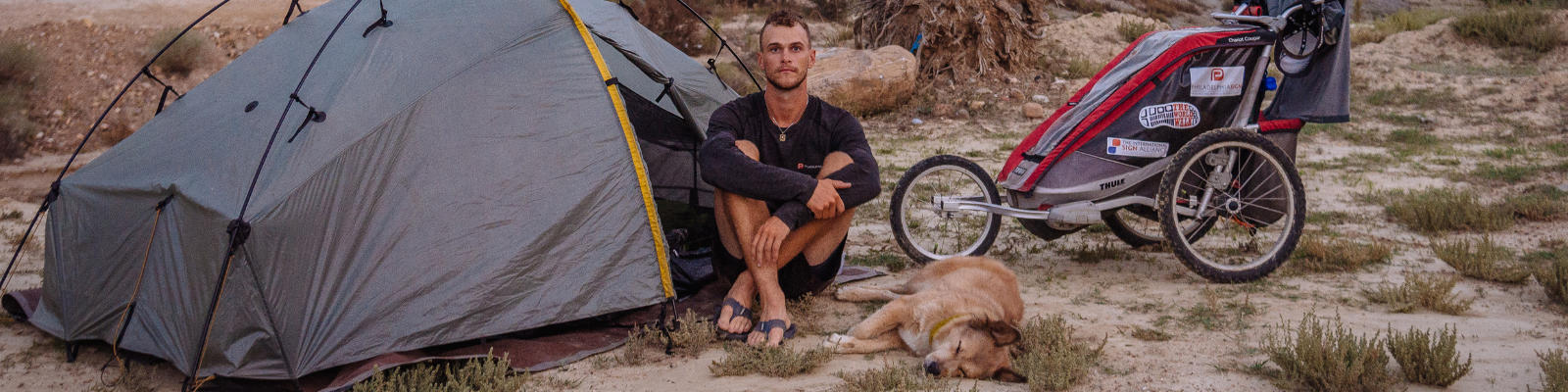
Tom Turcich spent seven years walking 46,000 km across six continents, becoming the 10th person to walk around the world. Accompanied by his dog Savannah, his journey focused on human connection and the mental endurance required for long-term adventure.
Excerpts taken from Wild Chats Podcast with Tom Turcich.
Tom’s journey wasn’t sparked by a bucket-list whim. It began with grief, a hard look at mortality, and a decision to live more deliberately. What followed was a life-defining experiment in endurance. Long days of walking, relentless weather, constant uncertainty, and a slow transformation from timid introvert into someone who could navigate borders, deserts, illness, loneliness, and the sheer grind of putting one foot in front of the other over and over again.
Tom’s origin story starts with a loss and a shocking realisation of the fragility of life.
“My friend when I was 17 passed away in this freak jet ski accident. Until that point in life, I had never known anyone who died… And then my friend, Annemarie, who in my mind was a much better person than I was… she was the nicest person I knew… you could never get her to say anything even remotely ungenerous…If Anne-Marie could die who’s so clearly better than I am, then so can I. And so could my family, so could my friends. And so it was this real visceral realisation that life is not guaranteed and it’s fleeting and it’s fragile.”
For months, he struggled to integrate it. Then Dead Poets Society gave him language for the feeling.
“Someone played Dead Poets Society… and that was the answer that I needed at the time. And so I latched on to Carpe Diem… I watched that movie probably two dozen times and I read everything that was mentioned in the movie, Frost, Whitman, Thoreau… and it became my mantra.”
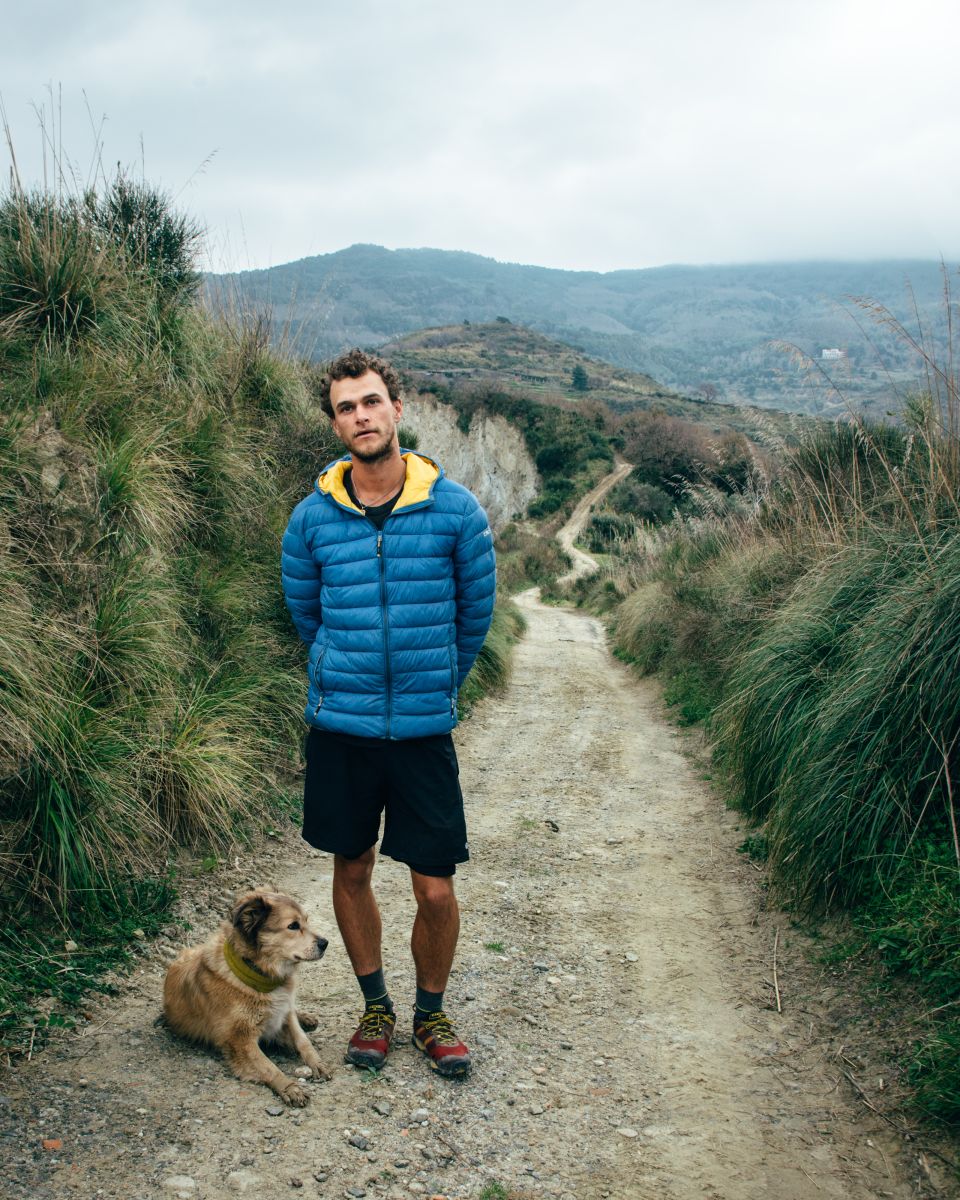
But ideas are easy to agree with, it’s actually living them and turning thoughts into action that’s the hard part.There came a moment for Tom that really flipped the switch.
After a third date with a girl, he didn’t kiss her. He sat on a curb, staring at “Carpe Diem” on his phone, and realised he had to act now or lose the clarity. Long story short, he texted her, she came back, they kissed, and the lesson landed…Action changes your life. Thoughts don’t.
That mindset became a fuse that led to packed days, new challenges, and eventually a deeper look at the big question, if you only get one life… what makes it meaningful? For Tom, the answer was travel. Not just casual travel but the kind of adventure that would force him to grow. An adventure like the heroes he’s been reading about.
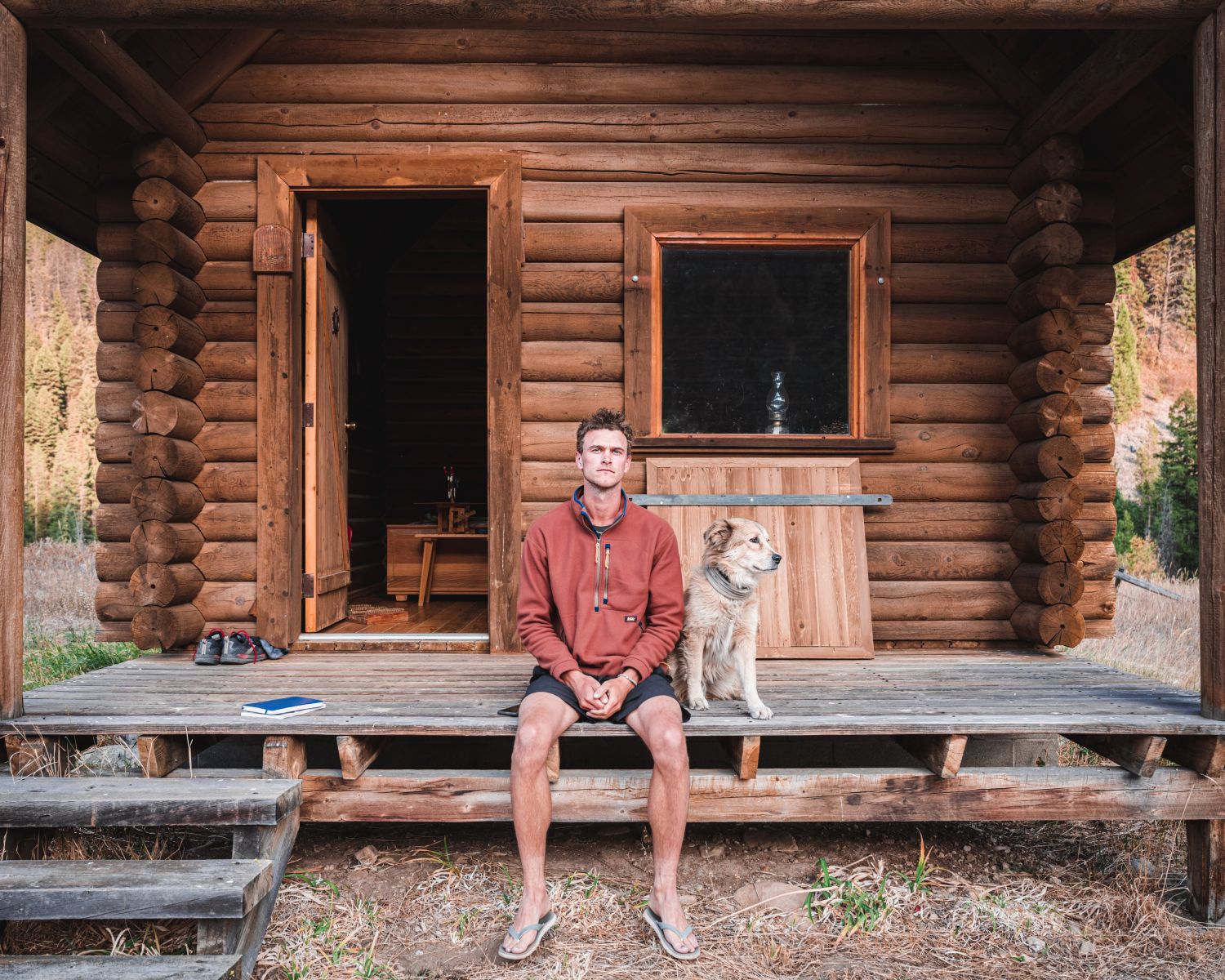
Tom didn’t want a manageable adventure, he wanted something truly life-defining. ‘Right before I left… my mom was crying and saying, ‘why can’t you just walk across America?’ I said, ‘that’s not enough for me.’ So I wanted it purposefully to be really, really big.”
And what’s interesting is that his travel background was… pretty normal. A few here and there, nothing that would suggest he was ready for “seven years walking.” But he’d found the thing he wanted and that was intentionally seeking a life that would force him into growth.
“I wanted to be forced into adventure, forced because I was timid and introverted and I wanted to grow out of that and I wanted to understand the world.”
He wanted a goal that was so big it couldn’t be ignored. Something that would reshape his identity over years, not just months of challenge, discomfort, and most importantly awe. During the interview, Ben Southall poses a question that hits home for anyone standing on the edge of a big decision: Do we really need a tragedy to wake us up?
Tom’s response offers a masterclass in the psychology of adventure. He argues that most of us are trapped in the "realm of thoughts," a place that feels safe but ultimately keeps us stagnant.
.JPG)
Tom explains that we often mistake our internal monologue for reality. We think about doing things, and that thinking feels productive but it lacks the friction required for true change.
"The realm of your thoughts is not where the good stuff is... it's not where reality and not where the excitement is. The realm of action, which is more difficult and more uncomfortable, is where the good stuff is. In the comfort of your home, an adventure feels like a series of "unchallenged thoughts." But the moment you step out the door, the world becomes "cold and indifferent." For Tom, the secret wasn't avoiding that cold, it was learning to speak its language.
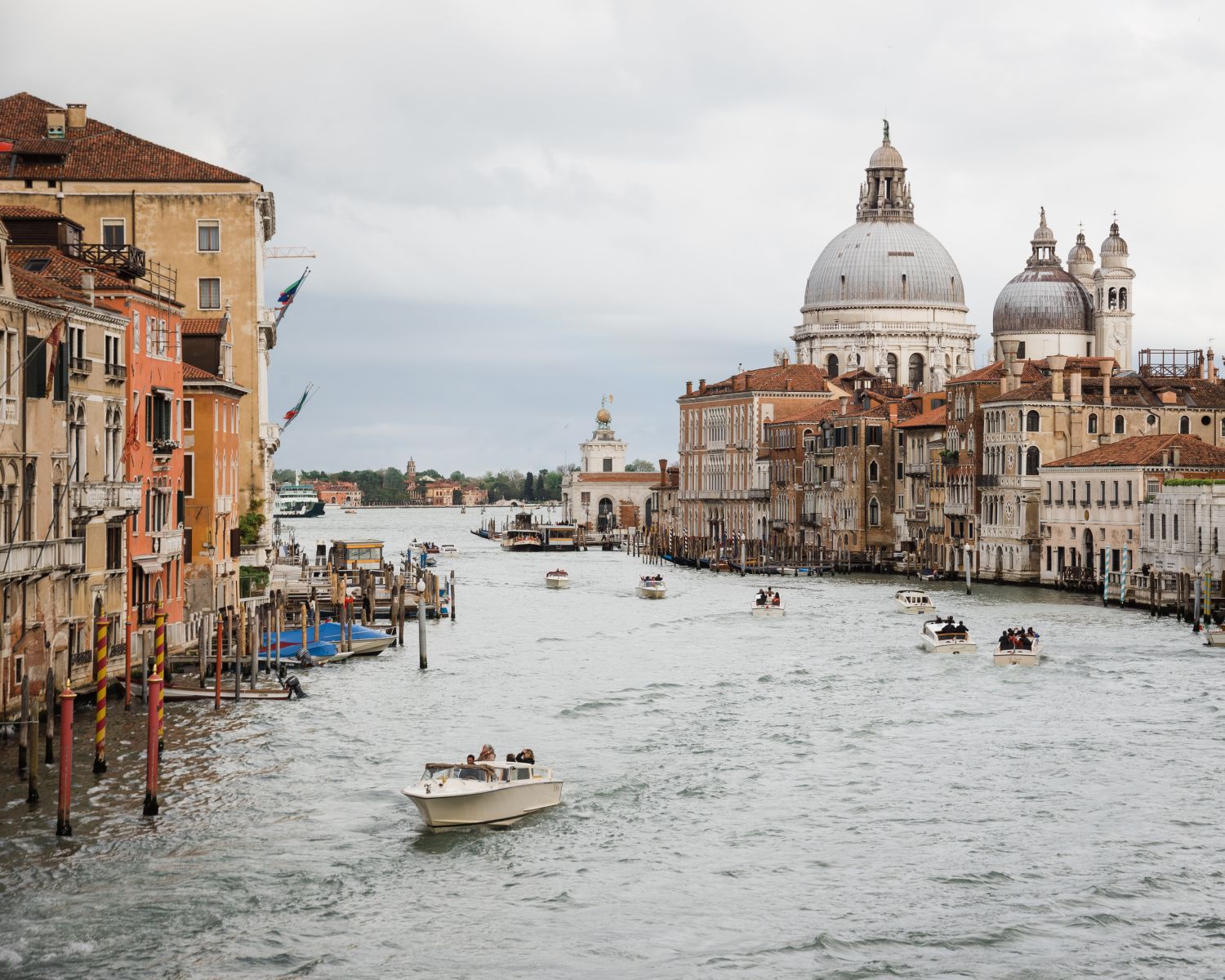
When you are 40,000 km from home, discomfort stops being something to fear and starts being a data point. Tom suggests that we need to stop viewing discomfort as "danger" and start translating it as:
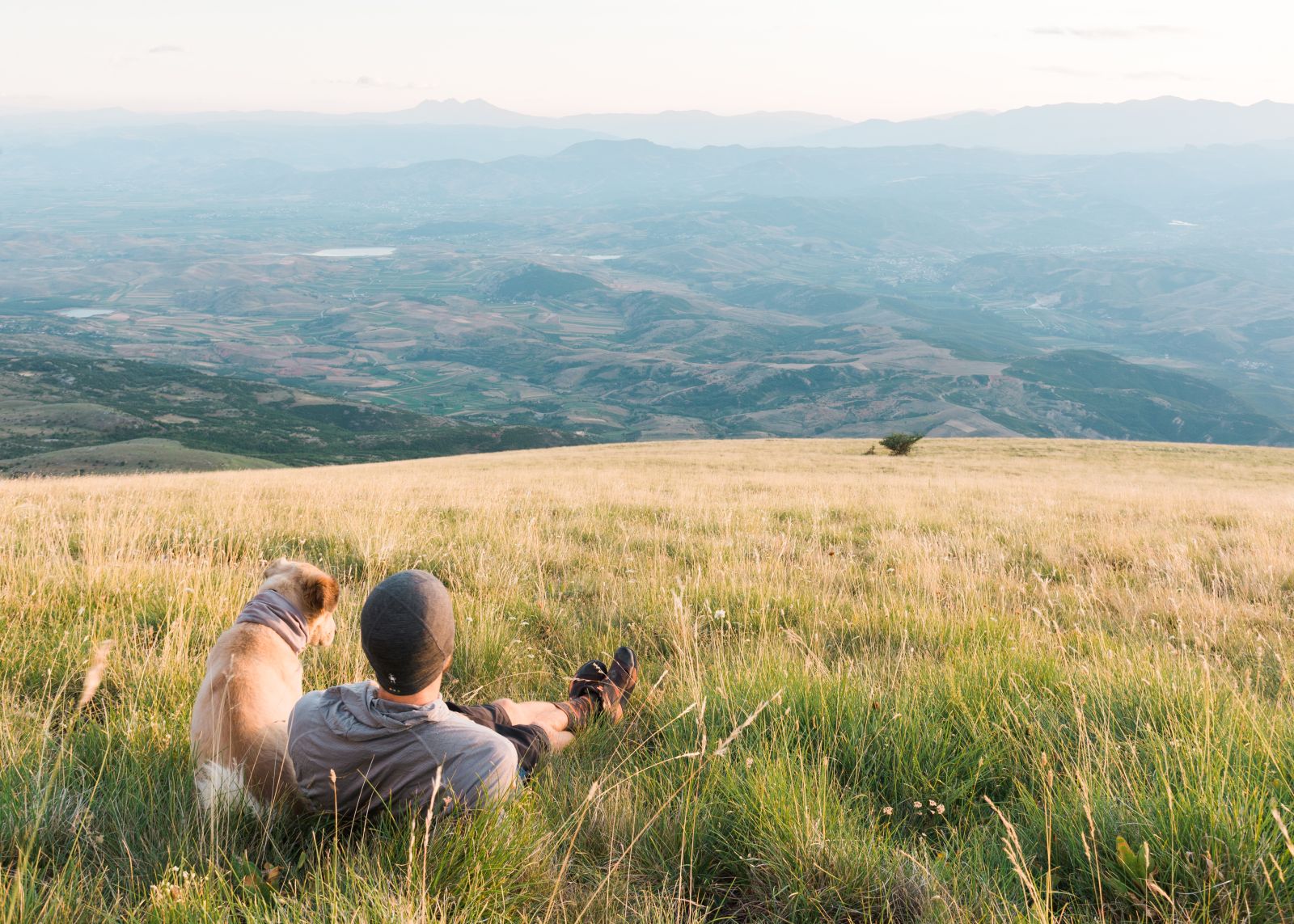
Ben frames it perfectly: "Adventure isn't just about the scenery; it is the physical space where discomfort lives. If you stay within the "mold of where you grew up," you remain unchallenged."
"You first have to just recognise that these are two different worlds... [differentiate] the comfort of your unchallenged thoughts versus the discomfort of the realm of action."
Like most modern adventurers, Tom prepared for his world walk by:
But when Ben asks what actually mattered, Tom’s answer is hilarious and honest:
“Ultimately, it all kind of was just worthless.” Because the real learning happens on the road and the first month is basically a live gear purge. He ditched the luxuries fast:
“I had a camp chair and a camp table, which is just absurd things to bring… I was pushing basically a baby carriage so I could carry more stuff… But then you’re pushing it up a hill and you go, ‘I got to toss… I cannot wait to get rid of this.”
And slowly, the true “core kit” revealed itself because reality teaches much faster than online research.
“One of the more interesting elements that were useful was a tarp… it gets you out of the shade. It keeps you maybe dry… it’s just to sit on, to lay out on… protects your tent from thorns… And then Leatherman… uses so many… and actually zip ties too… every once in a while, there’s some random thing… ‘perfect, this is when I need it.’”
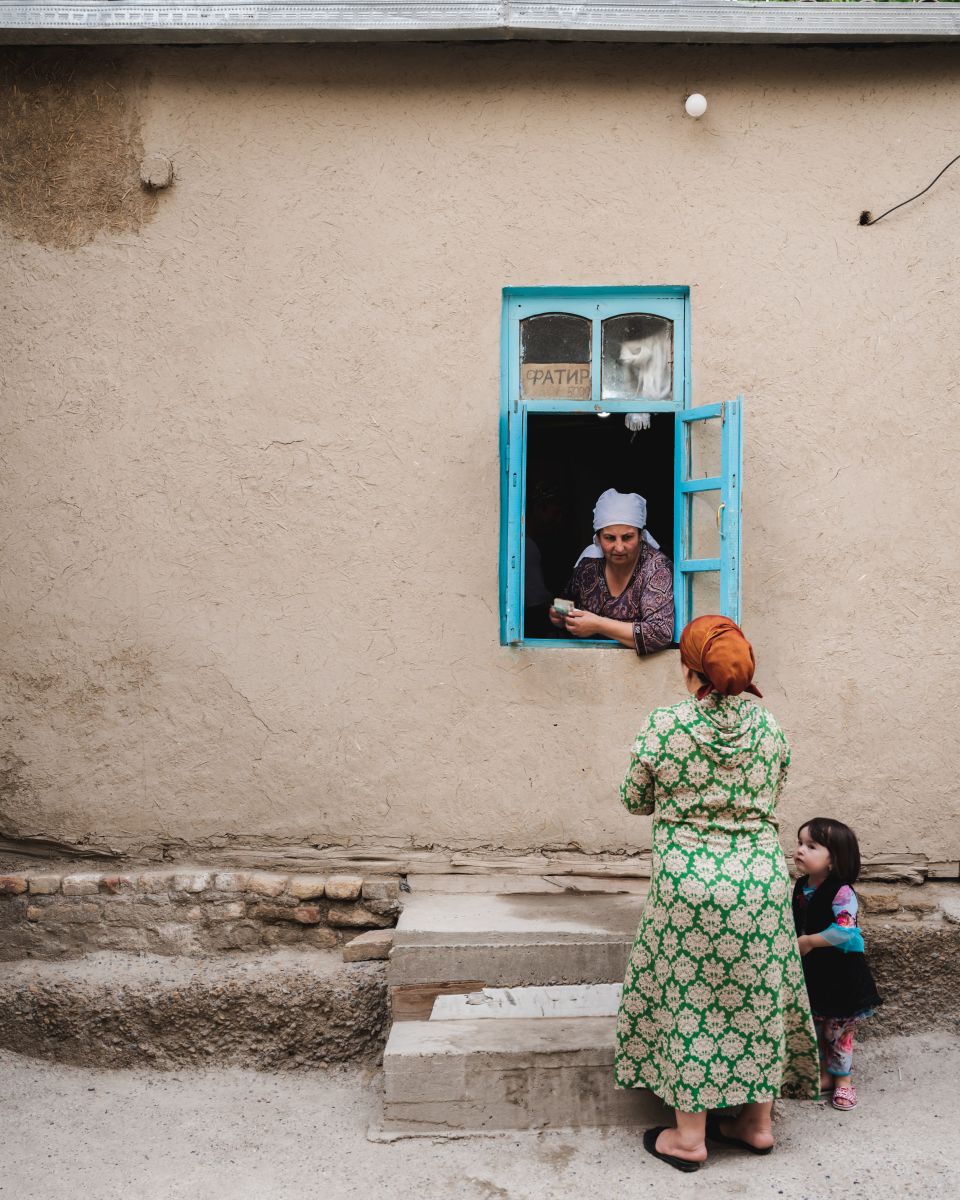
Tom’s journey was a live experiment in "less is more." After an initial month of hauling "absurd" luxuries like camp chairs, he refined his kit down to a core group of high-performance tools that could handle 46,000 km of abuse.
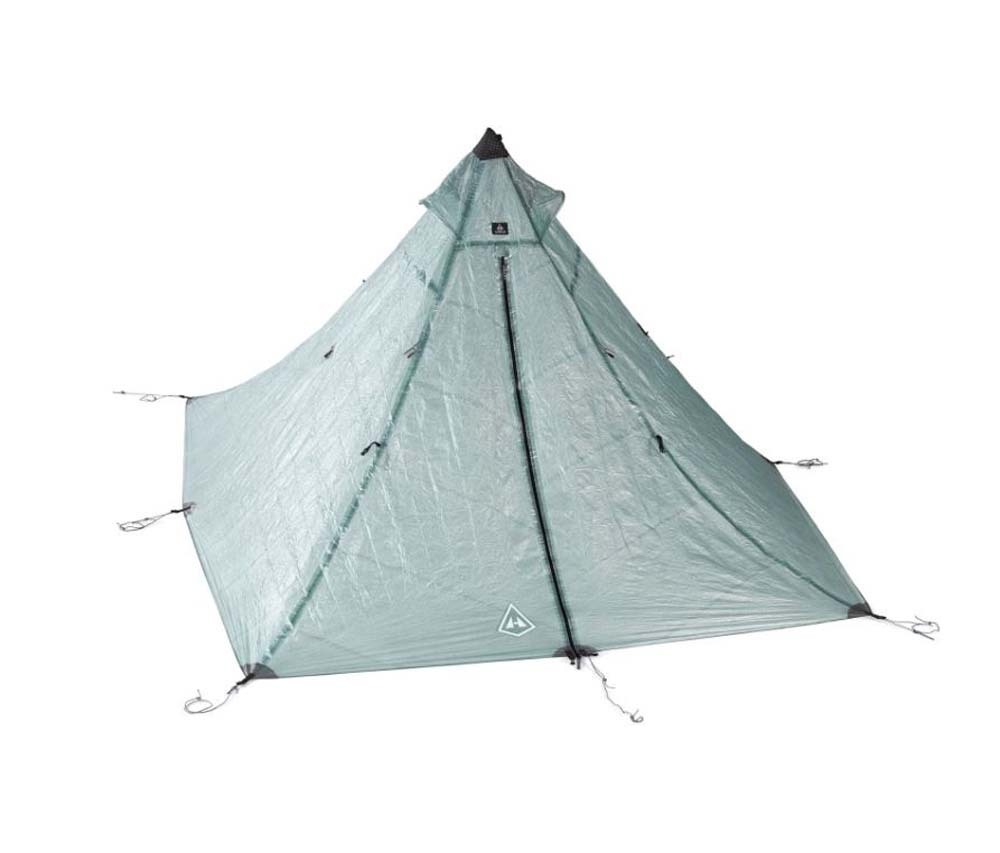
For a journey of this scale, your tent isn't just gear, it's your home. Tom eventually transitioned to the Hyperlite Mountain Gear UltaMid. Built from Dyneema® Composite Fabric (DCF), it is 100% waterproof and, unlike nylon, it won't sag when wet. Its pyramid shape is a masterclass in aerodynamics, allowing it to shed heavy winds in exposed environments like the Andes or the high plains of Kyrgyzstan.
Even with a world-class tent, Tom found a lightweight tarp to be an "absolute necessity." The Sea To Summit Escapist served multiple roles: a quick-pitch shade for midday breaks in the desert, a ground cloth to protect his tent from sharp thorns, and a "stealth" shelter for nights when he needed to disappear into the landscape and be gone before sunrise.
This Escapist tarp is simple but super durable, so it lasts. Big enough to rig as an A-frame when the sky turns on you, light enough that you won’t resent it at kilometre 30. The Medium is 2.0 x 2.6 m and weighs about 270 g.
%20.jpg)
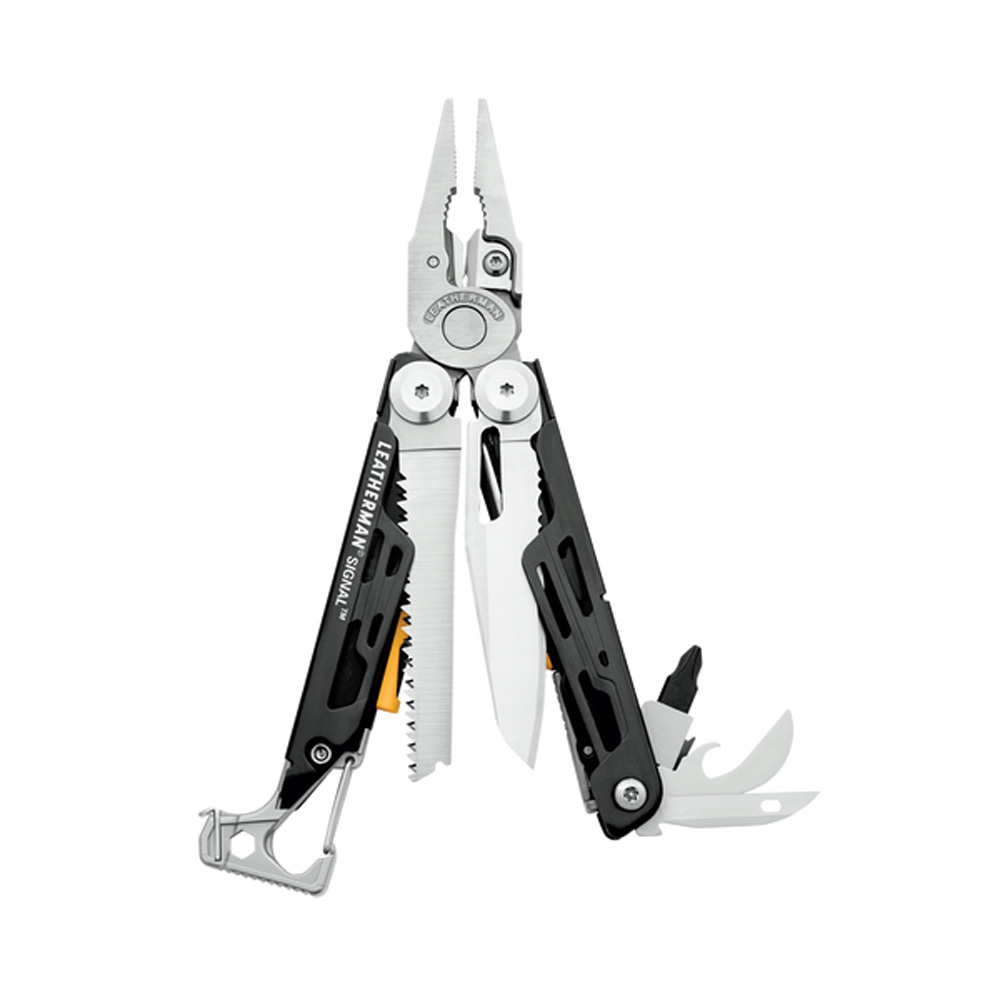
When your transport is a custom-modified stroller and you’re 50 km from the nearest town, you have to be your own mechanic. Tom called his Leatherman essential, for everything from hammering tent stakes into frozen ground to repairing the axle on his gear cart. The Signal model is specifically designed for adventure, including a built-in firestarter and an emergency whistle.
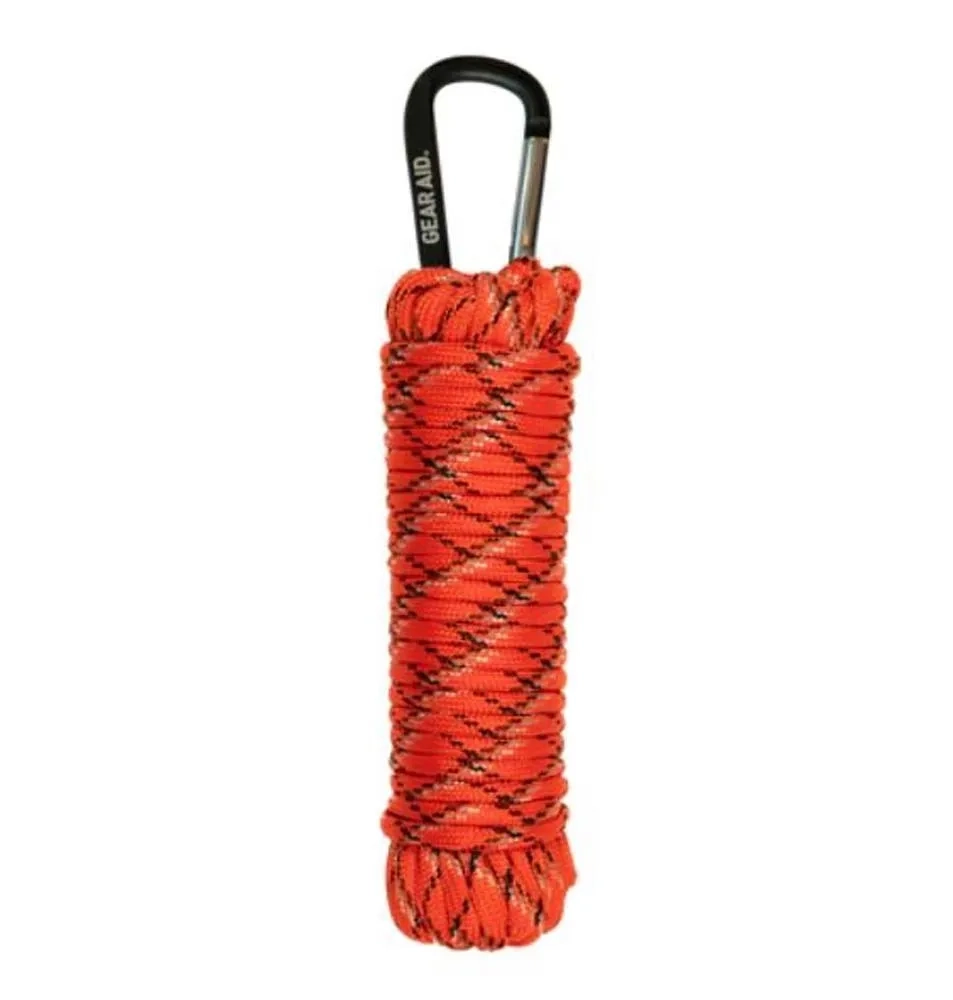
Finally, the "bush mechanic’s" kit. Tom always kept a length of high-test paracord and a handful of heavy-duty zip ties in the bottom of his cart. From replacing broken boot laces to lashing his gear down during high-wind storms, these two items solved the random problems that no travel blog could have predicted.
While Tom didn’t list every specific brand name in his interview, his sleep system evolved significantly to prioritise durability and temperature range over the seven-year journey and because he used a pram, he was able to avoid the "ultralight" trap of paper-thin gear, opting instead for items that offered a better night's rest, a critical factor for someone walking almost 40km a day.
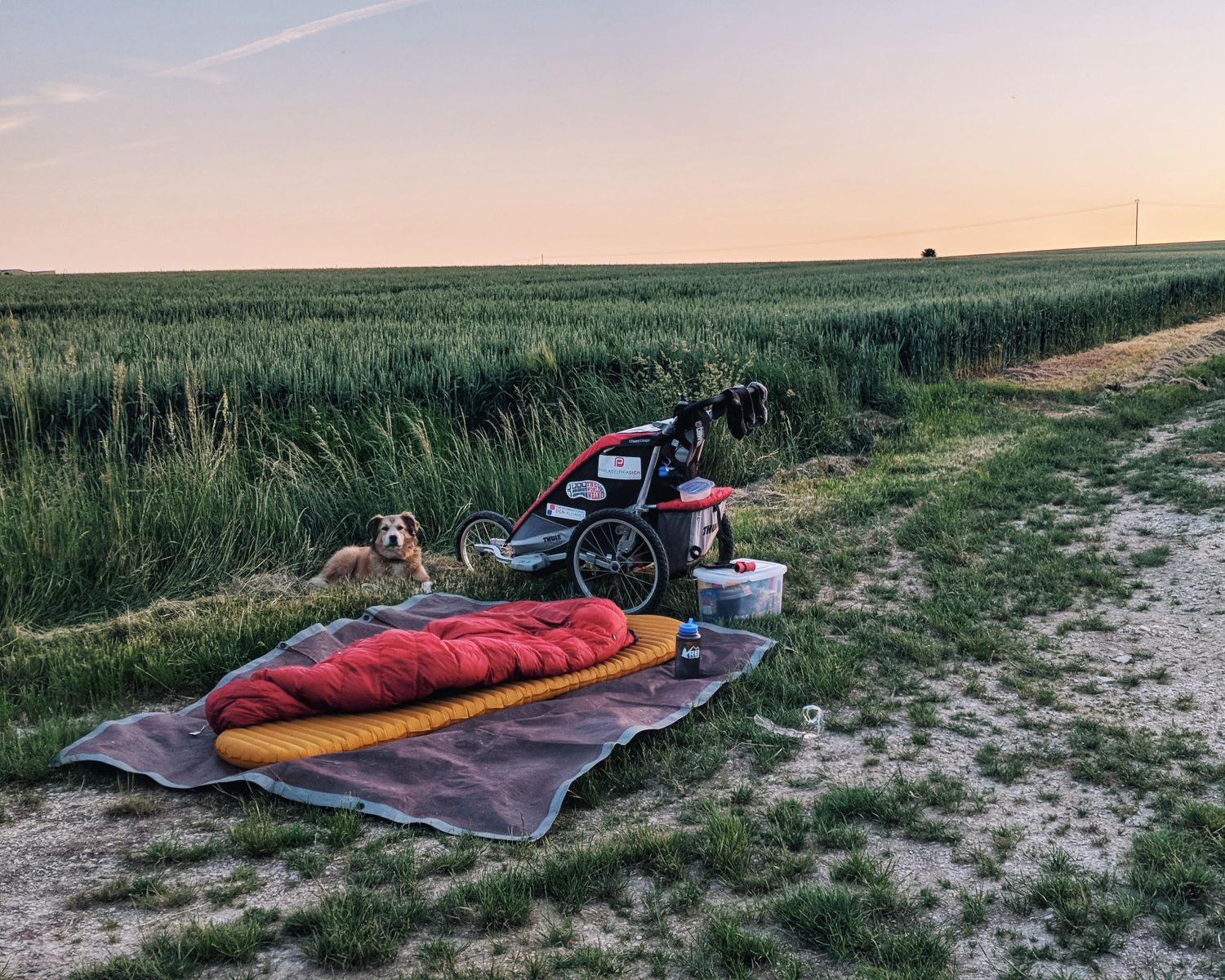
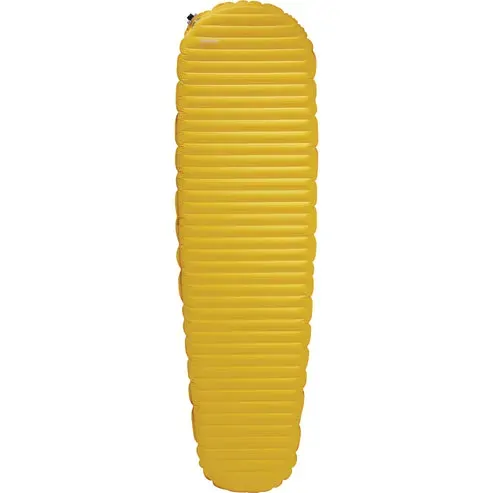
Tom consistently used an inflatable sleeping pad to deal with the varied terrain of 38 countries. For a world walker, the mat isn't just about cushioning; it’s about R-value (thermal resistance). He needed a pad that could insulate him from the frozen ground in Kyrgyzstan as effectively as the damp soil of the Balkans.
Tom’s sleeping bag strategy had to cover a massive thermal range, from -10°C winters to sweltering tropical nights. Rather than one single bag, he relied on a modular approach of layering his sleeping bags with a liner. He typically used a 850 high-fill power down sleeping bag (often a mummy-style with temp limit of -15°C ) for the cold stretches. Down was essential because it compresses small but offers the best warmth-to-weight ratio.
This was a secret to his gear’s longevity. A silk or merino wool liner keeps the sleeping bag clean from the salt and oils of seven years of sweat, and on hot nights in places like Morocco or Central America, he would sleep in just the liner on top of his mat.
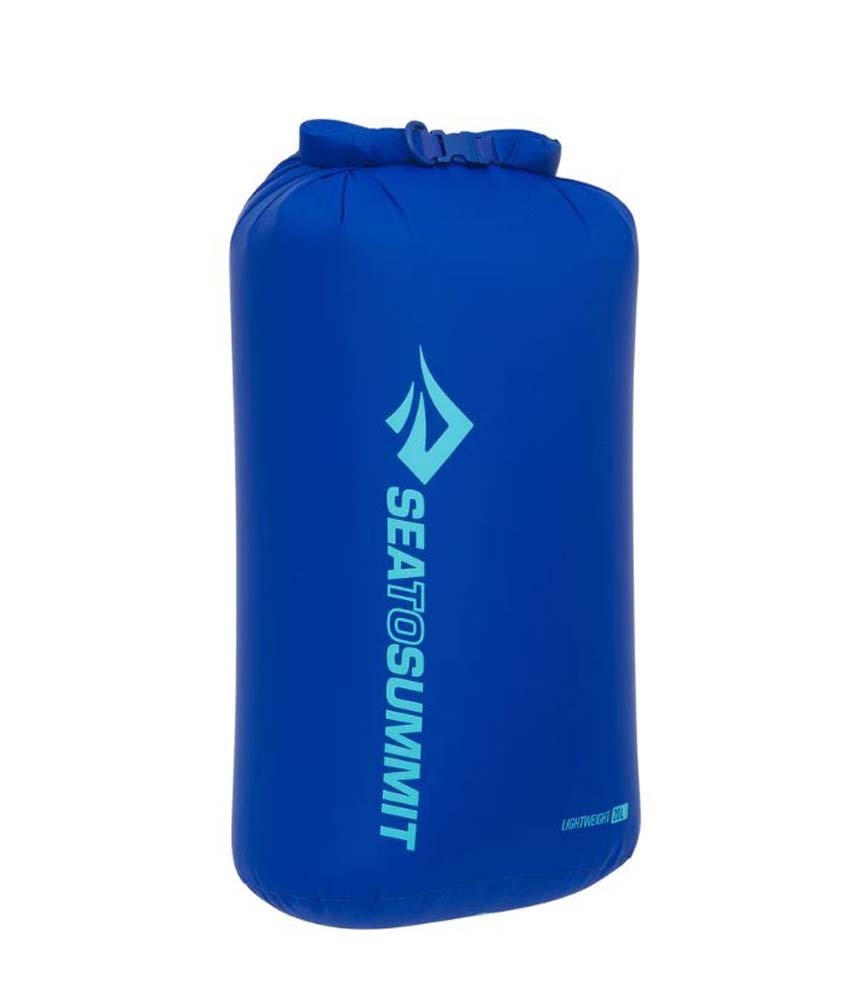
For a pilow, Tom used a Sea To Summit Dry Bag with clean clothes stuffed in it because on a 2,500-day journey, physical recovery is everything.
As mentioned in the gear list, Tom used his Sea to Summit Escapist Tarp or a dedicated ground sheet under his mat. This prevented "slow leaks" caused by thorns, glass, or sharp rocks which are a constant threat when you are camping in random spots on the side of the road.
.JPG)
Tom always assumed he’d haul gear in a cart, he’d seen other world walkers doing it. He hated backpacking with heavy loads and wanted to keep weight off his body. Originally, he tried to modify a bike trailer into a waist-pulled cart. A maker-space owner looked at it and said, essentially: Why not just push a stroller?
Baby strollers are:
That practical decision made the whole thing more sustainable, especially when he needed replacement components in places like Colombia!
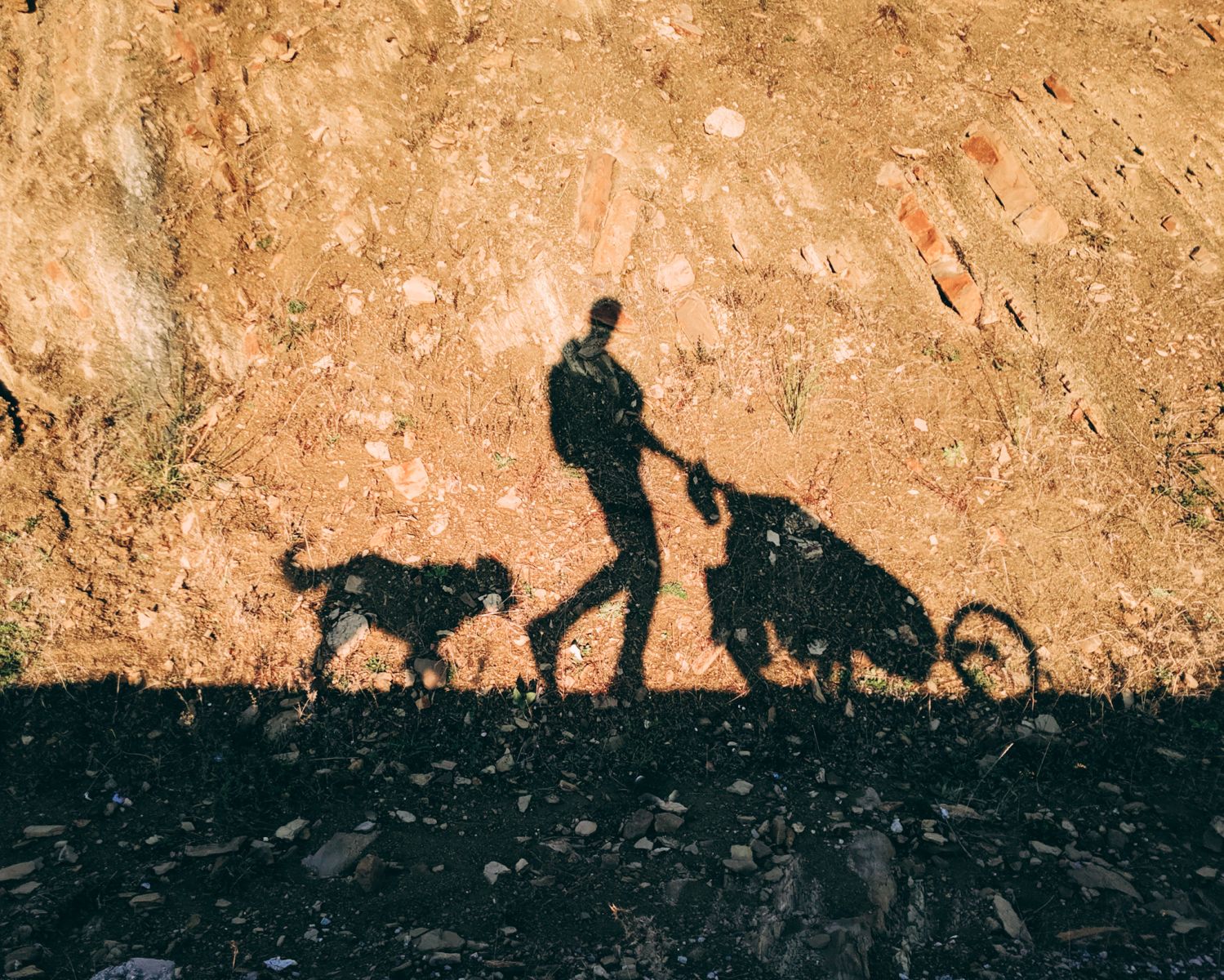
Tom’s daily target was roughly 38.62 km, about 8 hours of walking. At first, he couldn’t do it. He cramped, blistered, and got smashed by soreness. But once he adapted, 38.62 km became the sustainable ceiling. In Peru’s desert, he experimented with 55-60 km days to reach Lima faster… and learned the hard truth: Going harder made him slower and it’s consistency that beats heroics.
“I realised… I can only maintain about 24 miles a day, every day.”
Tom didn’t even have Instagram before he left but before he left, he held a fundraiser and people gave him money towards his adventure so he felt indebted. It was this feeling that made him start posting on social media. Originally, just photos of roads, because that’s what felt meaningful, but over time, the pressure of sharing daily pushed him to develop his photography skills.
“In the beginning, they were really bad… just photographs of the roads… And eventually, I got sick of taking photos of the road… So then I started turning my camera to the sides…”
Then he describes the moment the camera clicked:
“I remember being in Mexico… I took a photo of a bull in this wheat field and the light was falling really nicely. And I remember looking at it going, ‘whoa… like, I took that photo?’”
The constraint of walking made him a better photographer because he couldn’t chase the “perfect” locations. And in one of those surreal full-circle moments:
“Steve McCurry… in my mind is the greatest photographer ever… he follows me… we text all the time because I was taking good photographs.”
He couldn’t chase “Instagram-perfect” Alps silhouettes. He had to find beauty in local villages, architecture, ordinary roads, and faces.
Tom Turcich’s Photography Kit (for the gear nerds):
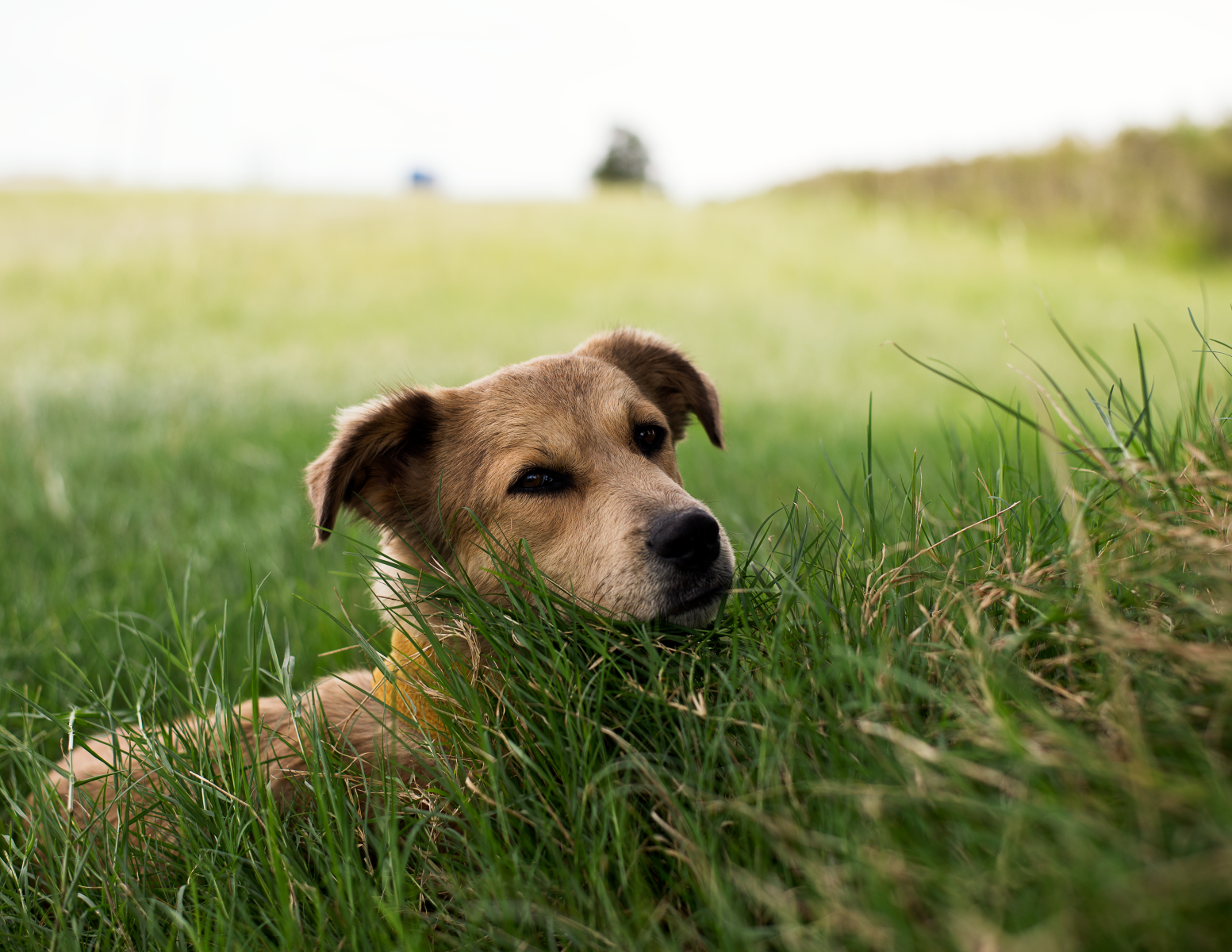
Five months into his walk, Tom reached Austin, Texas, and made a decision that would fundamentally change the journey. He walked into an adoption center and met a "little mangy mutt" named Savannah.
Choosing a puppy was a calculated risk. As Tom explains, it was a high "upfront cost" in training, but it meant she would know no other life but the road. After some initial struggles with a leash and a few packets of her "holy grail" training treat (slim jims), Savannah became an elite athlete. By the time they hit the Mexican border, she was effortlessly crushing 38 km days.
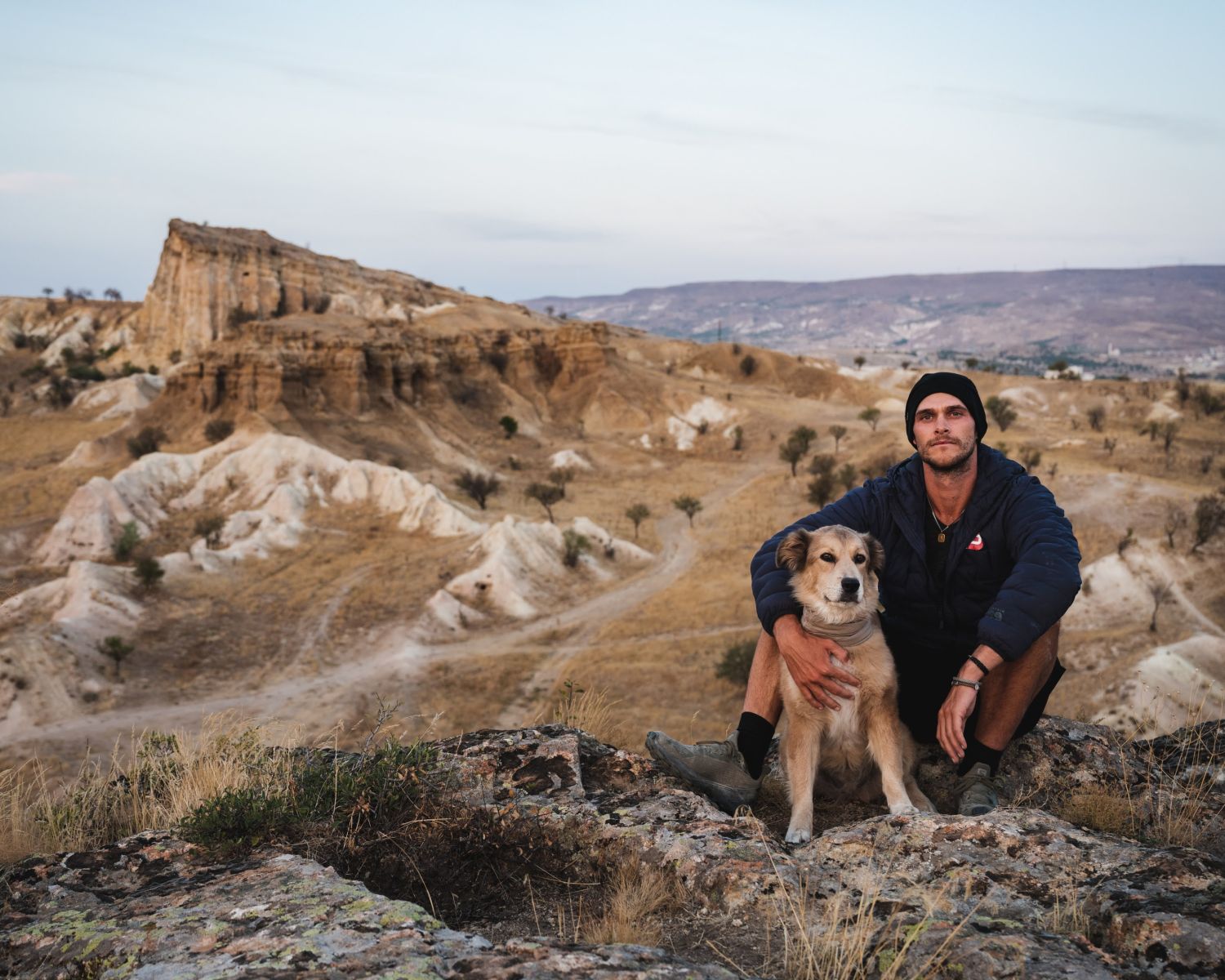
After years of shared sunrises and desert camps, the line between man and dog blurred. They weren't just traveling together; they were operating as a single unit.
"We were perfectly synced up… you just cannot even describe. We spent every minute of every day together for years. She was like an appendage for me. She was another part of me."
But having a partner meant learning to listen to non-verbal cues. When the heat in Costa Rica hit 38°C with 100% humidity, Tom saw Savannah struggling. He threw out his rigid schedule and let the dog dictate the pace. Their new "survival rhythm" became: Wake at 4:00 AM, walk until the 10:00 AM heat, shelter in the shade all day, and emerge for a final push at 6:00 PM.
Walking through Central and South America with a dog is effectively an invitation for every territorial stray on the continent to challenge you. Tom calls fending off dogs his "most developed skill," a daily ritual of high-stakes communication.
"Central and South America… it was every day. It was non-stop. Those dogs come out like a cannon when they see Savannah on the periphery of the territory."
Through thousands of miles of trial and error, Tom developed a calm, repeatable strategy for managing aggressive encounters. If you're trekking through dog-heavy regions, these are the golden rules:
Panic, shouting, or running signals to a dog that you are either a threat or prey. Most dogs are defending a zone, not hunting. Slow down, stand tall, and control your breathing. As Tom learned, dogs read your energy far faster than they read your intentions.
Backing away too quickly is an invitation for a dog to pursue. Square your shoulders and face the dog. Most aggressive barkers will stop short when met with quiet confidence. Maintain your position until the dog pauses, then move away slowly and decisively.
Distance is your best friend. Use your trekking poles, a water bottle, or even your gear cart to create a physical barrier between you and the dog.
Pro-Tip: If a dog rushes you, taking one firm step toward it often resets its brain and halts the charge. You aren’t fighting; you are managing space.
When you set up your tent, you are creating a temporary home. Do not allow local dogs to casually approach your sleeping area. Assert your boundaries early with noise or posture. If a dog associates your tent with passivity, they and their pack will return.
Dogs are naturally more active and defensive at dusk. By adopting Tom’s 4:00 AM start, you move through neighborhoods while the world (and its dogs) are still waking up, avoiding the high-energy "patrol" hours of the late afternoon.
The most important lesson Tom shares is understanding the "why." Most of these dogs aren't "mean"; they are semi-homeless animals in a symbiotic relationship with a property. They bark because it’s their job. Once you clear their invisible territory line, they usually disengage and go back to sleep.
Tom compresses seven years of walking into a few lines:
There is a romanticised image of the "World Walker" as a nomad living in a state of constant awe. But Tom is refreshingly honest about the reality of Year Six and Year Seven. In the beginning, every sunrise is a revelation. By the end, the "adventure" starts to feel like a shift at the office. Tom describes a phenomenon many long-term travelers experience: the exhaustion of constant exposure.
"It also kind of f*cking sucks… day to day. You’re tired and you’re in the rain or you’re in the sun and you’re looking for a place to sleep each night... it really became much more about getting to the next place where I could rest."
When you become a "proficient adventurer," the novelty fades. Being the perpetual stranger, the constant language barriers, and the daily hunt for a safe campsite stop being exciting, they become tasks. The "in-between" spaces aren't romantic anymore; they are just distances to be cleared.
.jpg)
Finishing a 46,000 km walk is a massive physical achievement, but the psychological homecoming is often the hardest mile. Tom’s return followed a classic, painful trajectory:
The first three months were pure euphoria. Tom reveled in the things we take for granted: hot coffee, a bed that doesn't move, family dinners, and a daily cigar.
Since the age of 17, Tom’s entire identity had been anchored to the World Walk. When he finally stepped back through his front door in New Jersey, the mission was complete.
"I had this pinpoint focus in my life... for 16 years. And then suddenly that’s gone. I didn’t know what to structure my days around."
This is Tom’s most profound insight. On the road, the world comes to you. By making one simple decision, to walk, you are guaranteed new people, new food, and new stories. You are a passive recipient of novelty.
Back in "normal" life, the world is stationary. Tom realised his "social muscles" had atrophied. He had forgotten how to initiate life by texting a friend, making a plan, or creating his own momentum.
"Why isn't the world coming at me? I had this muscle that we all have... that was totally atrophied in me. I had to sort of rebuild this."
This caused him to fall into a deep depression for about a month in Seattle, the only one of his life. What saved him? The Book. Writing his memoir, The World Walk, gave him a new "one goal" structure. It bought him the time he needed to reintegrate and turn his "atrophied muscles" into the strength needed for his next great chapter: marriage and a life off the road.
.webp)
After seven years of placing one foot in front of the other, Tom Turcich didn't just return with a passport full of stamps; he returned with a rewritten philosophy on how to live. Here are the core truths forged on the trail.
Many people wait for the "right time" to start their dream adventure. Tom’s advice is blunter: Just begin. He admits that he wasn't a world-class athlete or a seasoned survivalist when he started. He was a 26-year-old with a stroller and a "reckless" need to see the world. "You got to begin. Be a little bit more reckless... You’re more capable than you realise. You’re more adaptable than you realise. But you have to begin."
We often mistake "thinking" for "doing." For Tom, thoughts are safe and unchallenged, while action is where growth lives.
"The realm of your thoughts is not where the good stuff is... The realm of action, which is more difficult and more uncomfortable, is where the good stuff is."
In the deserts of Peru, Tom tried to be a hero. He pushed for 36-mile (58 km) days to reach Lima faster, only to find himself "depressed" and physically broken two days later. He eventually capped his pace at 24 miles (38 km) a day. The Lesson: A sustainable "ceiling" will always get you further than a series of heroic sprints followed by a total collapse.
Tom didn't become a world-class photographer by visiting the most beautiful places; he became one because he couldn't leave the road he was on."I had this constraint that was really useful... if I wanted to be a good photographer, I couldn’t rely on driving somewhere to a beautiful location. I had to find a beautiful photograph wherever I was." The Lesson: Don't wait for better gear or better locations. Use your current limitations to force your skills to level up.
Growth is not free. Constant "exposure", to new people, new climates, and the vulnerability of the road is exhausting.
"Exposure... had worn on me... by the end it was very exhausting. You grow like you would not believe, but it’s an incredible amount of growth [that comes with a price]." The Lesson: When planning a long-term goal, factor in "mental recovery" just as much as physical rest.
The walk eventually ends, but your need for purpose doesn't. Tom’s struggle with post-expedition depression was largely due to the sudden loss of his "North Star." The Lesson: Always have a "reintegration project" waiting for you. For Tom, it was his memoir. For you, it might be a new career goal or a community project.
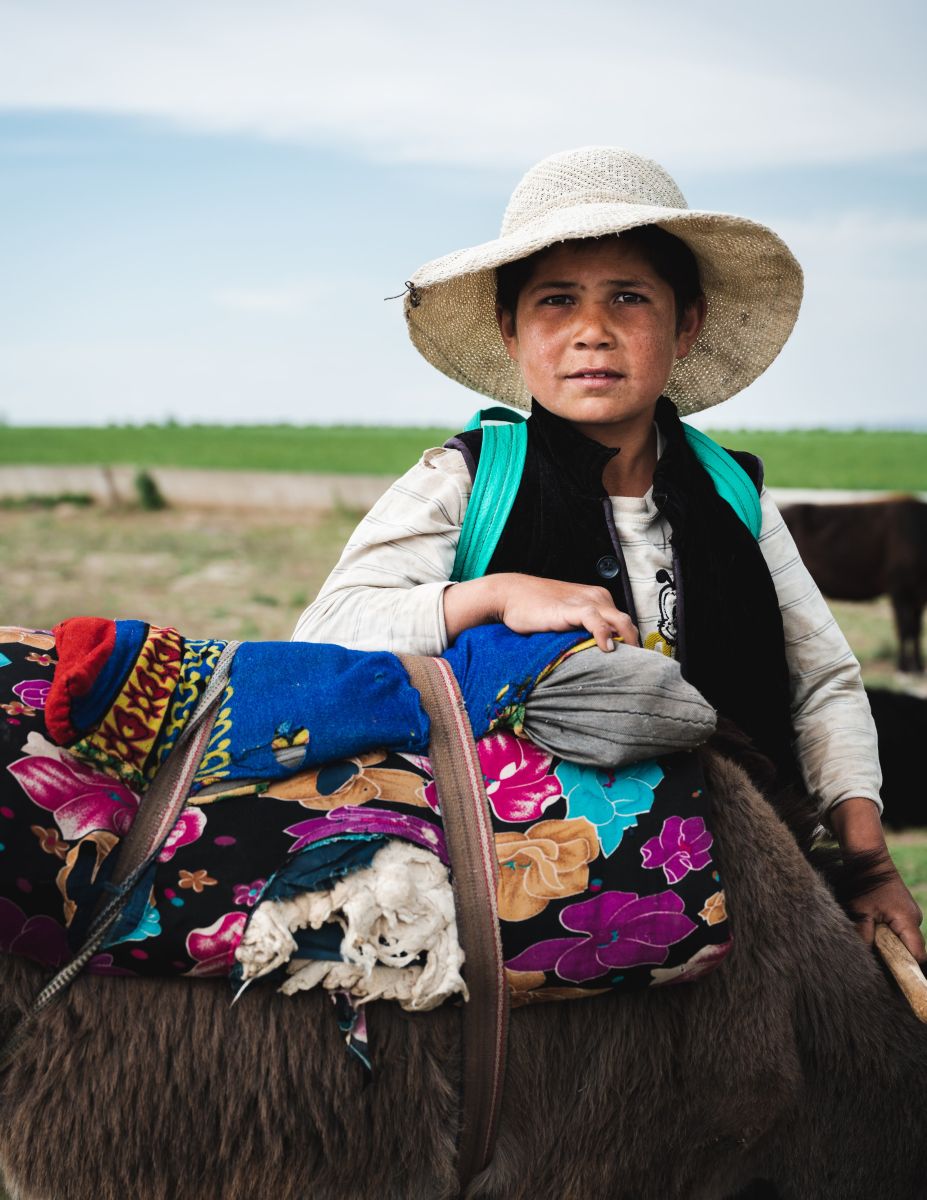
When Ben asked for the one thing every would-be adventurer needs to hear, Tom didn't talk about boots or maps. He talked about the threshold:
"You just have to differentiate the comfort of your unchallenged thoughts versus the discomfort of the realm of action."
Perhaps the most profound takeaway from Tom Turcich’s seven-year odyssey is the debunking of a common fear: that the world is inherently dangerous. After walking through thirty-eight countries and crossing six continents, Tom didn't return with stories of conflict, but with a deep-seated trust in humanity.
“I knew people are nice pretty much everywhere,” Tom reflected. Whether it was a beach house in Algeria or a mountain pass in Kyrgyzstan, the "World Walk" proved that while our landscapes differ, our capacity for kindness is universal.
Tom’s story reminds us that the greatest risk isn't stepping out the door, it's staying inside and letting our "unchallenged thoughts" dictate our reality. You don’t have to walk 46,000 km to find yourself, but you do have to take that first step into the "cold and indifferent" realm of action. That is where life, in all its grit and glory, truly begins.
To find out more about Tom check out:
Not sure what gear you need for your adventure? Chat with our friendly team of Outdoor Gear Specialists in-store or online today, and don’t forget to share your adventures with us on Instagram by tagging @wildearthaustralia in your next post.
Q: How many people have walked around the world?
A: Tom Turcich is officially only the 10th person in history to walk around the entire world. To qualify for this feat, a walker must typically cross at least four continents and cover a distance equivalent to the Earth’s circumference, moving entirely on foot.
Q: What was the total distance of the World Walk?
A: Tom covered approximately 46,000 km (28,000+ miles) over seven years. His route spanned 38 countries across six continents, starting and finishing at his home in New Jersey, USA.
Q: Is Savannah the first dog to walk around the world?
A: Yes. Savannah is the first dog to officially circumnavigate the globe on foot. She was adopted as a rescue pup in Texas during the first year of the journey and completed the remaining six years by Tom’s side, becoming a global icon for endurance.
Q: Why did Tom use a baby stroller instead of a backpack?
A: Tom chose a modified Thule jogging stroller because it is over-engineered for stability and significantly reduces the physical toll on the back and joints. Pushing a cart is more sustainable for years-long travel than carrying a heavy pack, and spare parts like tires and tubes are easily sourced worldwide.
Q: What happens if a world walker gets sick or injured?
A: Medical emergencies are a major hurdle. Tom had to pause his walk for several months in London after contracting a severe bacterial infection that caused him to lose 20 kg (45 lbs). He returned home for life-saving treatment before flying back to his exact stopping point to resume the walk.
Q: What gear did Tom Turcich use for his sleep system and shelter?
A: Tom’s refined gear list prioritised "ultralight" durability. His core setup featured a Hyperlite Mountain Gear UltaMid 2 tent, a Sea to Summit Escapist tarp, a Therm-a-Rest NeoAir mat, and a modular Sea to Summit sleeping bag and silk liner system.
Q: How did Tom afford to walk around the world for seven years?
A: Tom saved for years prior to departure and lived on a minimal budget of rice, beans, and peanut butter. He eventually secured a sponsorship from Philadelphia Sign and now supports his work through his memoir (The World Walk), photography, and motivational speaking.
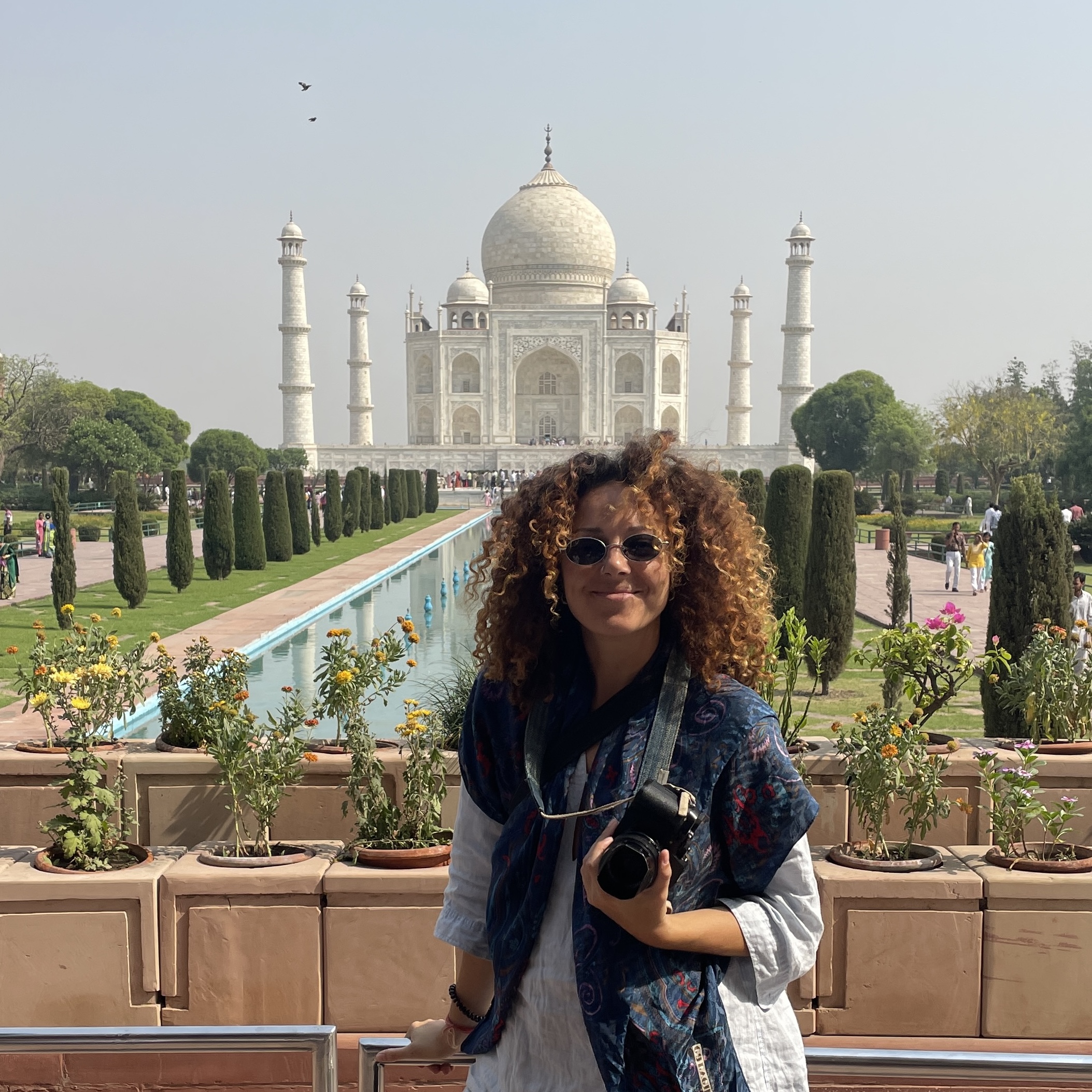
Quick answer: To remove a leech, slide a blunt edge (fingernail etc) under the small sucking end to break the suction, flick it off, then clean and cover the bite. Avoid burning, salting or yanking the leech off, this can increase risk of infection.
I don’t share this very often, but I am a pretty sentimental person.

I’ve always enjoyed hiking but had never done an overnight hike until my early 50’s. By chance, my niece mentioned that she was going to do one. I asked her who she was going with and she said “no one yet”.
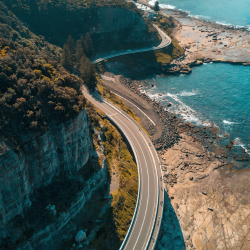
The best year ever doesn’t just happen; plan ahead with intention to make space for your adventures.












Using Afterpay you can pay for your order over 8 weeks. There's no interest or added fees* and nothing to pay today. Payment will be automatically taken from your debit or credit card in four equal payments each fortnight over 8 weeks, and you will receive your order immediately.
You simply need:
To use this service simply:
Approved AfterPay buyers will require the funds for the first payment to be available on their card at time of checkout, however the first payment won't be deducted for 14 days. First time AfterPay buyers will need to make the first instalment payment at the time of their purchase.
If you wish to return your goods you can choose to receive an exchange, or the Afterpay payment plan can be cancelled before the first payment at no charge. *If you fail to have sufficient funds available for AfterPay to automatically deduct payment on due instalment dates you will be charged a late fee of $10, and if the instalment payment remains overdue, an additional $7 will be charged one week later.
With AfterPay, there's no waiting and we'll ship out your order immediately as normal.

When you want to go now, sometimes it's handy to pay later. That's why, we offer interest free payment plans from two of Australia's favourite Buy now, Pay later services.