Total Items: 0
Sub Total: $0.00


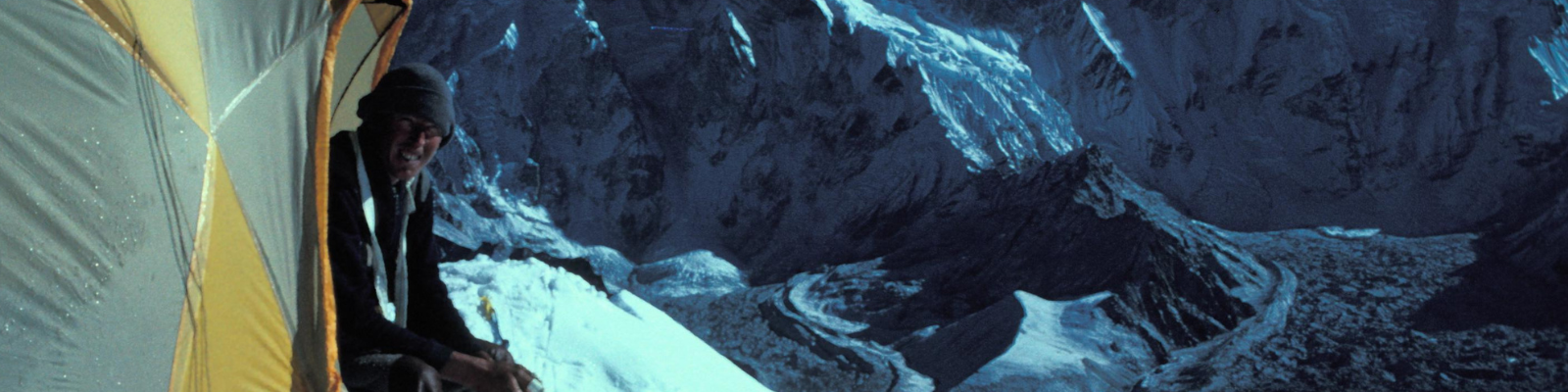
Before Sea to Summit was a gear brand, it was a human-powered Everest expedition. Here’s what Tim Macartney-Snape’s story teaches us about better gear.
If you pick up almost any Sea to Summit product, you'll find the brand name printed there on the label. Most people assume it's just good marketing but the truth is far more interesting.
In 1990, Australian mountaineer Tim Macartney-Snape set off from the Bay of Bengal and began walking towards Everest. His journey took him across India, the Ganges River and up through the foothills of Nepal, before he finally stood on the summit of Mount Everest.
.jpeg)
Setting off for the summit from the South Col, May 10 1990, 9.30 pm
He travelled from sea level to the highest point on Earth entirely human-powered. Literally climbing from Sea to Summit!
I sat down for a chat recently with Tim on the Wild Chats podcast to unpack the full story. What I came away with was a much deeper appreciation for both the brand sitting on my shelf and the remarkably curious, driven and self-sufficient man behind it.
Watch the full podcast here or listen on your favourite streaming platforms.
Tim's first Everest expedition was in 1984, via the North Face on the Chinese side of the mountain. Getting there required some serious cash ($150,000 worth of it to be precise). This in turn required some serious sponsorship and Tim's solution was to approach a television network to offer them the film rights, a pitch that eventually landed him in front of Sam Chisum, managing director of Channel 9.
"Kerry [Packer] being a gambler," Tim says with evident appreciation, "decided okay, give them 150 grand and see how they go."
The expedition was successful but it was a comment made by filmmaker Mike Dylan in the aftermath that proved to be the most consequential moment of the entire trip.
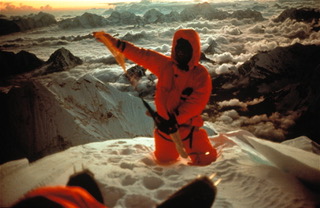
North Ridge, Ama Dablam, 1981
"He said to me, oh look Tim, you haven't climbed Everest properly," Tim recalls, still sounding mildly amused by it decades later. "I said, what do you mean? He said, well, to climb it properly you'd have to do it from sea level, because that's where it's measured from. No one does that."
Tim filed it away as a quaint idea. "After a couple of years I couldn't stop thinking about it," he told me. "I loved the idea of the holistic nature of it. Climbing the whole mountain. The mountain starts at sea level."
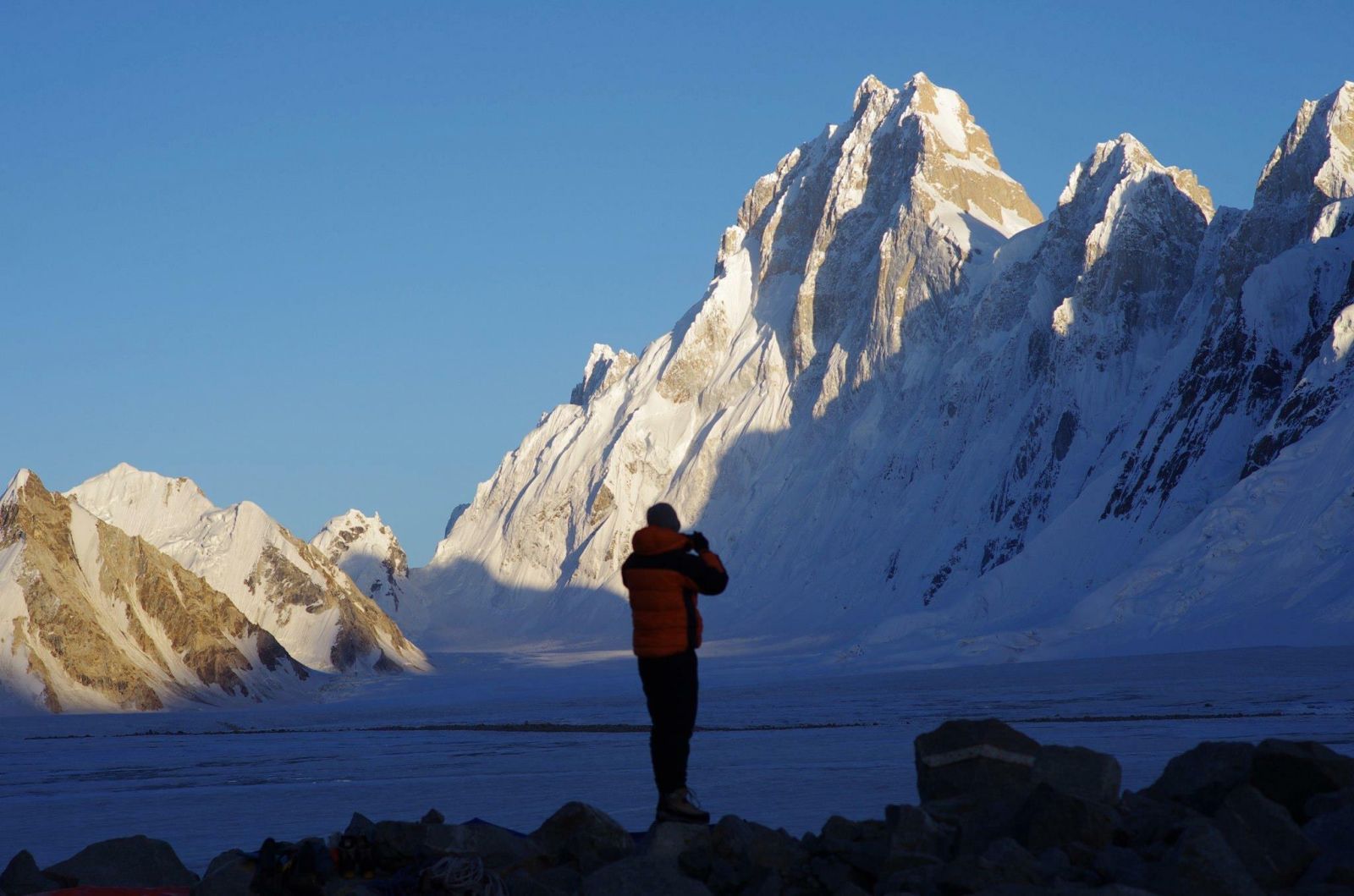
Mountains in Pakistan
Six years later he finally acted on it, stepping into the waters of the Bay of Bengal in 1990, Tim turned his back to the Indian Ocean and started walking. The Gangetic Plain hit him immediately. "I knew India would be crowded, but my god," he says, "The Gangetic Plain is the most densely populated rural region on earth. You could just never get away from people."
.jpeg)
On the Bay of Bengal starting off for Everest, January 1990
Crowds gathered wherever he stopped, conversations inevitably turning to cricket, his British support crew driving a Land Rover Defender ahead each day to scout out campsites, often ending up in the walled compounds of wealthy Indian families when finding any real privacy proved impossible.
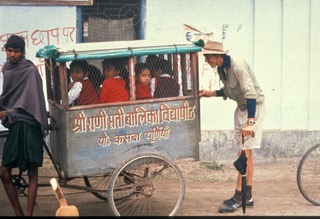
Off to school, on India's Gangetic Plain
When Tim reached the Ganges he discovered there was no bridge at his chosen crossing point. So, rather than take a boat and break the integrity of the journey, he swam it, across all three channels, approximately three kilometres of one of the most polluted rivers on earth. "The most challenging thing," he says, "was not to get water in my mouth. Which was impossible."
The border crossing into Nepal nearly unravelled everything because India had closed the main crossings in retaliation for Nepal purchasing arms from China. Tim arrived to find his route blocked with no clear timeline for reopening. With the nearest open crossing 300 kilometres to the east and the spring summit window on Everest waiting for nobody. Tim decided to run it.
"The first day of 60 kilometres was okay," he recalls "The second day was hard work. I was really stiff. My feet were pretty blistered. By the fifth day I'd got into gear and could run all day."
.jpeg)
Swimming across the Ganges
The summit push itself was completed alone, without oxygen and through the night, Tim setting off at 9:30pm ahead of the other climbers on the mountain, knowing he would move more slowly without supplementary oxygen and needing the head start. He climbed through the darkness managing the brutal cold, until the sun finally broke over the horizon. "The sun comes up and it's just such a relief," he told me. "You suddenly start to feel a little bit alive."
.jpeg)
Just below the south summit, 7am 11 May 1990
Reaching the summit for the second time, having walked every metre from the Indian Ocean to get there, Tim found something quieter than euphoria. "It was like, okay, I've been here before," he says. "I just lounged around. It was relaxed. I had plenty of time and it was early in the day." He pauses. "Not particularly enjoyable being alone though, I have to say. Life is better shared, of course."
Tim's appetite for adventure started long before mountaineering Everest.
He spent the first twelve years of his life on a farm in Tanzania, the son of a man who had survived the First World War by the narrowest of margins, a shrapnel wound straight through the chest saved only by the luck of being right next to a field hospital. After which he subsequently decided that a conventional life wasn’t going to be enough. His father ended up farming Africa building something from scratch with a deep understanding that the soil needed nurturing rather than exploiting.
.jpeg)
Tim and a friend at home in Tanzania
It was in this environment that formed Tim's character. "In farming, especially when you don't have a lot of money, you've got to be innovative," he told me. "You've got to be self-sufficient. You've got to be able to improvise."
.jpeg)
Tim's dad and their cattle on the farm in Tanzania
Those three qualities run like a single unbroken thread through everything Tim has done since, from the mountains he has climbed to the company he would eventually help to build.
"I always looked to the horizon and wondered what was on the other side of that hill," he said. "I always loved to climb hills so you could look out across the country."
.jpeg)
Tim and Pip with Zenadu at his home and farm in Tanzania
At boarding school in northern Tanzania, that horizon had a name. Mount Meru rose near his classroom window, close enough to become a daily invitation, occasionally dusted with snow at the summit and visible on most days. The school ran an annual trip to climb it but Tim never got to go. His family left Africa the year before he was old enough to join.
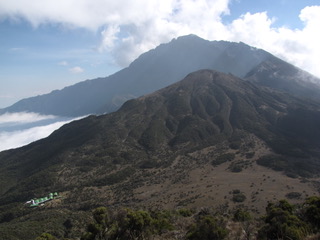
Mt Meru Summit, Tanzania, Africa
He has been back to climb it since. "My school window became a reality," he says simply.
University gave the dream somewhere to go. Tim studied biological sciences, majoring in botany, but it was the mountaineering club that genuinely changed his direction. "It really just comes down to curiosity," he told me. "You look at a mountain, you look at a cliff, and you start thinking, there's a route up there."
From the club came a mountaineering course in New Zealand, from that came a university expedition to the Himalaya, where Tim became the only member of the team to reach the summit, and from that came everything else.
"I realised pretty quickly that the only way to make a job interesting was to make it challenging," he said. "I love problem-solving. I've always had that approach towards everything in life."
After coming home from the Sea to Summit expedition, Tim found himself at a loose end (in the way that only someone who has just completed something so epic can be). "I thought well, seriously what am I going to do?"
The answer arrived through his climbing partner Roland Tyson, who had already been making some of the bags and equipment Tim had used on the expedition.
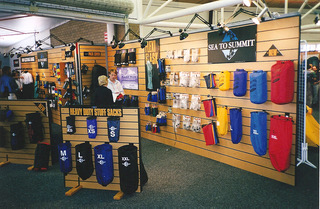
Early trade show, displaying Sea To Sumimit stuff sacks, gaiters, liners, map cases, dry bags, dry towels
"I thought it would be a good match," Tim says. "Roland is very practically oriented and quite driven. And I thought I could add my two bob's worth in terms of design but also use the notoriety of the sea to summit expedition to give it credibility."
"From the start, I always sort of questioned my equipment," he told me. "Yeah, this is good, but could it be better?" That question was asked repeatedly at altitude, in bad weather and under genuine pressure and it's the same question that Sea to Summit was built to answer.
.jpeg)
Some of the products that Tim got Roland to make me for my Sea to Summit expedition (canvas duffles, first aid kit).
They started with accessories like sleeping bag liners, stuff sacks and dry bags. That's because these are the kinds of products that required little more than a sewing machine, good design and good material and it was clear to them that this category was consistently underserved by the outdoor industry.
"Accessories were always an afterthought," he explains. "Something that companies made to use up excess fabric left over from making other things. No one paid any attention to stuff sacks. The ones that were available were poorly made, badly designed and most importantly they weren't packaged."
That last point was the insight that changed everything. "A small product needs to sell itself," Tim says. "You can't have it hanging limply on a hook at the back of a shop. But if you put it in attractive packaging with information that sells the benefit, you can get quite technical, and people will buy it." Sea to Summit began packaging each product in its own purpose designed stuff sack with clear technical information printed on the outside. It sounds straightforward now but at the time it was a genuine innovation. "I think we led the world in terms of innovating for small products like stuff sacks and dry bags and sleeping bag liners," Tim says.
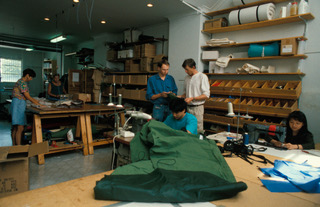
Canvas Divvy Bag swag, one of the earliest products (founders Tim Macartney Snape and Roland Tyson)
The business grew the same way Tim climbed mountains, step by step, without skipping stages. Eight or nine years of grinding away in the Australian market before volume justified moving offshore with a gradual accumulation of manufacturing knowledge until they were designing their own fabrics at mill level. They focused on incremental expansion from accessories into sleeping bags, despite considerable industry scepticism. "It was the same as climbing," Tim says. "I didn't go to Everest to begin with. We started off making small things, making sure they were successful, and gradually it was an upward movement."
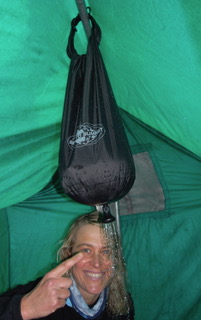
Product testing in the Kimberley
On serious expeditions, small gear problems become big ones quickly. A poorly designed stuff sack isn't just annoying when you're cold and tired and trying to find a dry layer in your pack at altitude. A dry bag that doesn't seal reliably is more than an inconvenience when a river crossing goes wrong or a storm rolls in overnight. Tim understood this from direct experience, and it shaped Sea to Summit's core philosophy from the beginning. The small workhorse essentials matter just as much as the headline gear, and they deserve the same level of design attention.
Tim's approach to choosing and designing gear was shaped by his years of real expedition experience, where every item in the pack had to justify its weight and earn its place. After all, it doesn't matter whether you're heading deep into the Himalaya or going out for an overnight hike in the Grampians.
.jpeg)
Product testing in the Kimberley
And when it comes to the relationship between comfort and adventure, Tim is direct. "The things you remember about a great adventure are the hardships," he told me. "The epics. If you make yourself too comfortable, you lose the very thing you went out there to find." But he is equally clear that good gear is not about suffering unnecessarily. "A true adventurer will use the advantage of modern gear to push the boundaries further out," he says. "You can do more because it's lighter. You can go faster. You can attempt harder things."
If you spend enough time outdoors and researching in hiking and camping forums and you’ll notice Sea to Summit gear is often praised for durability, packability and clever designs. Wild Earth customers, staff and ambassadors regularly call out the brand’s dry bags, stuff sacks, sleeping bags and sleeping mats as the kind of gear that lasts for years.
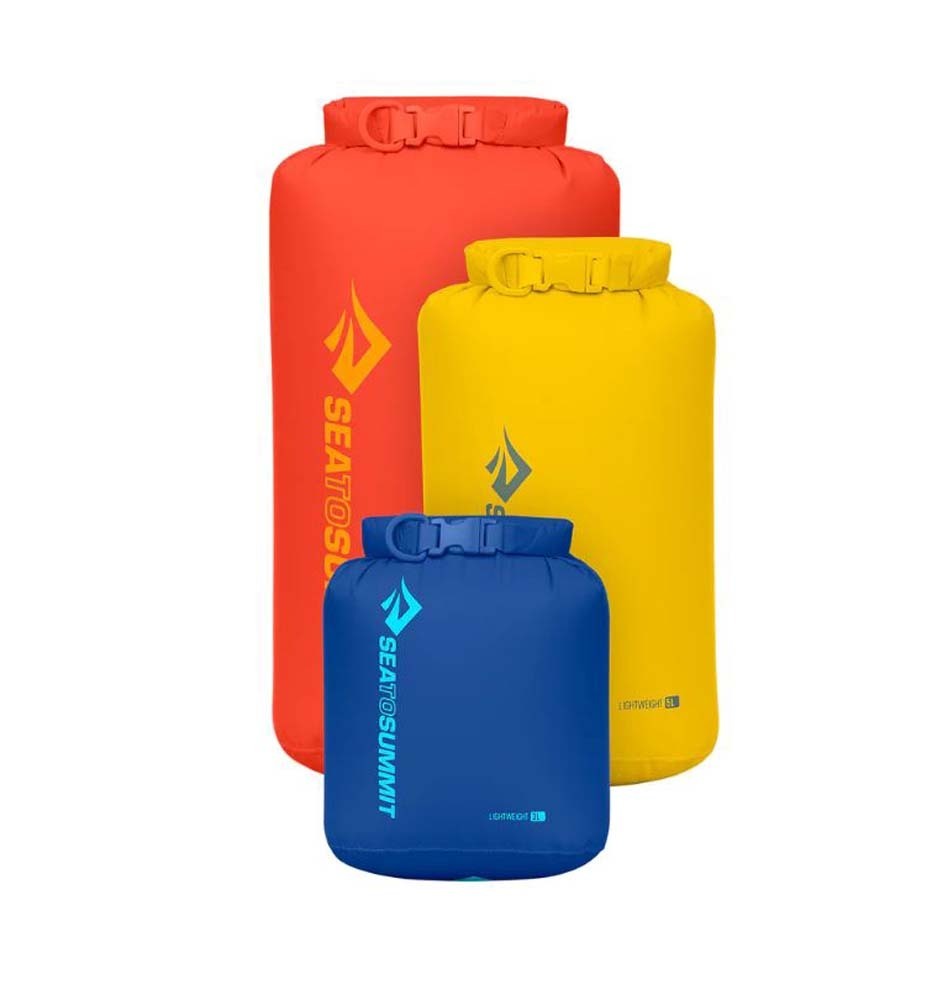
Drybags protect the things that would ruin your trip if they got wet like sleeping bags, layers and electronics. Check out Wild Earth's dry bags to find the right one for your setup.
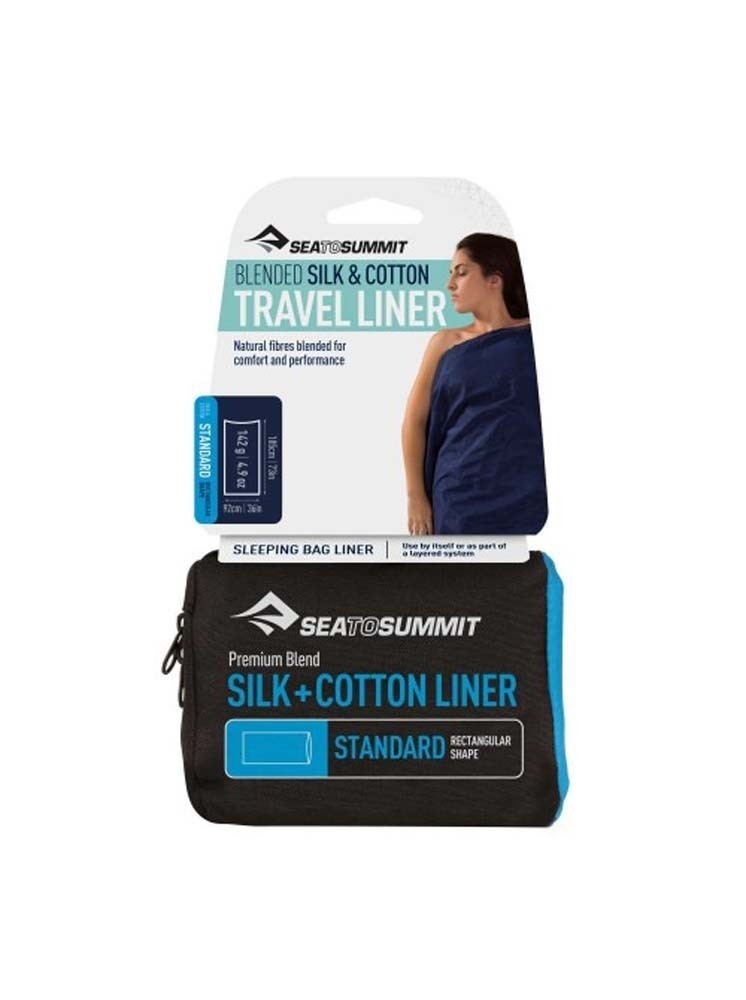
Sleeping bag liners are another high-value item with an epic warmth-to-weight ratio to level up your sleep system. Not only do they keep your bag cleaner for longer, they also increase the temperature value, giving you more flexibility across different conditions and seasons. Explore Wild Earth's sleeping bag liners to find the right one for your setup.
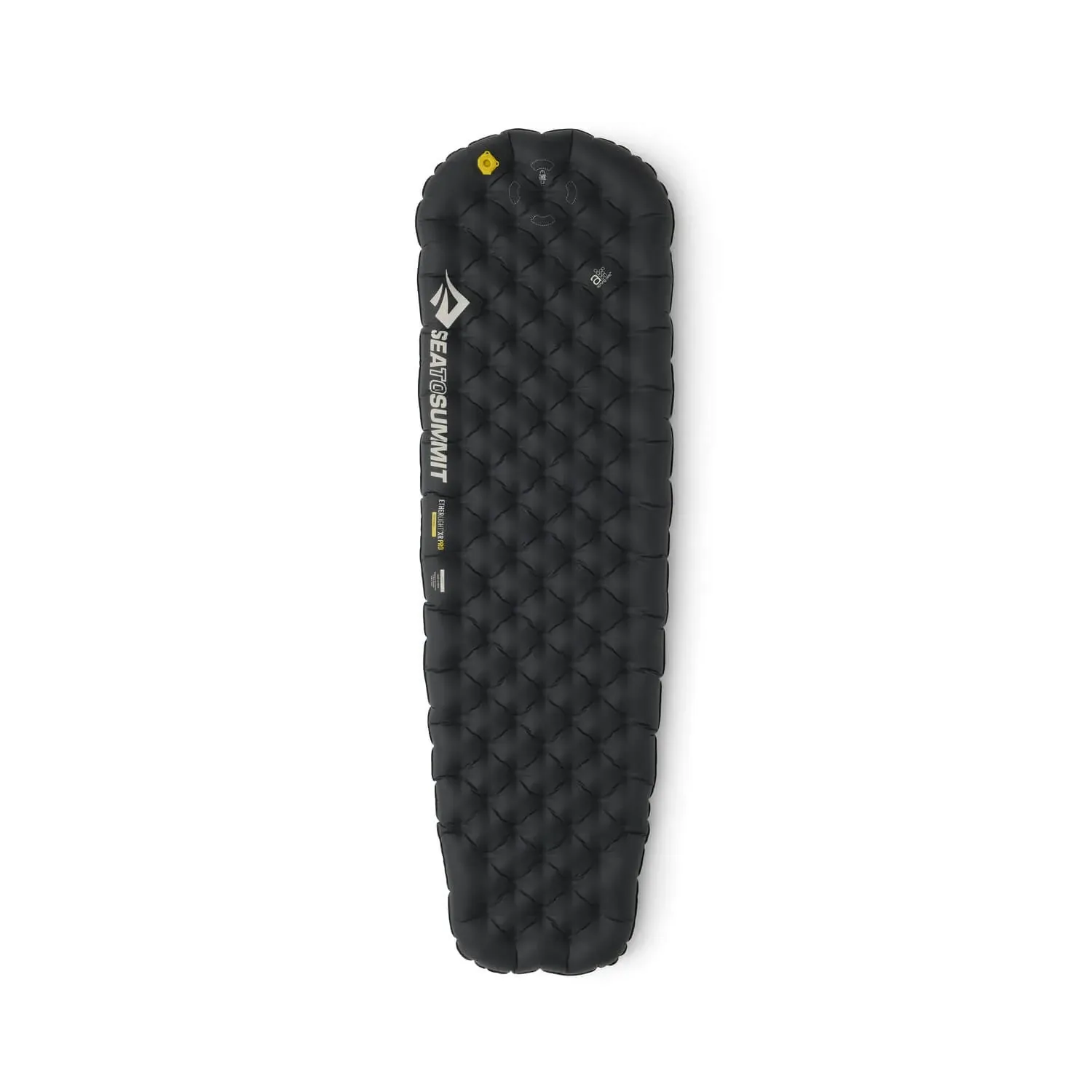
Sleeping mats and pads do more than cushion the ground beneath you. A well-insulated mat keeps you warmer through the night and makes your whole sleep system more effective regardless of the bag you're using because we lose so much heat from under us if we're not careful. See Wild Earth's sleeping mats and pads if you are building or upgrading your camp kit.
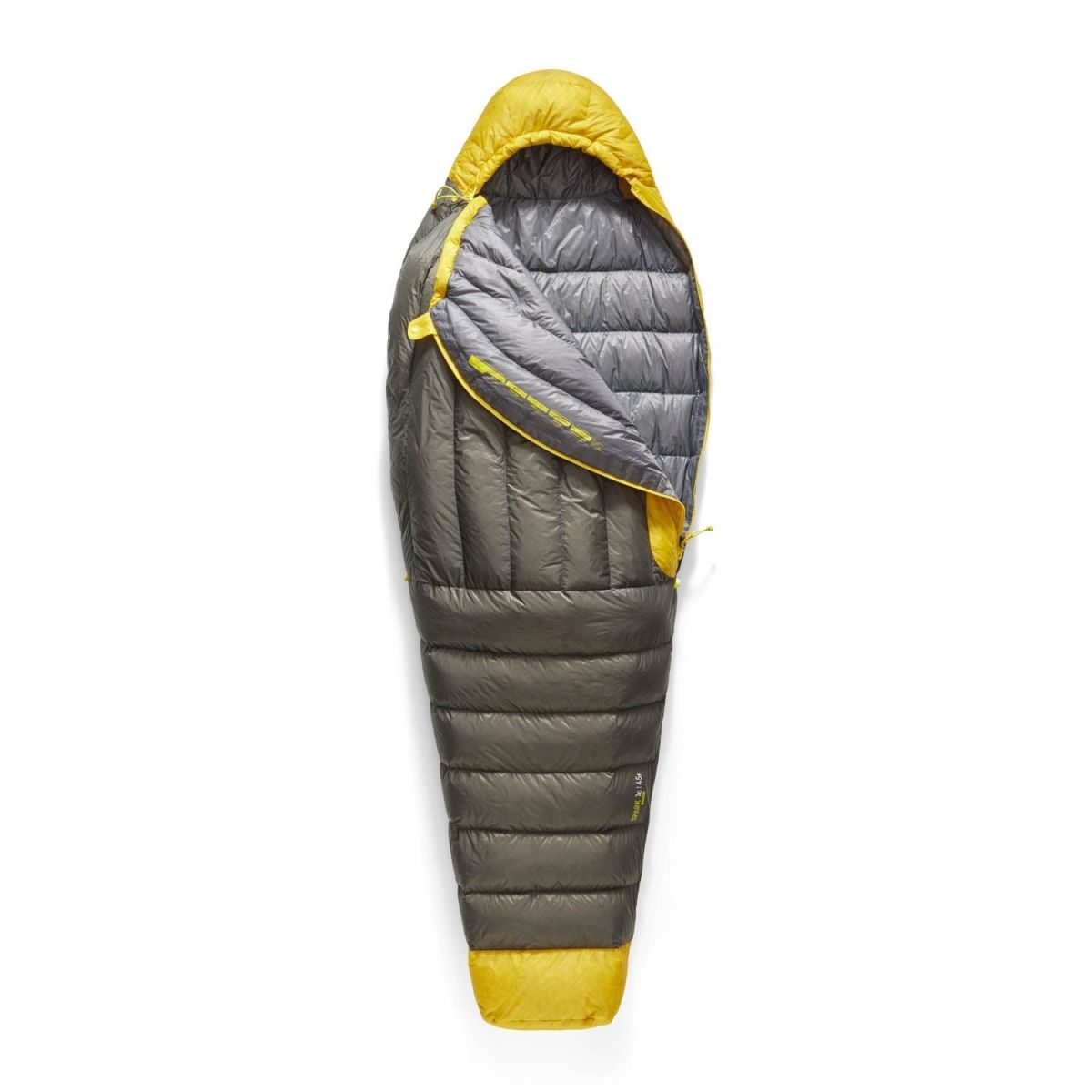
The full Sea to Summit range at Wild Earth covers everything from dry storage and sleep systems to camp kitchen gear, travel accessories and packable hiking essentials. Browse the full Sea to Summit range at Wild Earth to find the pieces that best suit your next trip.
Tim Macartney-Snape's story is not really about reaching the summit of Everest. It is about the way he chose to get there, and the standard he held himself and his gear to every step of the way. "You only get out of life what you put into it," he told me. "Do meaningful adventure. And if you don't do any hard yards, it's not going to be an adventure of consequence."
It's that philosophy built Sea to Summit from a sewing machine and a sleeping bag liner into one of the most trusted outdoor gear brands in the world. And it is a useful lens for thinking about your own kit before your next trip, whatever that trip looks like.
Ask better questions of your gear like, What problem does it solve? What weight does it justify? What does it protect? Because the right gear is not always the newest or the most technical option on the shelf. Instead, it's the gear that does its job when the weather turns or the trail gets harder than expected.
That is what Tim was looking for on every expedition. It is what Sea to Summit was built to deliver. And it is what the name on the label has meant all along.
.jpeg)
Tim en-route to Everest 1990
If Tim’s story has you dreaming of your own Himalayan adventure, he’s also leading World Expeditions’ West Khumbu Exploratory with Tim Macartney-Snape, a 26-day Nepal trek through remote valleys, ancient trade routes and rarely visited parts of the Everest region.
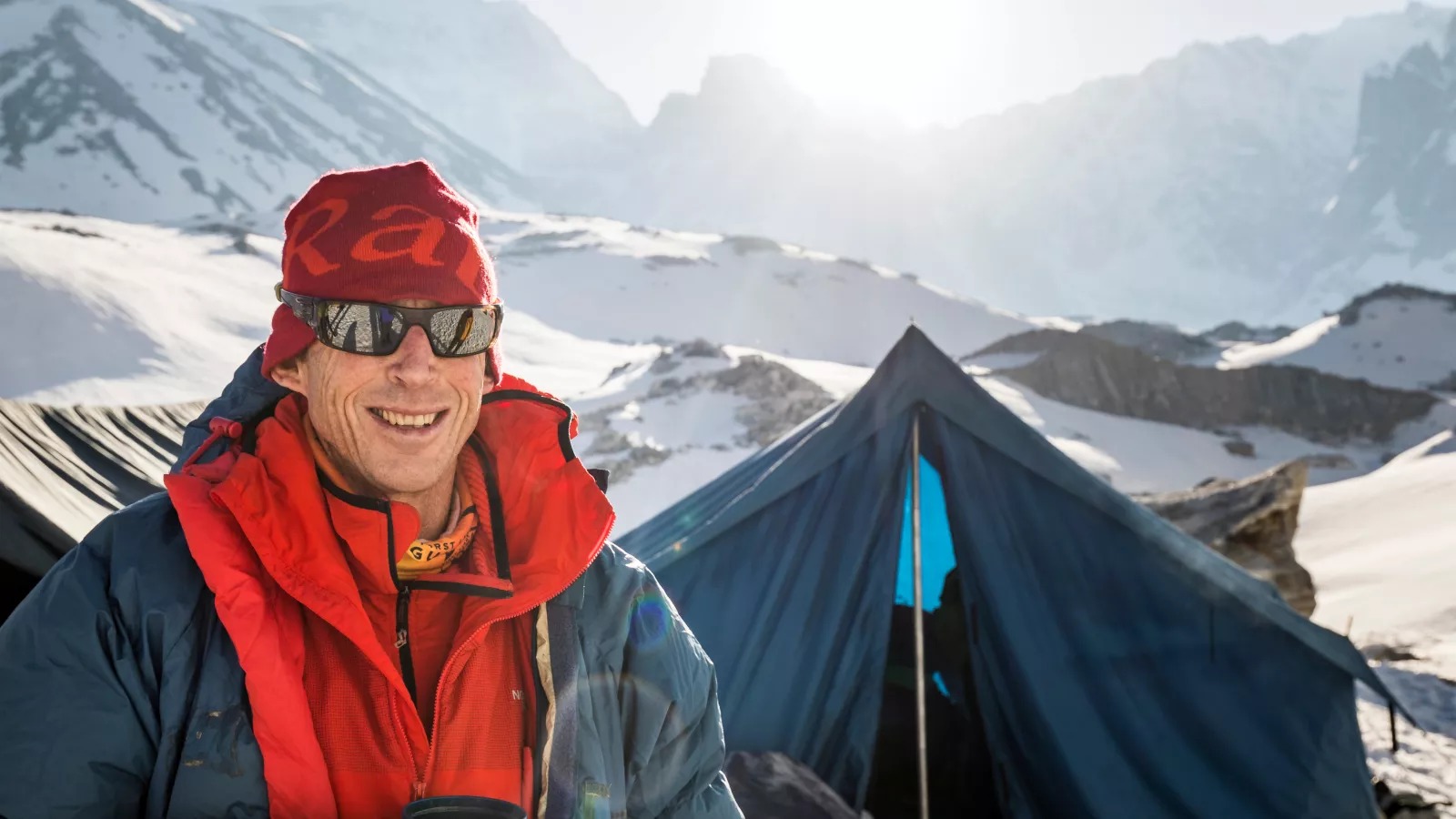
West Khumbu Exploratory with Tim Macartney-Snape photo by Lachlan Gardiner
If exploring cold environments are more your jam, and you're not so keen on altitude and elevation, I'm leading another Extreme Dreams: Arctic expeditions deep in the Arctic in January. A week of snowshoeing, cross-country skiing, and dog sledding across the Finnish tundra, under the Northern Lights.
Not sure what gear you need for your next adventure? Chat with our friendly team of Outdoor Gear Specialists in-store or online today, and don’t forget to share your adventures with us on Instagram by tagging @wildearthaustralia in your next post.
Learn how to layer for winter with a base layer, fleece or mid-layer, insulated jacket and waterproof shell. Based on multiple winter seasons in Nagano, Japan, this guide explains how to stay warm, dry and comfortable without overheating in cold weather.
Some adventures are planned; others unfold unexpectedly. Lena's spontaneous trip to Nepal became a life-changing trek through the Himalayas, filled with breathtaking landscapes, high-altitude challenges, and unforgettable encounters.
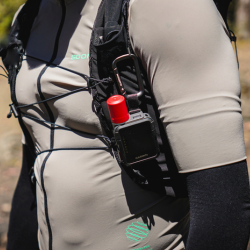
If you’ve ever searched ‘what is a PLB?’ and ended up more confused than when you started, this guide explains the difference, compares the best models in Australia for 2026, and shows how to register and carry them properly.
Washing down gear can feel risky, but it doesn’t have to be. Here’s how to clean down jackets, sleeping bags and quilts without wrecking them.












Using Afterpay you can pay for your order over 8 weeks. There's no interest or added fees* and nothing to pay today. Payment will be automatically taken from your debit or credit card in four equal payments each fortnight over 8 weeks, and you will receive your order immediately.
You simply need:
To use this service simply:
Approved AfterPay buyers will require the funds for the first payment to be available on their card at time of checkout, however the first payment won't be deducted for 14 days. First time AfterPay buyers will need to make the first instalment payment at the time of their purchase.
If you wish to return your goods you can choose to receive an exchange, or the Afterpay payment plan can be cancelled before the first payment at no charge. *If you fail to have sufficient funds available for AfterPay to automatically deduct payment on due instalment dates you will be charged a late fee of $10, and if the instalment payment remains overdue, an additional $7 will be charged one week later.
With AfterPay, there's no waiting and we'll ship out your order immediately as normal.

When you want to go now, sometimes it's handy to pay later. That's why, we offer interest free payment plans from two of Australia's favourite Buy now, Pay later services.