Total Items: 0
Sub Total: $0.00


Planning the Camino? I walked 900km on the Camino Francés to Santiago, then on to Finisterre. Here’s what I’d do again (and what I’d change) from training, my packing list, shoes, blisters, accommodation, safety, and gear.
Table of Contents
Hi, I’m Lynne. I’m a hiker, a nurse and midwife, and I work at Wild Earth. I walked the Camino Francés from Saint Jean Pied de Port, France to Santiago, Spain and then I kept going for another four days to Finisterre. All up, it was about 900km, and it went almost perfectly.
I’m not a public speaker and I’m not a guru… I’m just someone who did the walk, learned a lot the practical way, and now I help Camino customers in the Wild Earth store all the time.
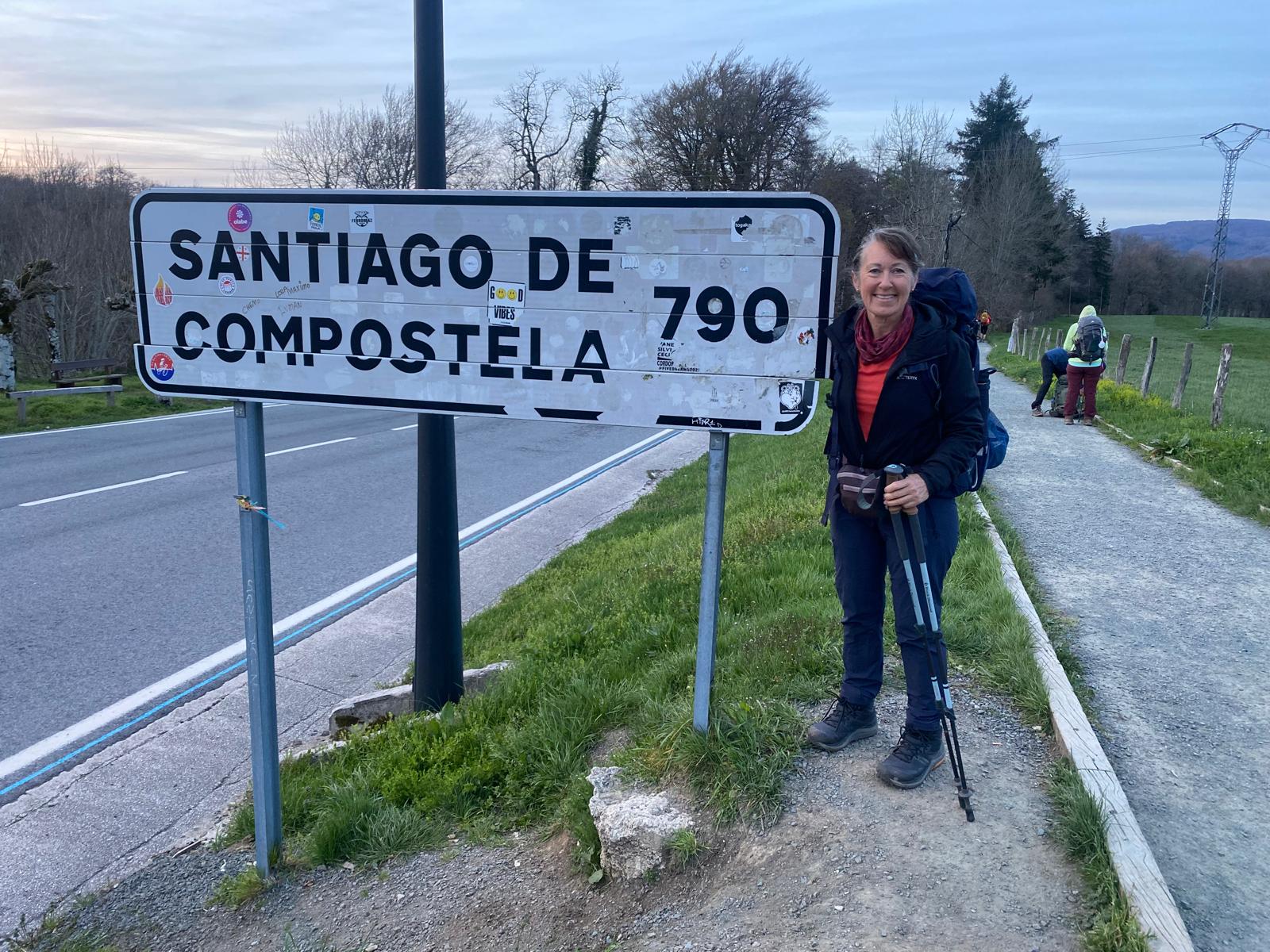
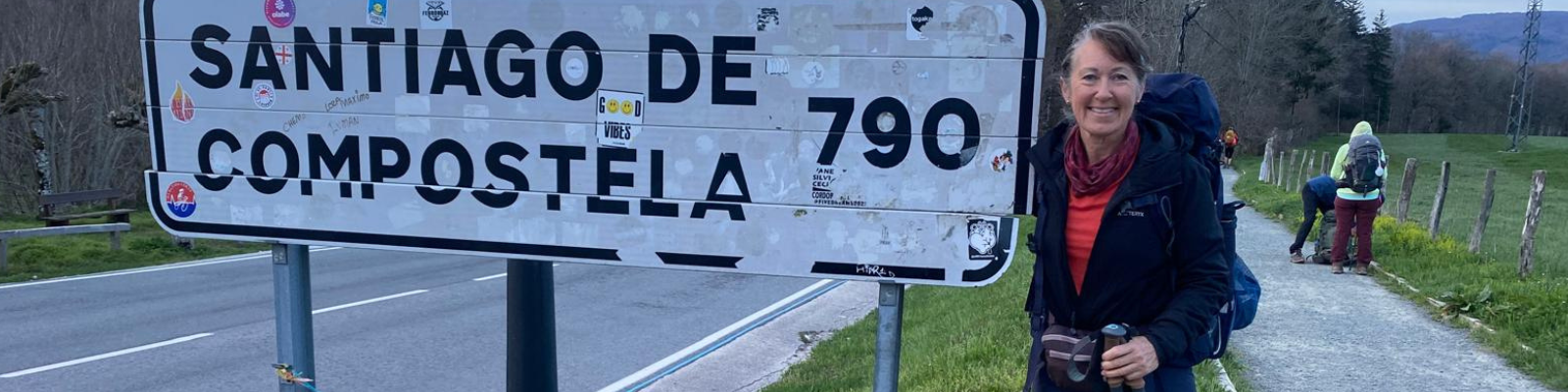
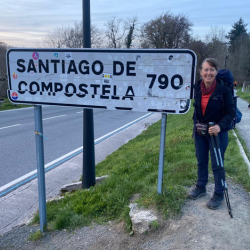
At the famous 790km to Santiago de Compostela Road Sign at the start of the Camino.
If you’re planning on walking the Camino and you’re feeling overwhelmed by gear, blisters, booking beds, hiking boots versus trail runners, and worrying about ‘what if I get there and everything falls apart?’...you’re in safe hands!
The Camino is a long-distance walking route, or really, a whole series of routes, across Spain and beyond that ending in Santiago de Compostela, where the cathedral there holds the traditional relics of St James. People walk it for all kinds of reasons, from fitness, adventure, faith, healing, curiosity, or simply for the love of Spanish history, food and wine.
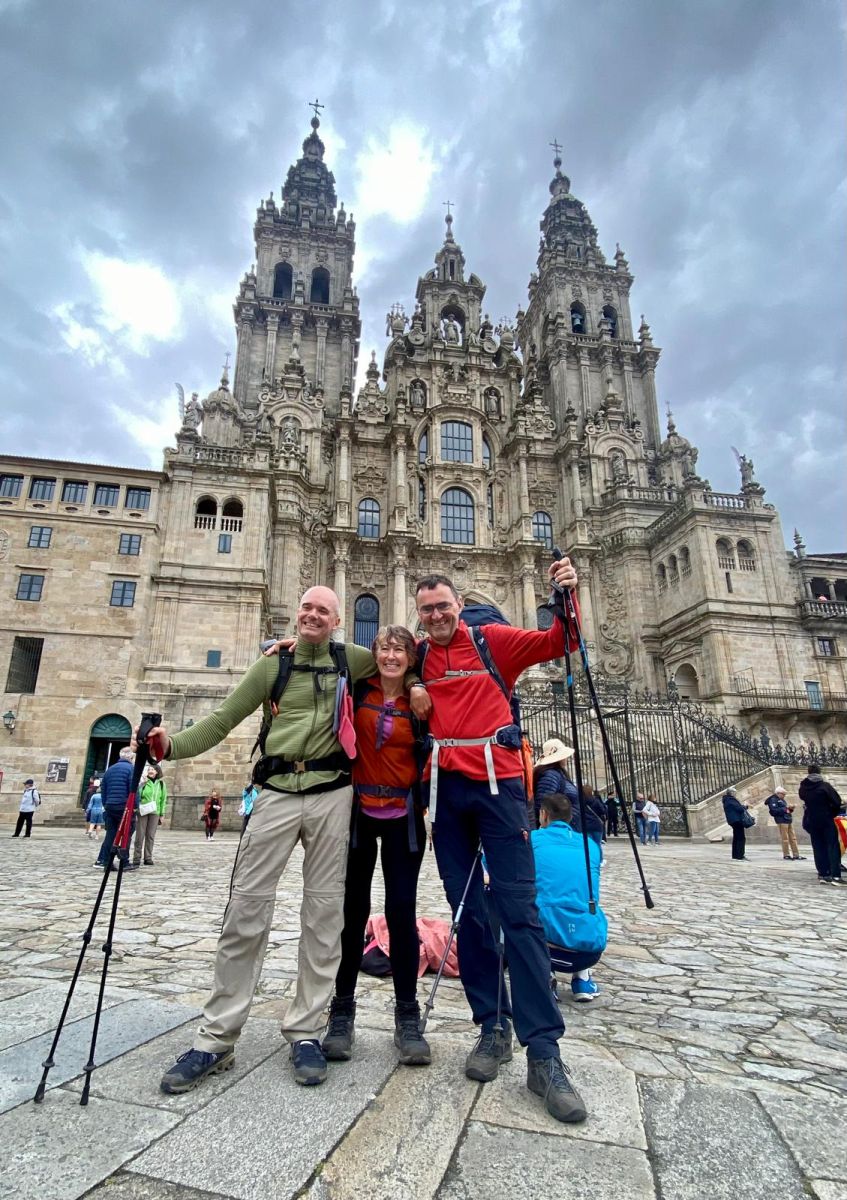
Pilgrim community celebrating outside the Santiago de Compostela Cathedral
It's one of the easiest big adventures in the world to actually pull off because the infrastructure is incredible. You don't need to carry a tent. You dont' need wilderness navigation skills and you're never far from a town, a bed, a café, a bathroom, or help if you need it.
This guide is written for total beginners with a very Aussie perspective. I’ll share what to pack, what it feels like, what to expect in accommodation, how to avoid the classic mistakes, and how to make Day 1 (the scary one) feel doable. This article is everything I’d tell you if you walked into the store and said ‘Lynne, help! I’m doing the Camino’.
If you prefer to watch the full two-hour in-store Camino workshop I gave, you can check it out below:
The Camino is an 800 year old pilgrimage that ends in Santiago de Compostela, Spain. It is the sort of walk that has tradition and meaning built into it, but it is also very practical. You walk, you eat, you sleep, you stamp your credencial (a paper you get at the start and stamp along the way), and you do it again the next day.
There are many different routes and most of them end in Santiago, Spain. You can also walk on to Finisterre, which is what I did, and it is honestly one of the best add-ons you can do if you have the time and your body is feeling good.
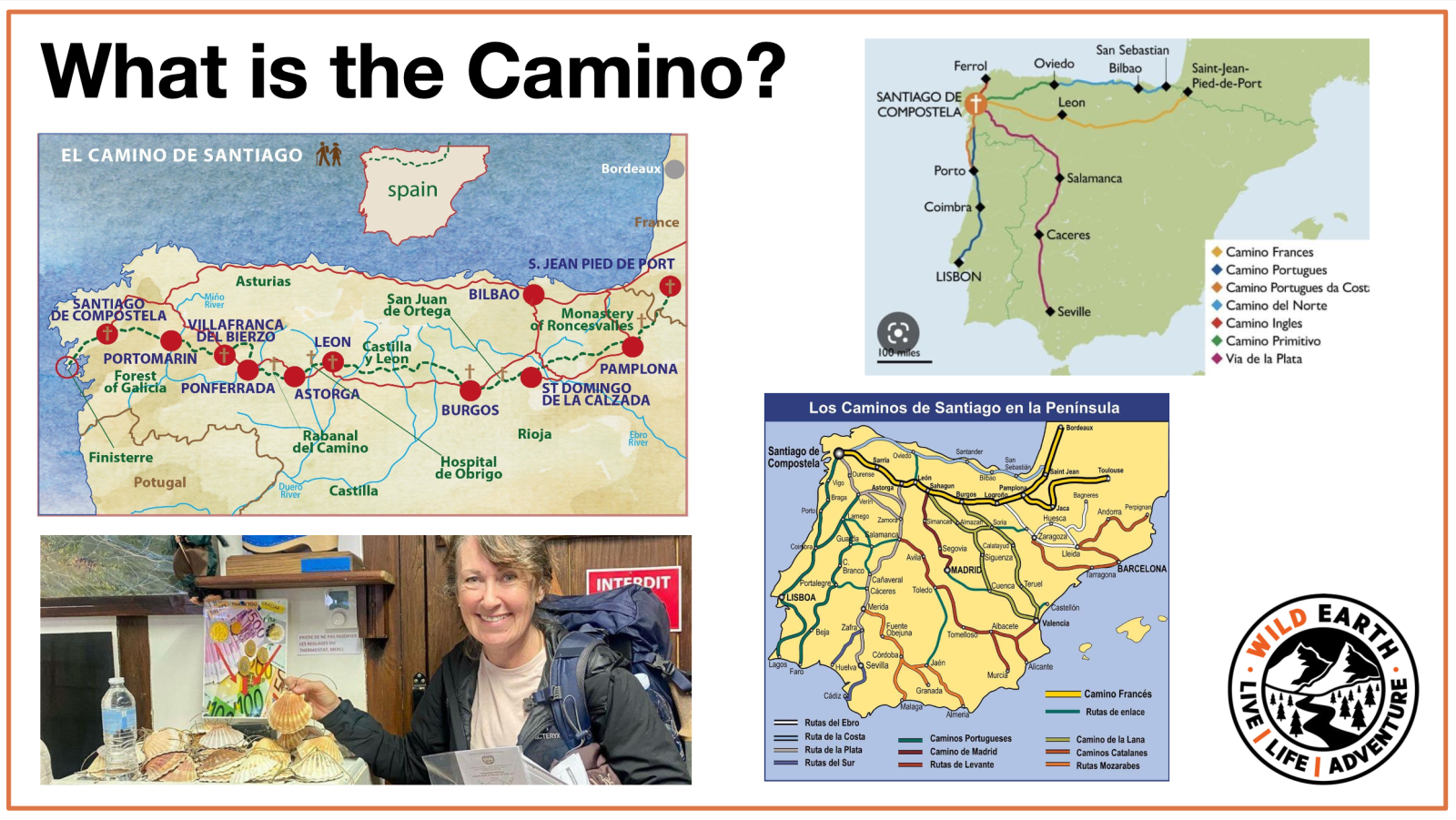
This is the best known route and it shows, with loads of infrastructure, plenty of albergues, cafés, water points, and other pilgrims to meet along the way. If you want a first Camino experience where it is easier to find your rhythm and you are less likely to feel stuck or scared, this is usually the one I recommend. It is also the easiest to make it up as you go because there are so many options each day.
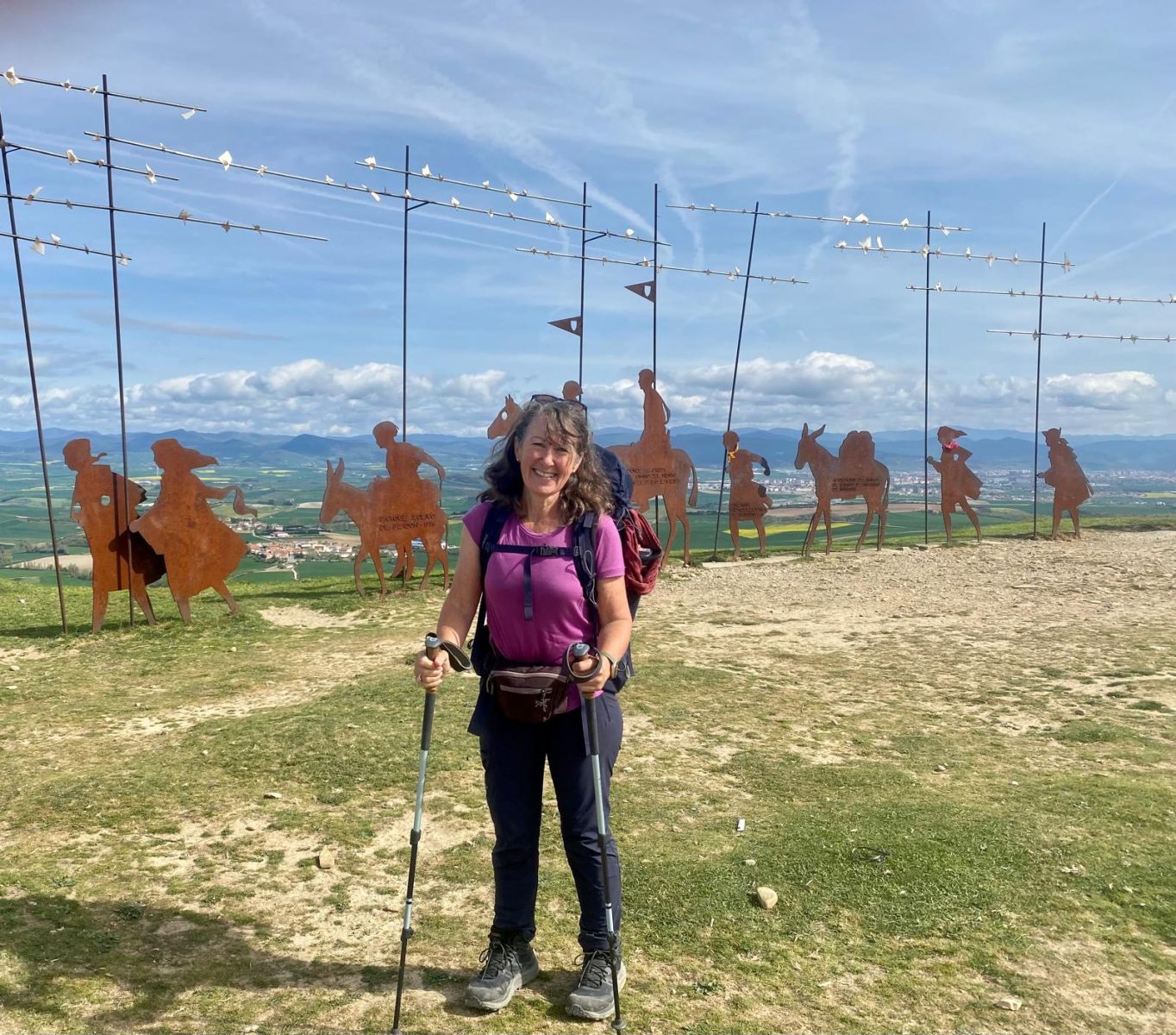
The famous metal pilgrim sculptures at Alto del Perdon on the Camino Frances route
This trail hugs the northern coast of Spain. The scenery is incredible, but it can be more physically demanding and, in places, accommodation can be more spaced out. If you love the coastline and you do not mind a bit more effort, it is a ripper.
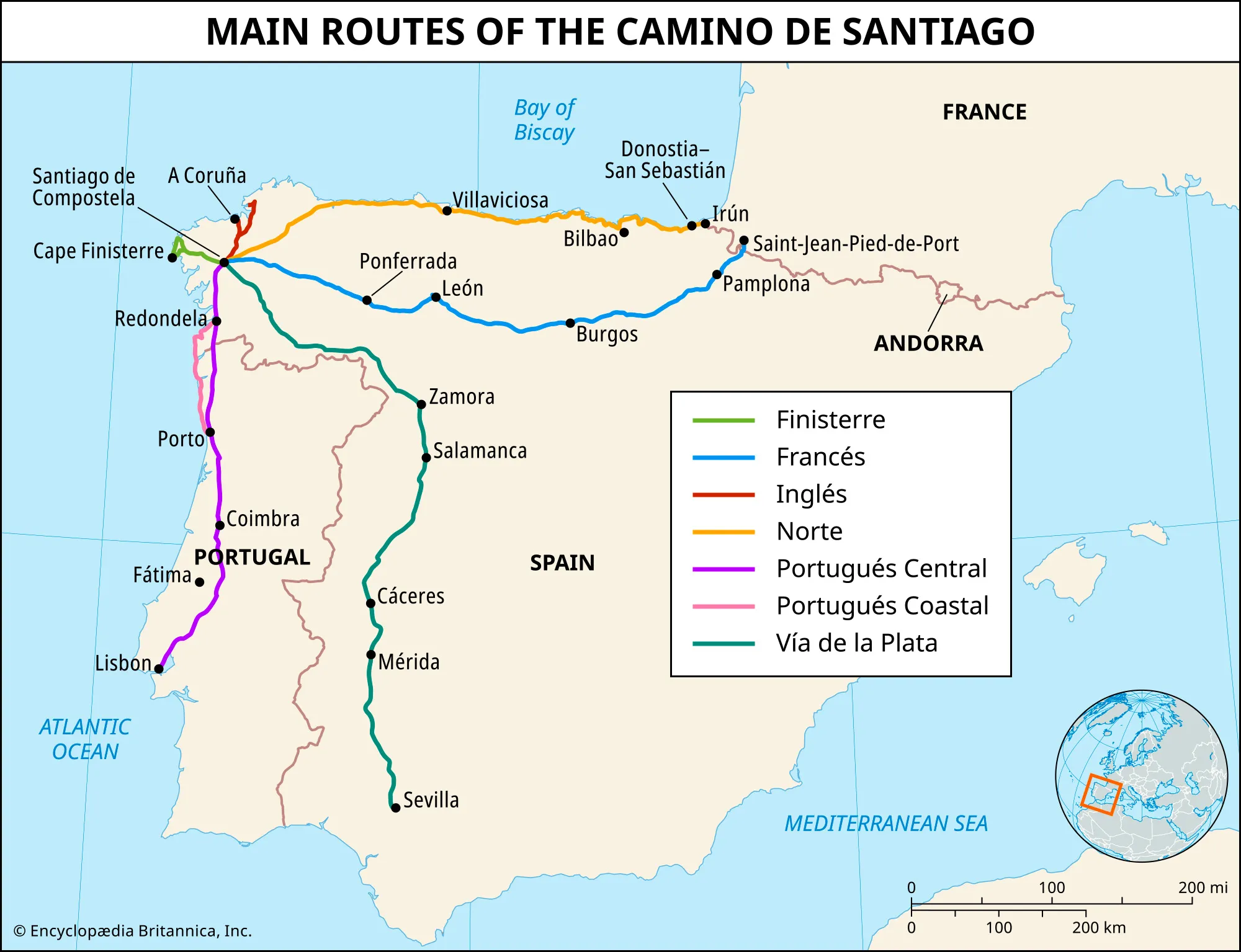
A lot of people start in Porto and walk north. You can choose the coastal route, the central route, or add the Spiritual Variant near the top, which includes a boat crossing. It is a gorgeous way to do it. The vibe can feel a bit calmer than the Francés, but it can also mean slightly fewer accommodation choices in smaller towns, depending on season.
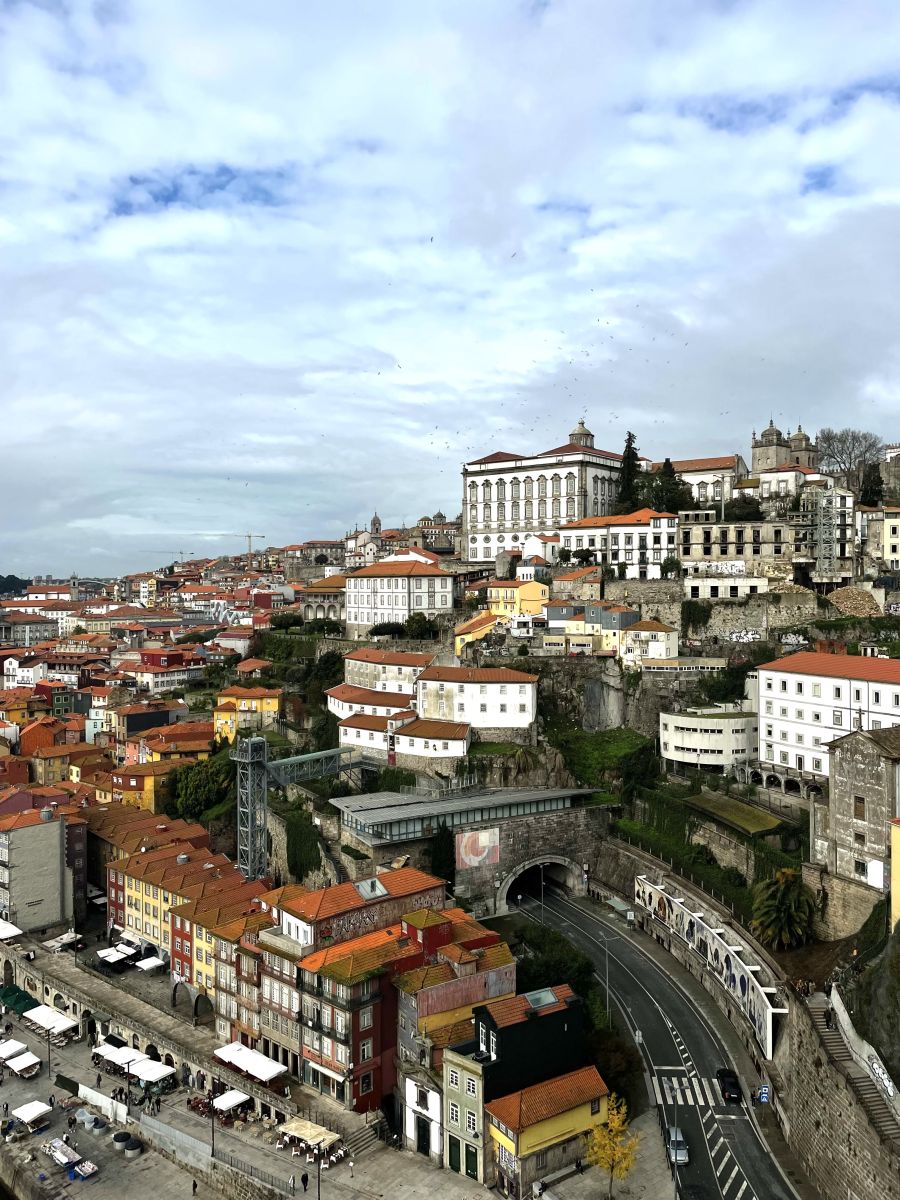
The City of Porto, Camino Portugués
This one is often described as the mountain Camino. Less busy with much more inclines. I have not walked it yet, but if someone tells me they want quieter days and do not mind hard yards, it is usually on their shortlist.
There are others too, including the Via de la Plata, which can involve longer gaps between towns. That style suits some people, but I generally suggest getting a first Camino under your belt before choosing a route with fewer services.
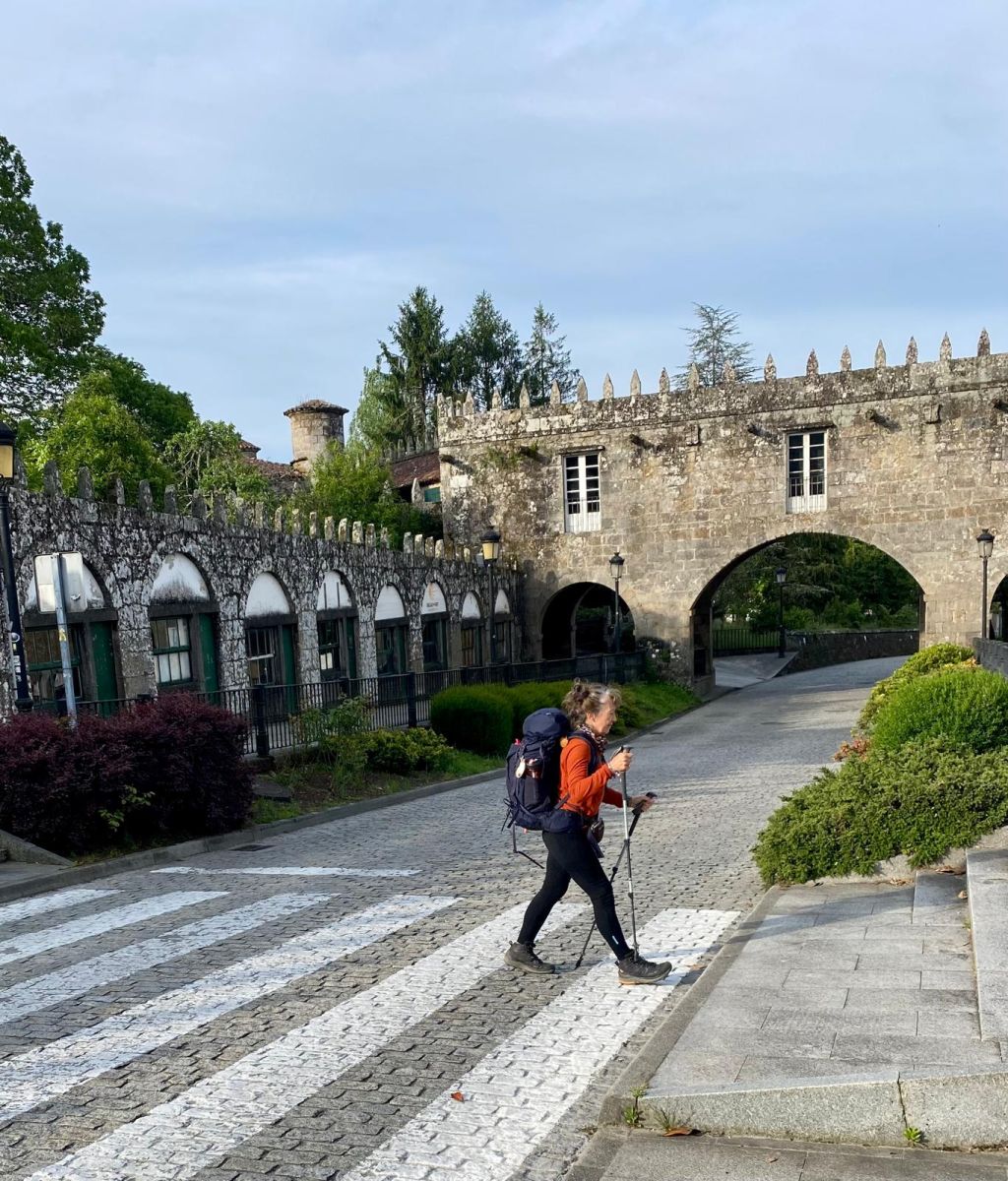
Walking The Way.
If you are wondering what Camino is right for you, I’d ask yourself three questions.
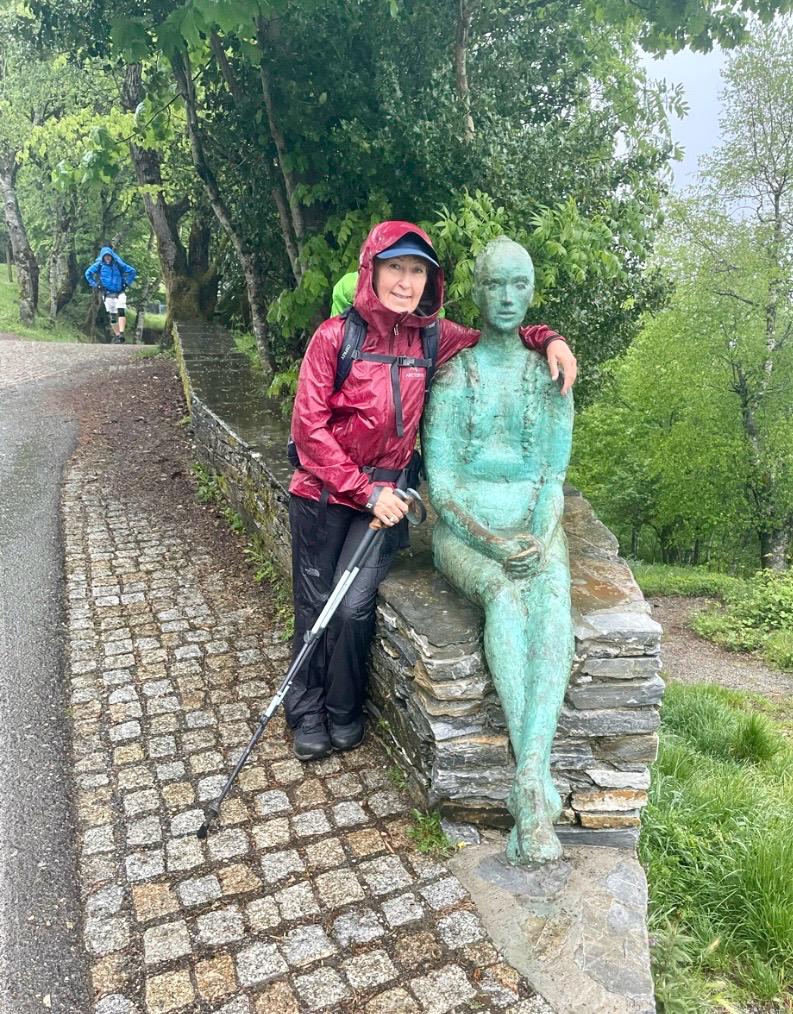
My wet weather friend in Galicia.
The best time to walk the Camino is usually May, June, or September, when temperatures are mild, rainfall is lower, and the trail is fully open with long daylight hours. May and June bring green landscapes and wildflowers, while September offers a beautiful harvest season feel, especially through Rioja.
There are so many ways to do it:
But whichever way you do it, the big thing you need to remember is that this adventure can absolutely be life-changing!
I have done other long walks, including the Coast to Coast in England, and I loved them. But the Camino is in a different category. It's very special.
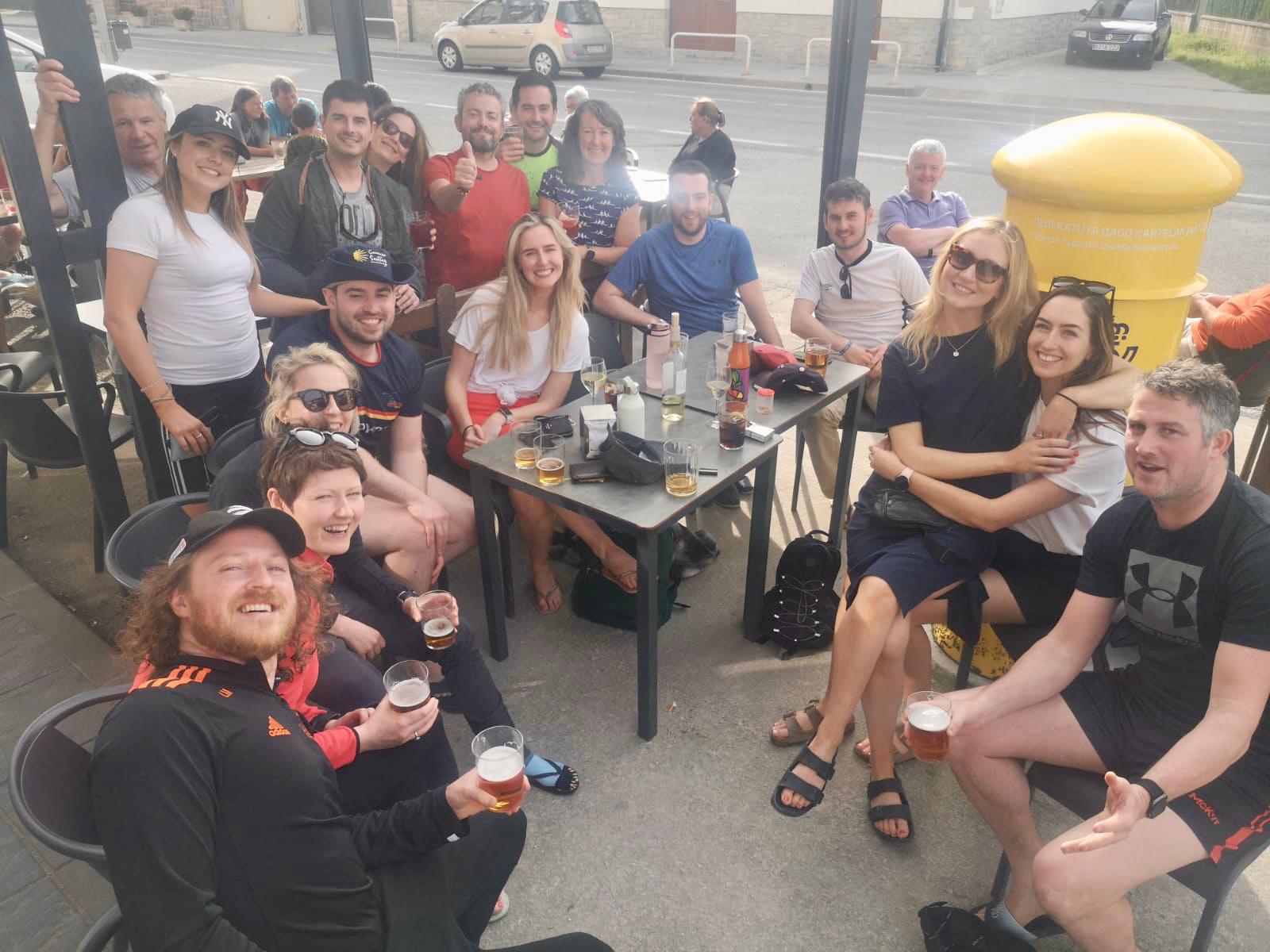
Socialising with the crew after a big day of walking on the Camino Frances
I started walking on April 7 from Saint Jean Pied de Port and walked to Santiago. I stayed a couple of nights, then walked the extra days to Finisterre. After that, I took the bus back to Santiago and went down to Porto for a couple of days.
It took me 36 days to reach Santiago, then 4 to Finisterre, which is funny because my daughter walked it years earlier and also did it in 40 days as well!
I was totally inspired after I watched the film, The Way. I just got that tug that a lot of us get, and thought right, I have to do that! If you haven’t watched it, I really recommend it. I went alone, but I wasn’t there to process any big life drama… I just really wanted to do it. That being said, I still found it had a way of giving me something special that I needed, whether I was looking for it or not. It’s simply magical!
When people ask 'how long does it take to walk the Camino?', they are usually looking into the Camino Francés and while everyone’s pace is different, the journey is traditionally broken into 33 stages (about 33-35 days).
Here is how those days are typically divided across the four distinct regions:
People fly in all sorts of ways, from Paris, Barcelona, Madrid, London (wherever suits). I flew into Barcelona as I did not have other travel plans. From there I had a couple of days to regroup and then I caught a train up to Pamplona, stayed one night, and caught the bus to Saint Jean from there.
One thing I worried about, like everyone does, was ‘what if I arrive in Spain and my pack does not show up?’. My gear was precious because I had planned it so carefully. I wanted my main pack as carry-on, but hiking poles cannot go in carry-on.
So here is what I did and it worked really well.
If you do not want to do that, you can buy poles over there. Outdoor gear stores exist in places like Barcelona, Lisbon and Porto, and there are also outdoor shops in some of the bigger towns. But I loved my poles and I wanted my own setup.
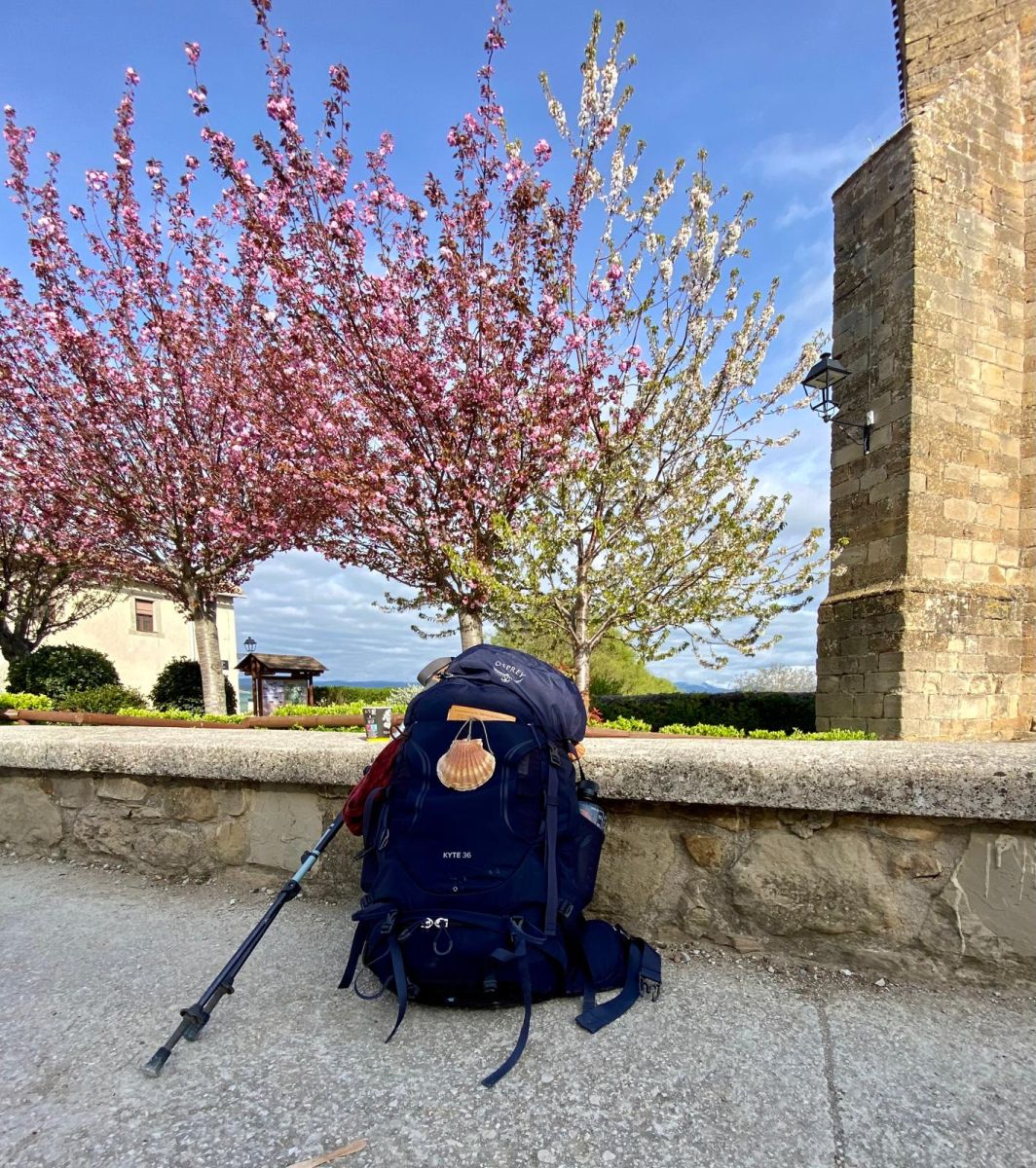
My beloved Osprey backpack, complete with hiking poles and shell!
When you arrive in Saint Jean, the first thing you should do is head to the Camino office and pick up your credencial. This is your pilgrim passport and you’ll stamp it along the way at each place you stay and at the local churches if you like.
I loved mine. I filled it completely with stamps and it is one of my favourite mementos. In Saint Jean there was a dish of shells when I was there. You could choose one, leave a donation, and tie it on your pack.
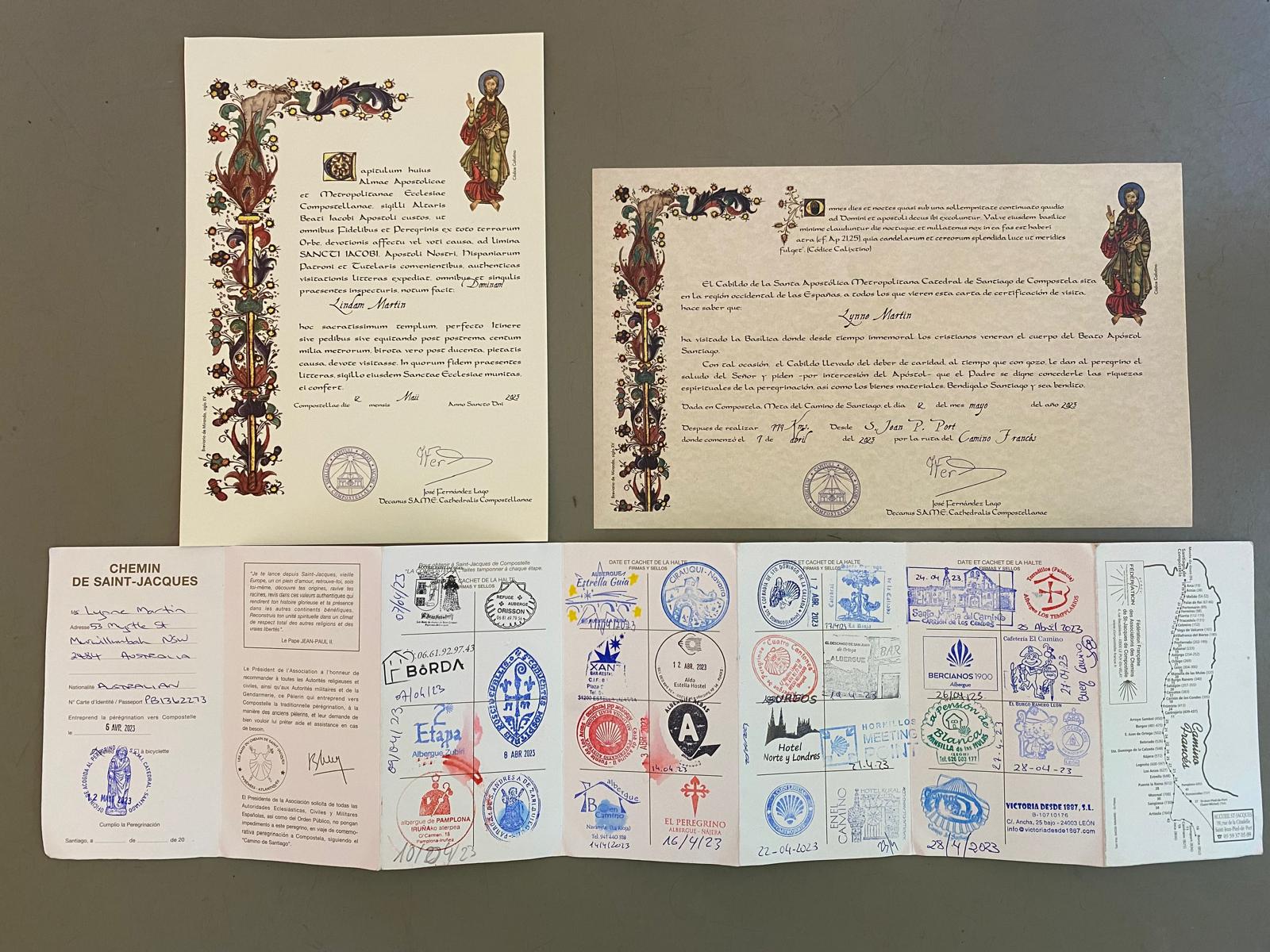
Camino de Santiago pilgrim passport credencial with stamps and official completion certificate
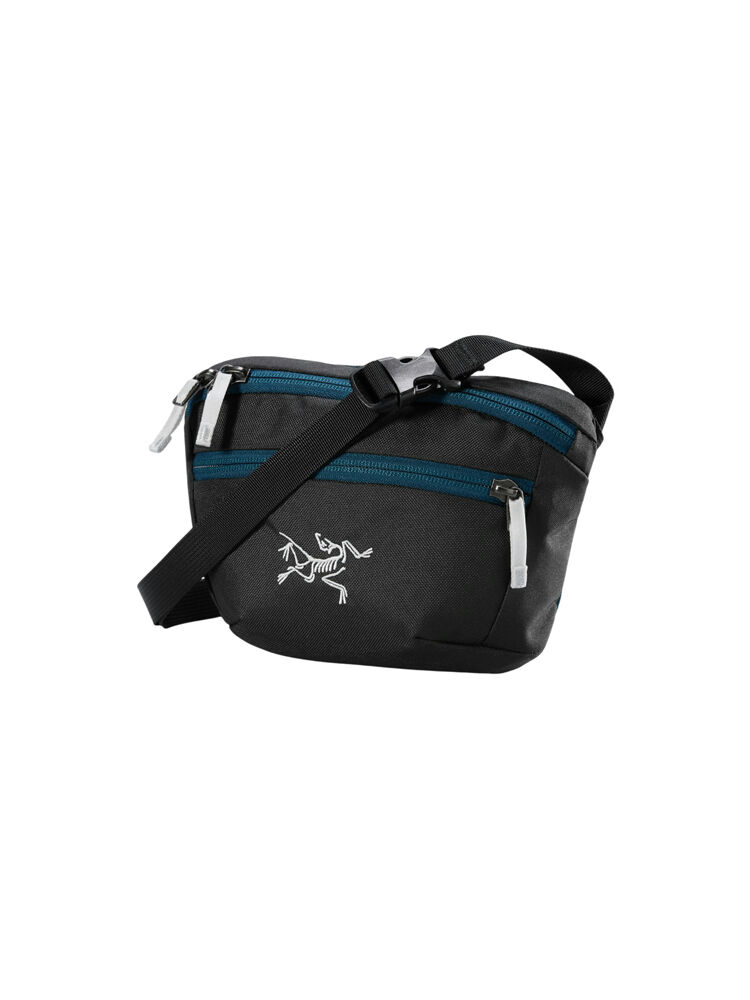
I think this is one of my strongest practical tips! A Waist Bag is an invaluable addition to your Camino kit, you can wear it around the waist or across the shoulder depending on your preference.
Every day you will be asked for your credencial and your payment for the bed, often cash in euros. It is easiest if you carry a waist bag and keep all the important stuff together and easily accessible.
This small Arcteryx waist bag came with me when I stopped for coffee. It went with me to the shower. It went under my pillow at night. I never left it behind.
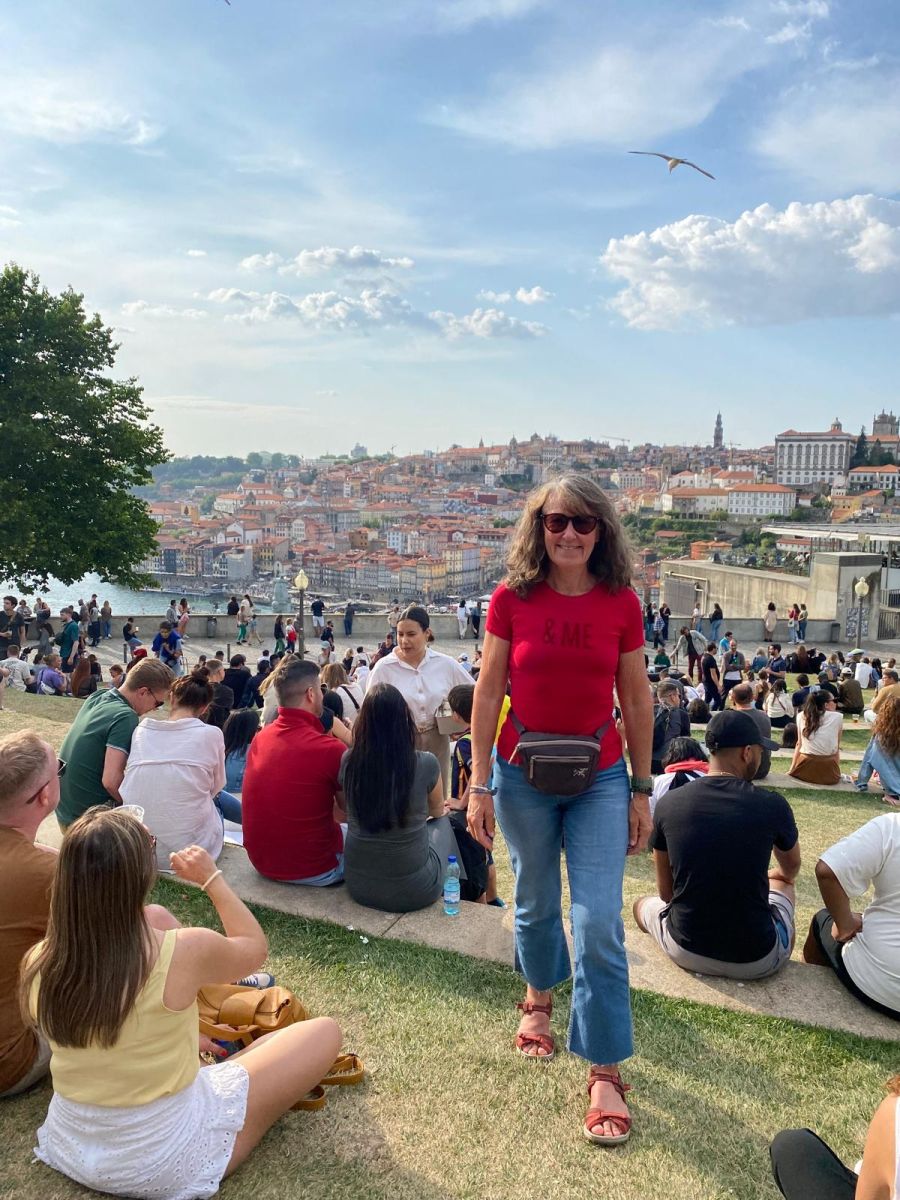
Me with my Waist Bag in Porto
This is where people get stressed out, but there is no need to panic. Some people never book and they wing the whole thing. I wanted to do that too but I started over Easter and I was told it would book out. So I booked my first few nights, and after that I found my perfect flow.
My booking strategy - Book 1 day ahead
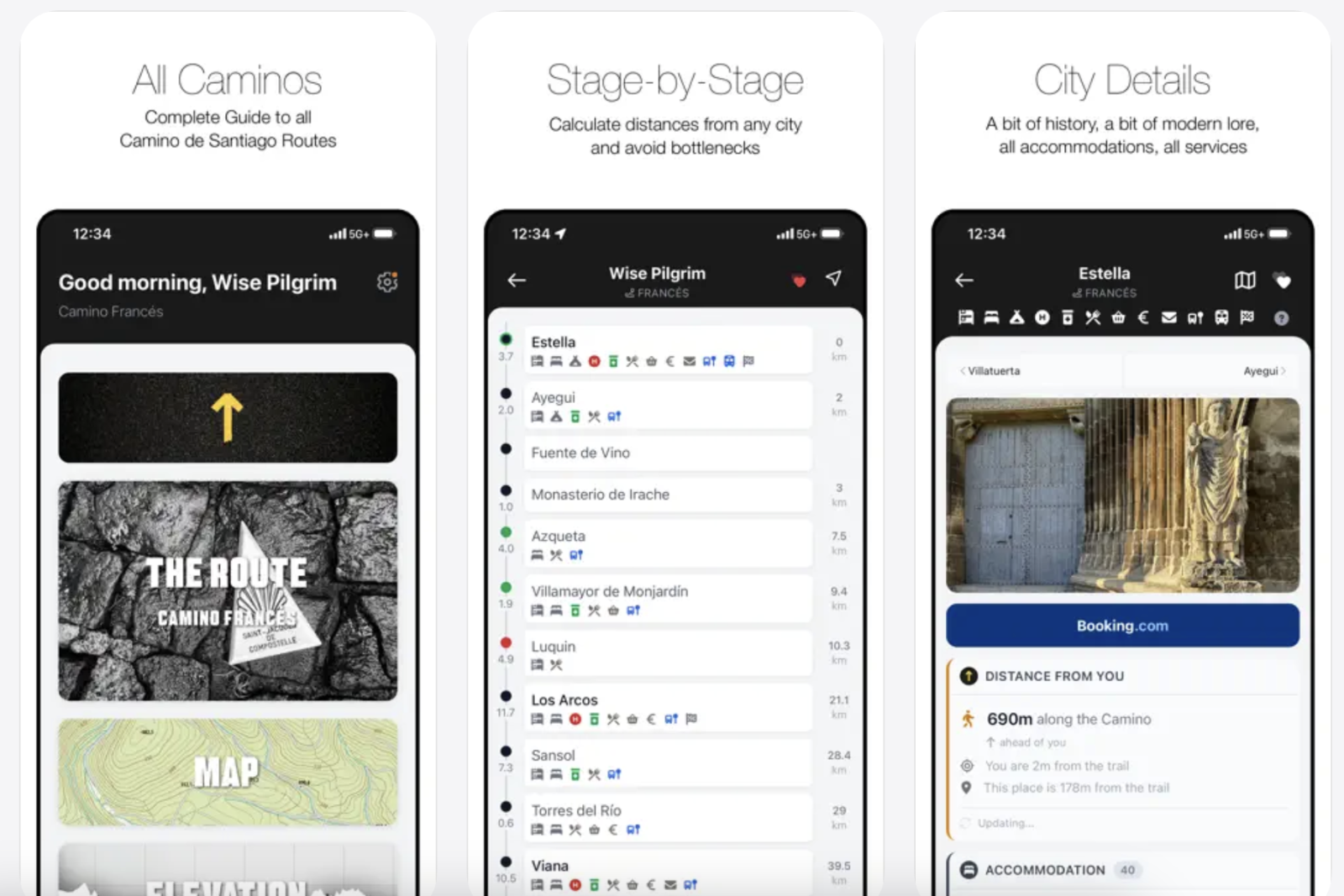
Every afternoon I would decide where I wanted to be tomorrow and book that night. That way I did not spend the day worrying, ‘Will there be a bed? Will I have to walk another 8km? Will I end up in a hotel I did not want?’.
I used an app called Wise Pilgrim. It cost about seven dollars when I bought it. The app:
WhatsApp is huge on the Camino with many people exchanging numbers, messaging about dinner, organising group chats and it really helps you stay connected without needing to walk together all day. It's by far the most used app for connecting with people (it's rare for group dinners to be organised on Signal or Telegram).
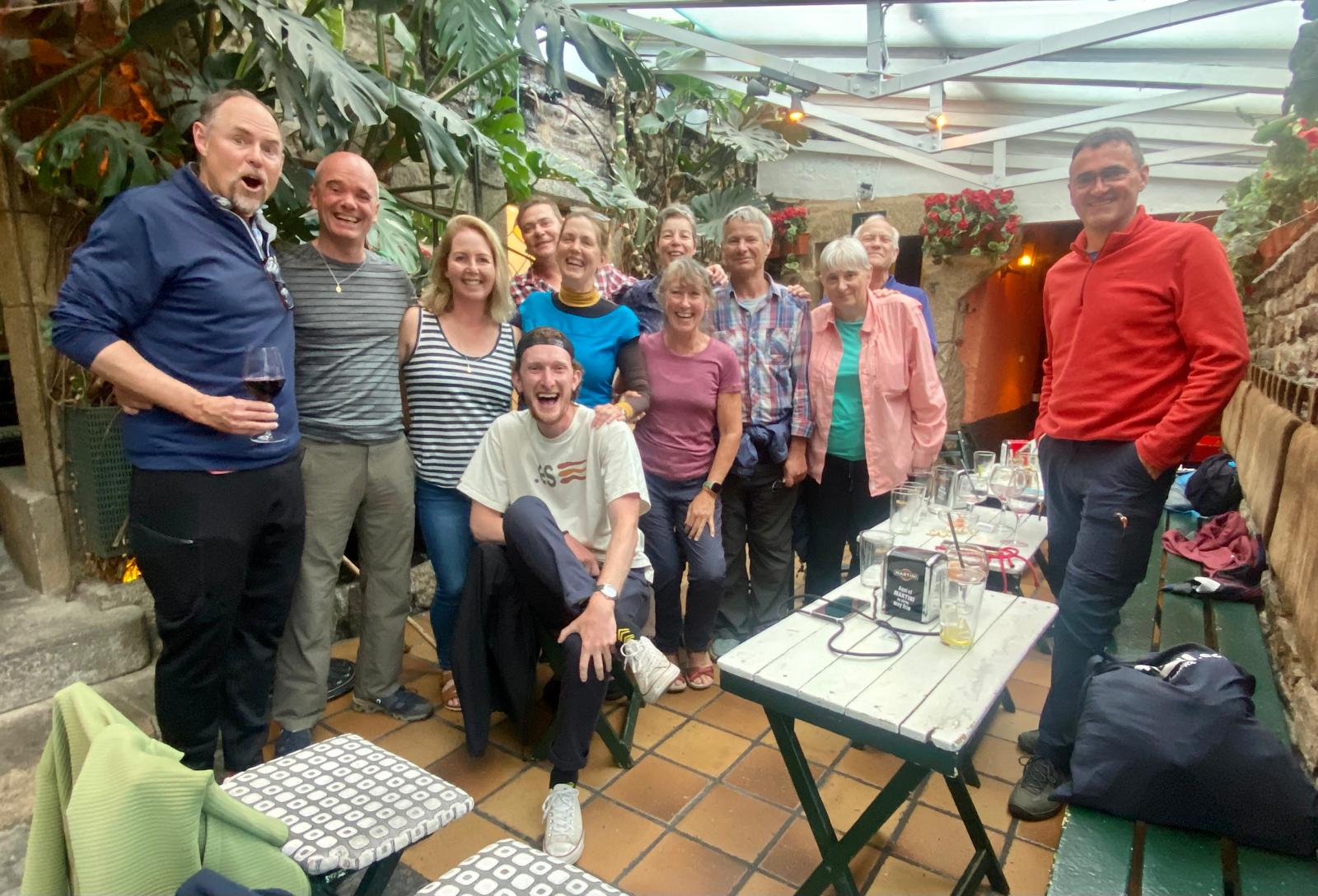
Pilgrims catching up after walking on the Camino Frances stages
For many pilgrims, Day 1 is the most intimidating day of the whole Camino. Not because the distance is impossible, but because it is a big climb, the mountain weather can be unpredictable, and it is your first day so your body is not used to walking big distances yet.
I want to say this clearly. You do not get extra Camino points for suffering on Day 1!
If you are worried about fitness, knees, blisters, or you just want to ease your way into it, consider stopping in Orisson Refugio, about 8 to 9 km in. Orisson is a small pilgrim refuge on the mountain road, and it is basically the perfect half-way point.
In practical terms, it looks like this:
This can be good for beginners because it:
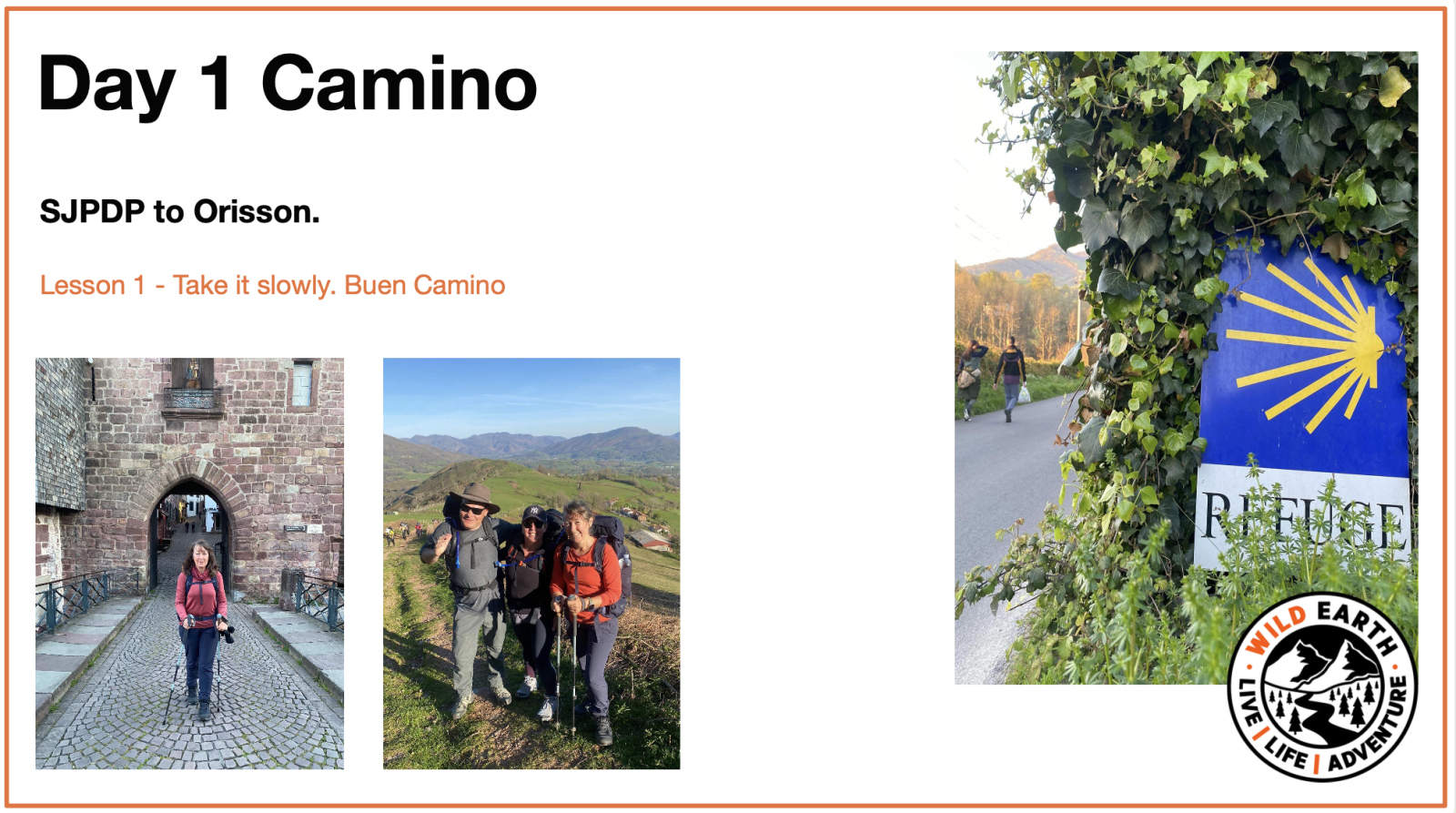
Note! Orisson books out months in advance these days. If you cannot get a bed, you still have options.
Option 1: Taxi or Shuttle
Some people take a shuttle or taxi up from Saint Jean to a higher point, then walk from there so they still avoid doing the entire day in one hit. Ask locally in Saint Jean, because transport options can change seasonally.
Option 2: Take the Valcarlos route
If the weather is bad, snow, heavy fog, storms, the Napoleon Route can be closed and pilgrims are directed to take Valcarlos instead.
Important: The Napoleon Route can open and close depending on weather.
This catches first timers off guard because even if it is sunny in Saint Jean, conditions up in the mountains can be totally different. When I went, the Napoleon Route had opened just days earlier and then closed again right after due to snow.
What you should do the night before:
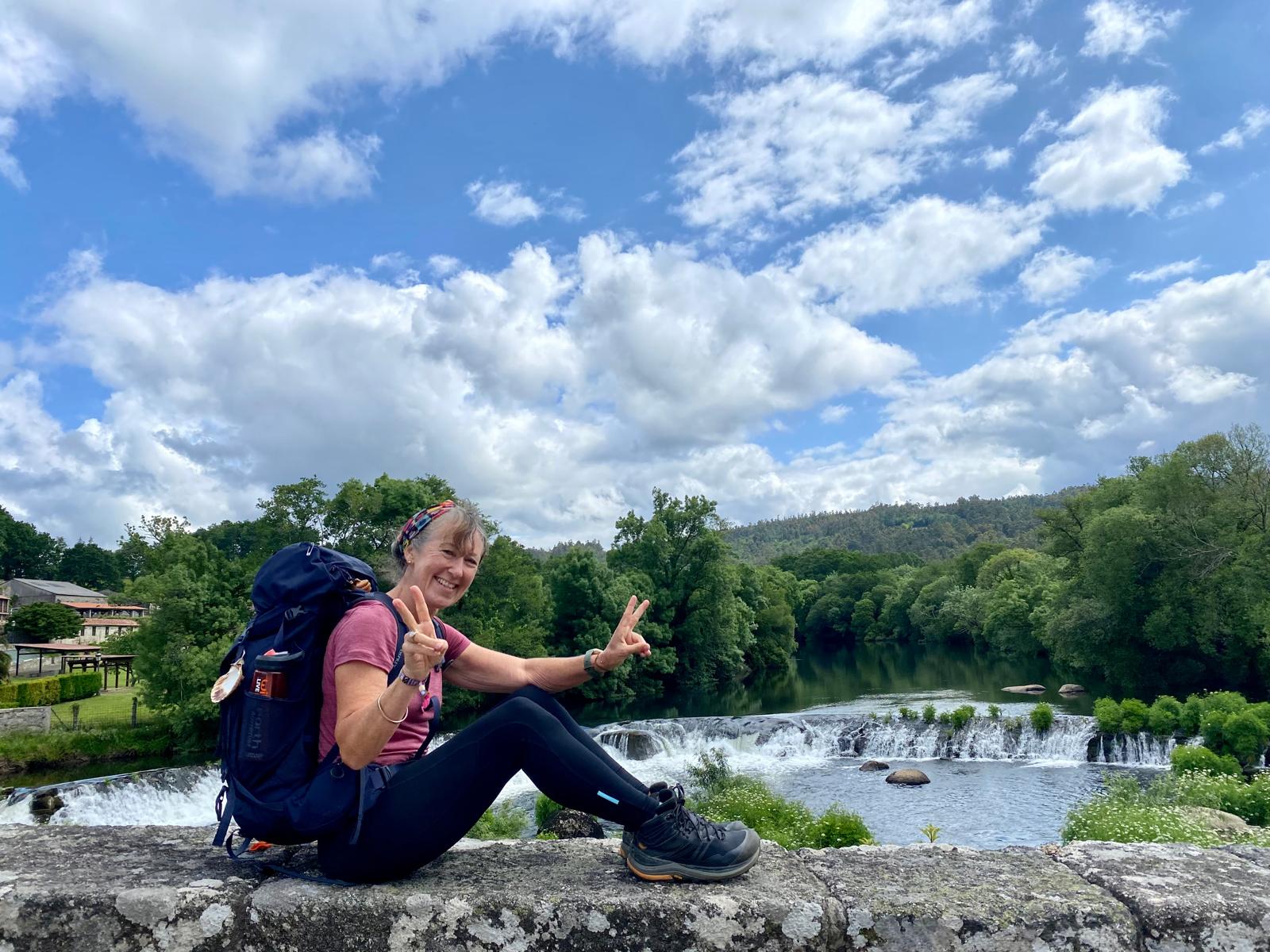
Sitting on a bridge somewhere along the Camino
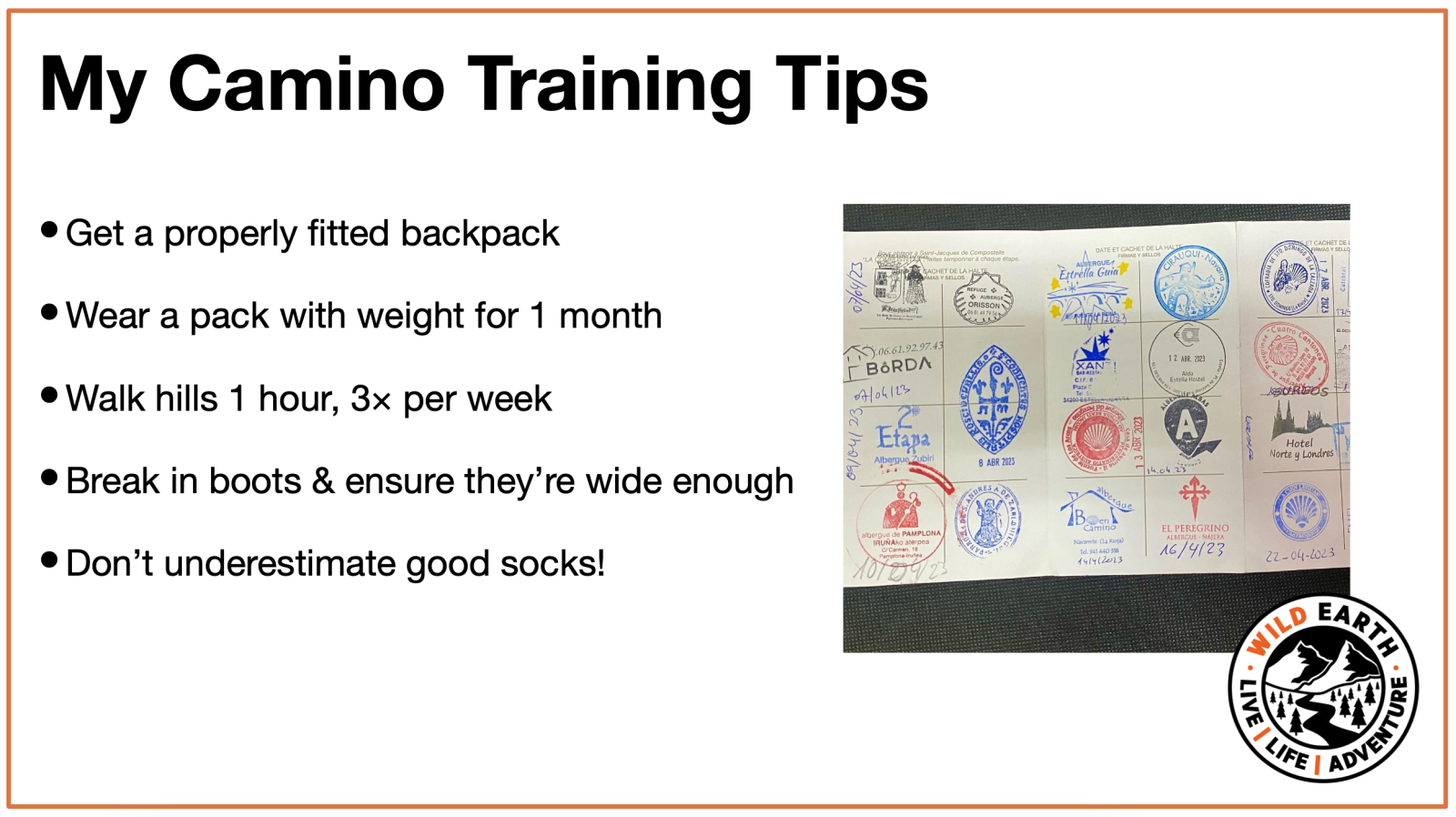
I wore my pack at work with about 5kg in it for a month before I left for the Camino, simply walking around the store. It helped my body adapt before I ever set foot in Spain. Even then, for the first week or two I had little twinges in my pelvis and lower back, then it settled.
Walking hills also helps a lot as it can help get your legs used to hills and steady walking.
If you get injured or your feet give out, it doesn’t have to be the end of your Camino. Luggage transfer is easy.
Often it is around seven Euros and you can arrange through the albergue or your accommodation. Someone will collect your bag and deliver it to the next town so you can walk with a light day pack and arrive to find your gear waiting for you.
Even if you plan to carry your pack, I strongly recommend bringing something small you can use as a day pack. It is handy for showers and for wandering around town in the afternoon.
The Camino is brilliantly signposted, but there are moments where you get a choice. Stay on the main route, or take a variant. I took a few of these and I am really glad I did.
Here are the ones I recommend
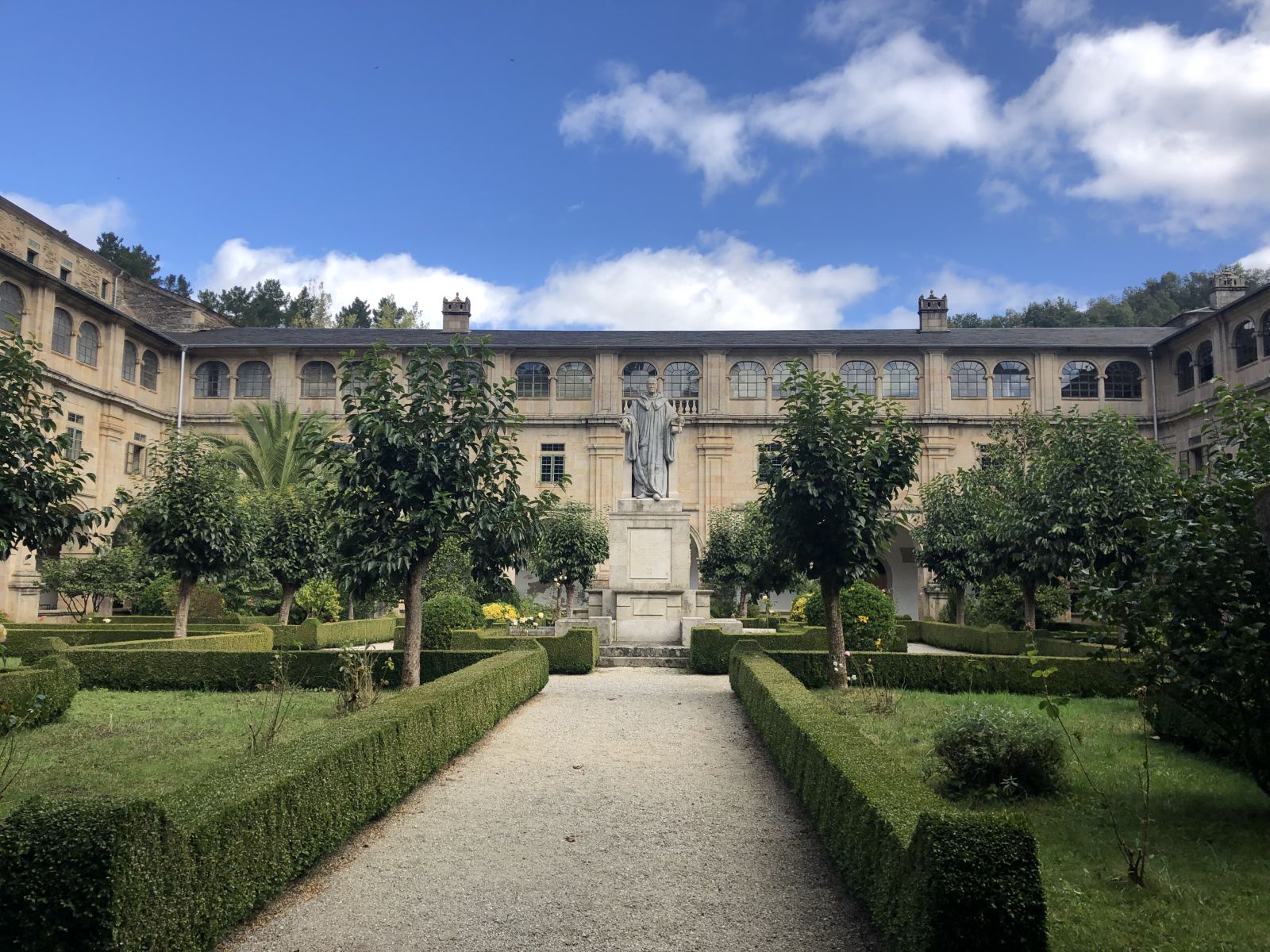
Samos Monastery Detour Camino Francés between Triacastela and Sarria
I am not going to pretend there is one perfect packing list, as I’ve mentioned throughout this article, it’s an individual thing. However, there are some non-negotiables that I think make the whole experience easier.
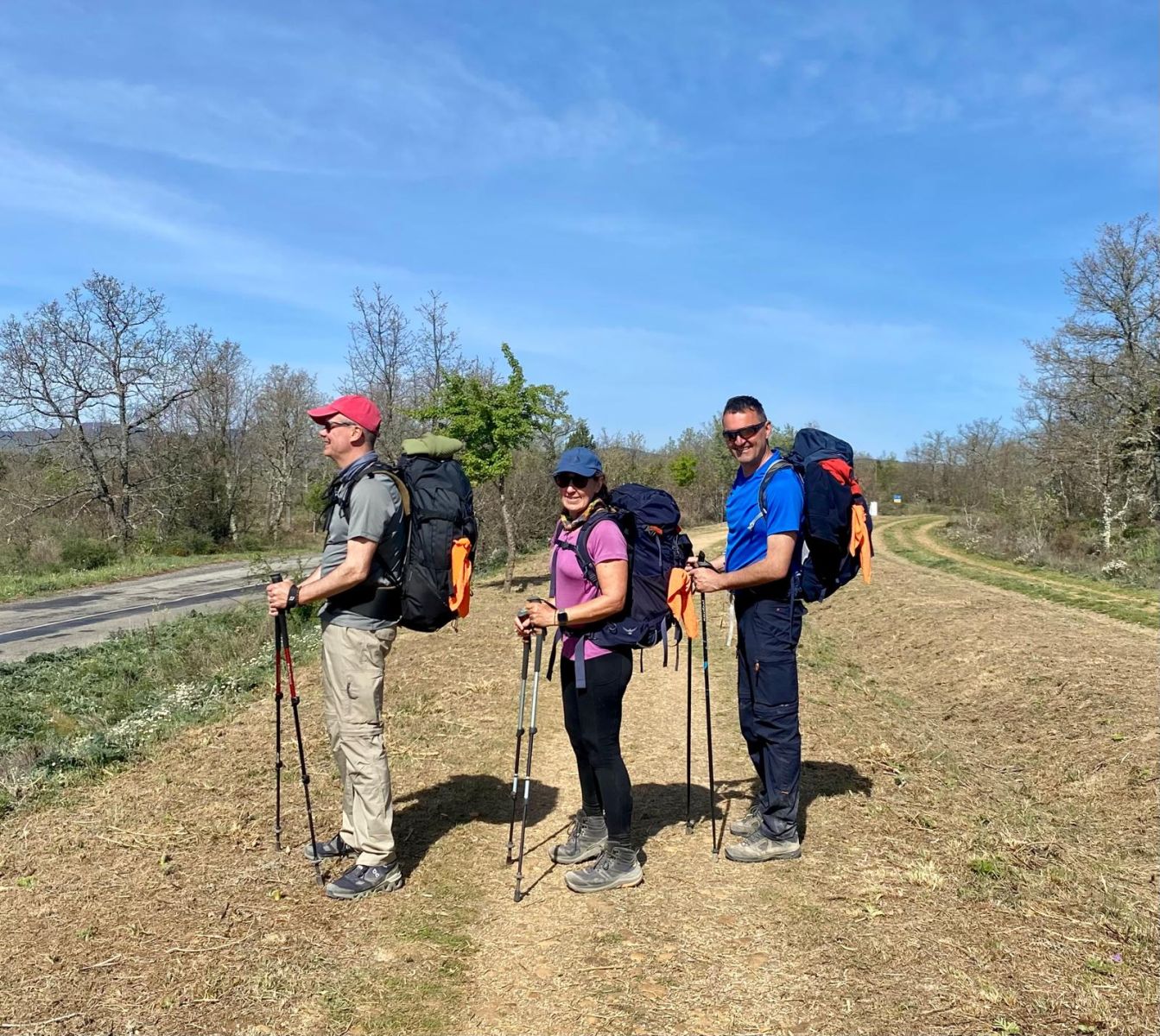
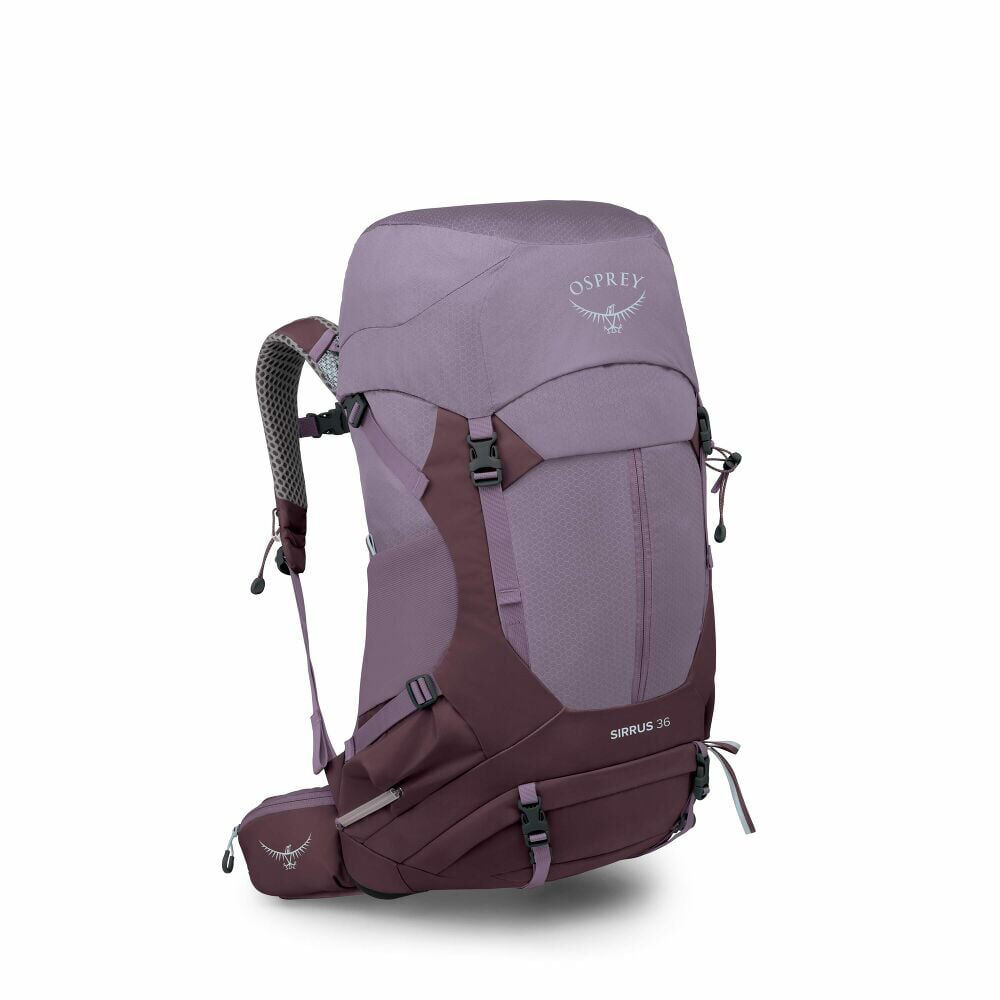
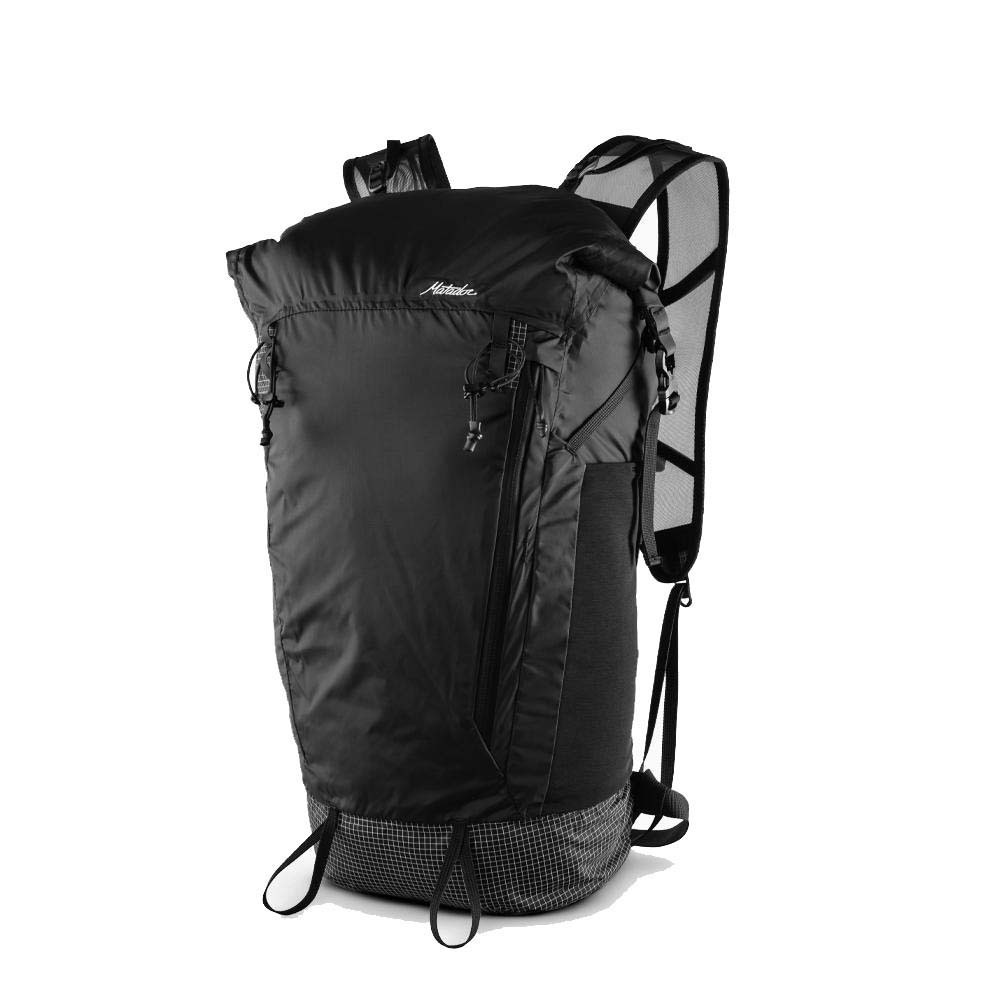
Three backpacks on the trail.
I am blunt about this for a reason because I see people come into the shop with 60 litre packs and 10 to 12kg loads… And I honestly think, if you cannot fit it into 30-45 litre backpacks, you have packed way too much!
A heavy pack increases your odds of:
I saw people walking with packs sitting too high, load lifters not tightened, and weight pulling backward off their shoulders. Sometimes they were in pain simply because they did not know a pack should be adjusted properly.
“Your feet and your pack are your two biggest success factors. That is not dramatic. It is just true!” - Lynne
I strongly recommend bringing something small you can use as a packable day pack. It is handy for showers and for wandering around town in the afternoon.
The honest answer is, it depends... People constantly ask me whether they should wear hiking boots or trail runners on the Camino. There is not really one right answer because it depends on you, your feet, your ankles, the season, and what you have tested at home. I wore the Topo Trail Venture 2 Hiking Boots.
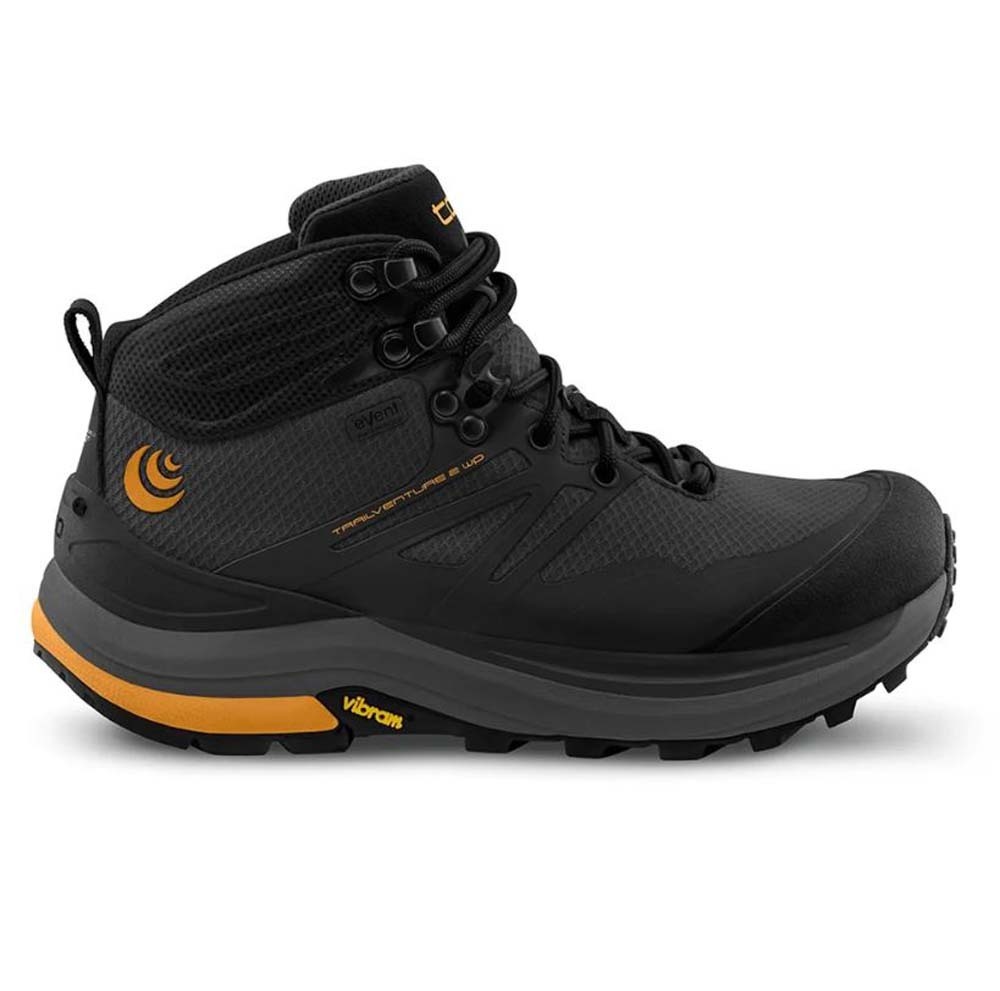
Trail runners can breathe better, dry faster and feel lighter. But on the flip side, that means more stones and grit can sneak in unless you use gaiters. One of my walking mates was constantly stopping to empty his shoes. I did not have to do that nearly as often in boots.

Here's my complete packing list for the Camino De Santiago.
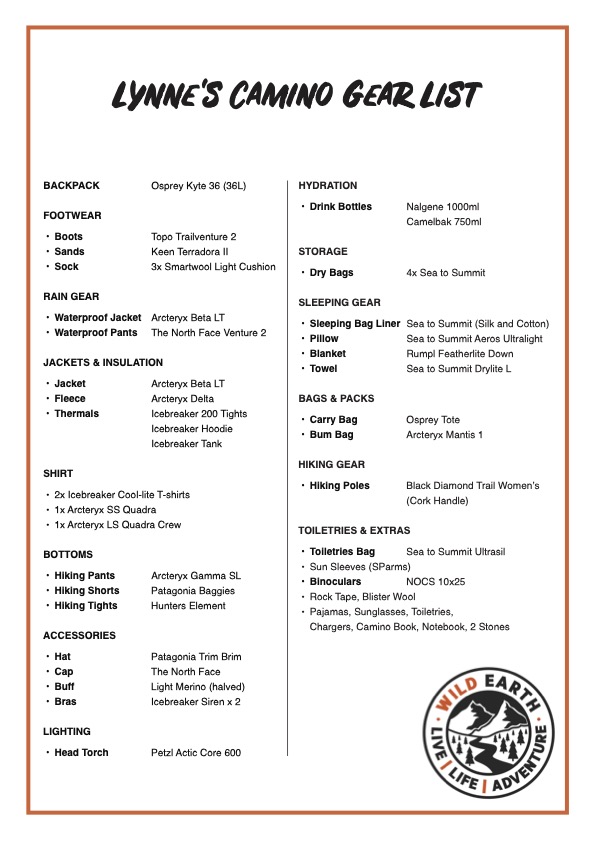
I went in spring and I expected wet weather, especially later toward Galicia. I hate being wet and cold so I made sure my system was waterproof boots, waterproof jacket, and waterproof pants.
Here is an important detail many people forget… If your boots are waterproof but your pants are not, water runs down your legs into your boots and then it cannot get out. That is why waterproof pants matter if you are going the waterproof boot route.
For what it is worth, I only had one truly horrible rainy morning in 40 days, but I was warm and dry and still loving life while someone beside me was miserable because he was soaked through. That is why being prepared makes all the difference.
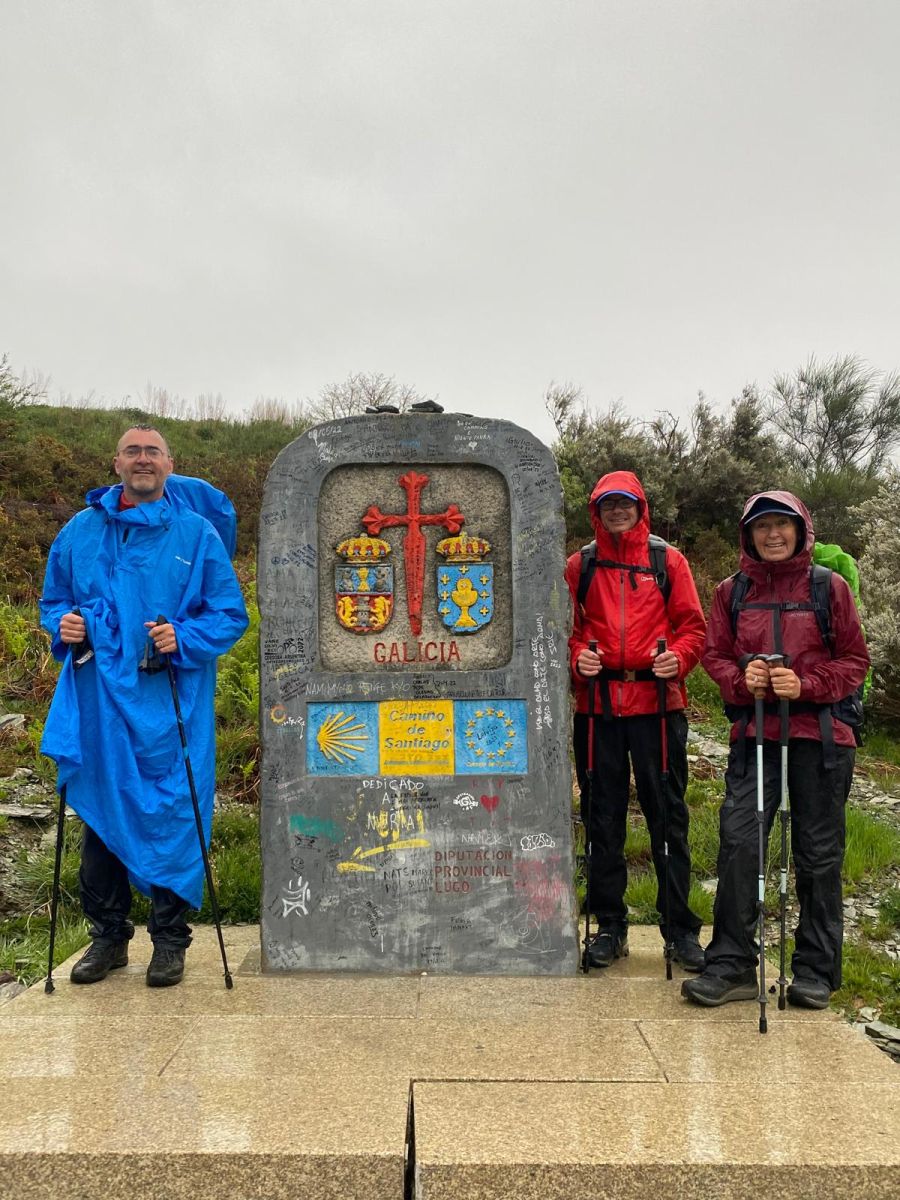
The one rainy day in Galicia!
I see people try to mix it up, different socks one day, different shoes the next, new inserts, new lacing tricks and believe you me, that is asking for trouble.
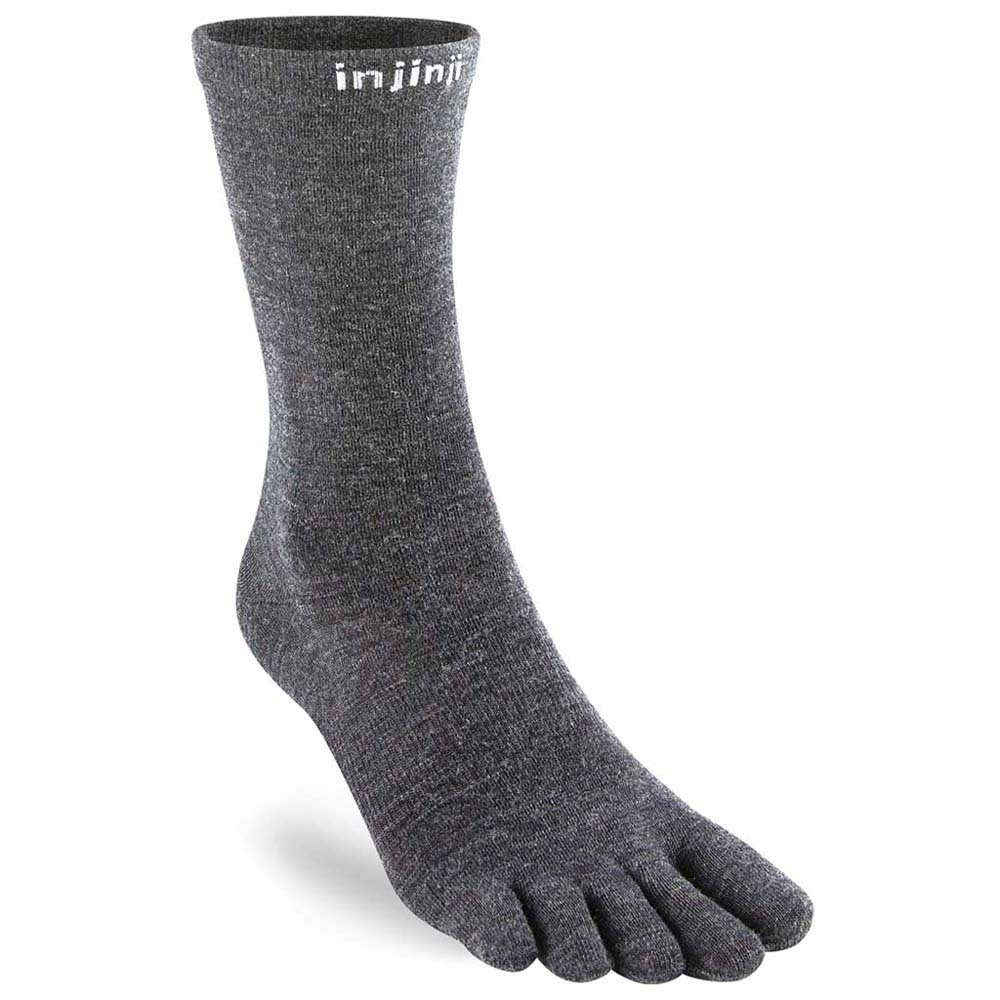
Socks matter way more than people think, I wore my Smartwool Light Cushion Merino socks for the duration of the walk and I only took three pairs. That was all I needed (it saves lugging around your dirty laundry). I didn't bring liners, toe socks or try any fancy experiments and it worked pretty well for me.
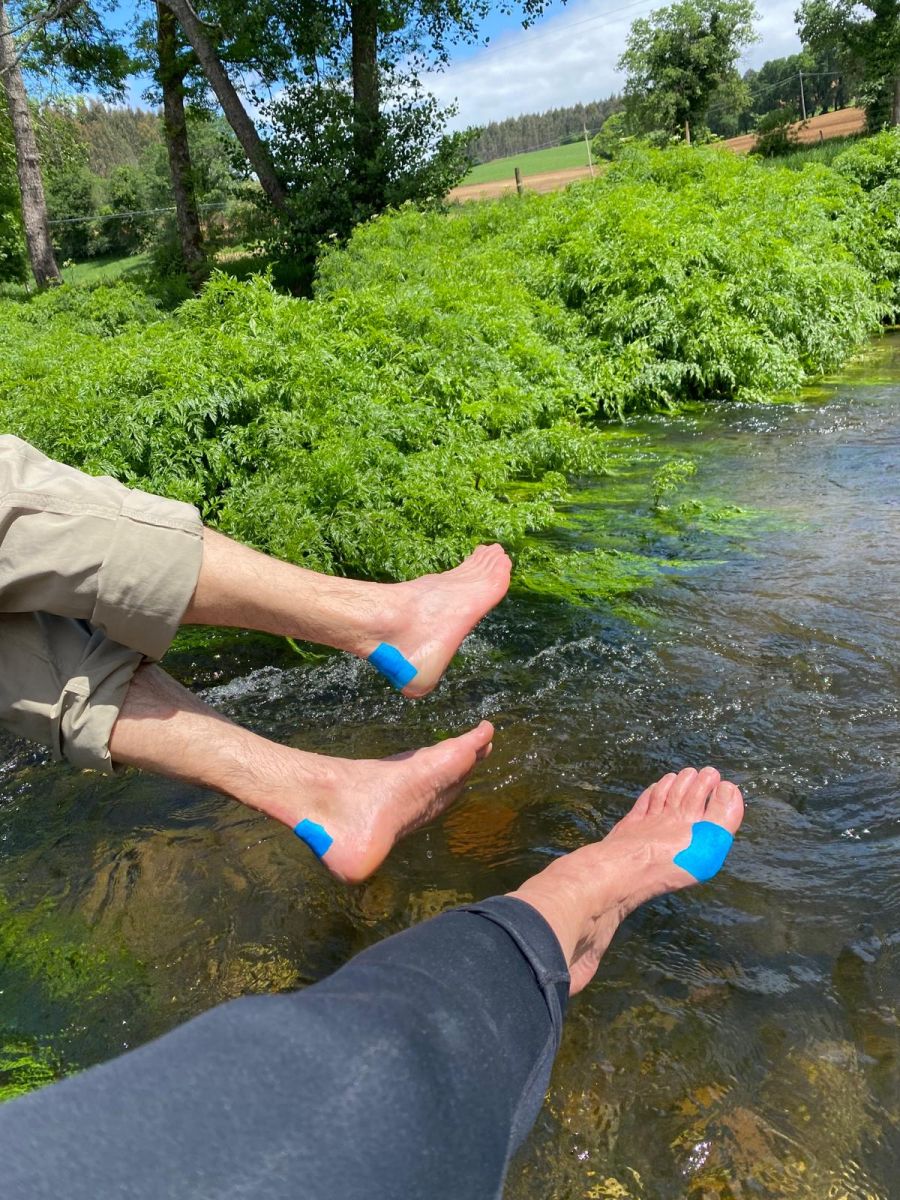
Testing out my Rock Tape blister kit
I got two blisters and they were totally my fault. I ignored hot spots when I should have known better. I was cranky, I wanted to get there, and I kept walking. Lesson learned.
If you start to feel a hot spot, stop straight away and deal with it before it becomes a blister!
My Camino foot care kit essentials:

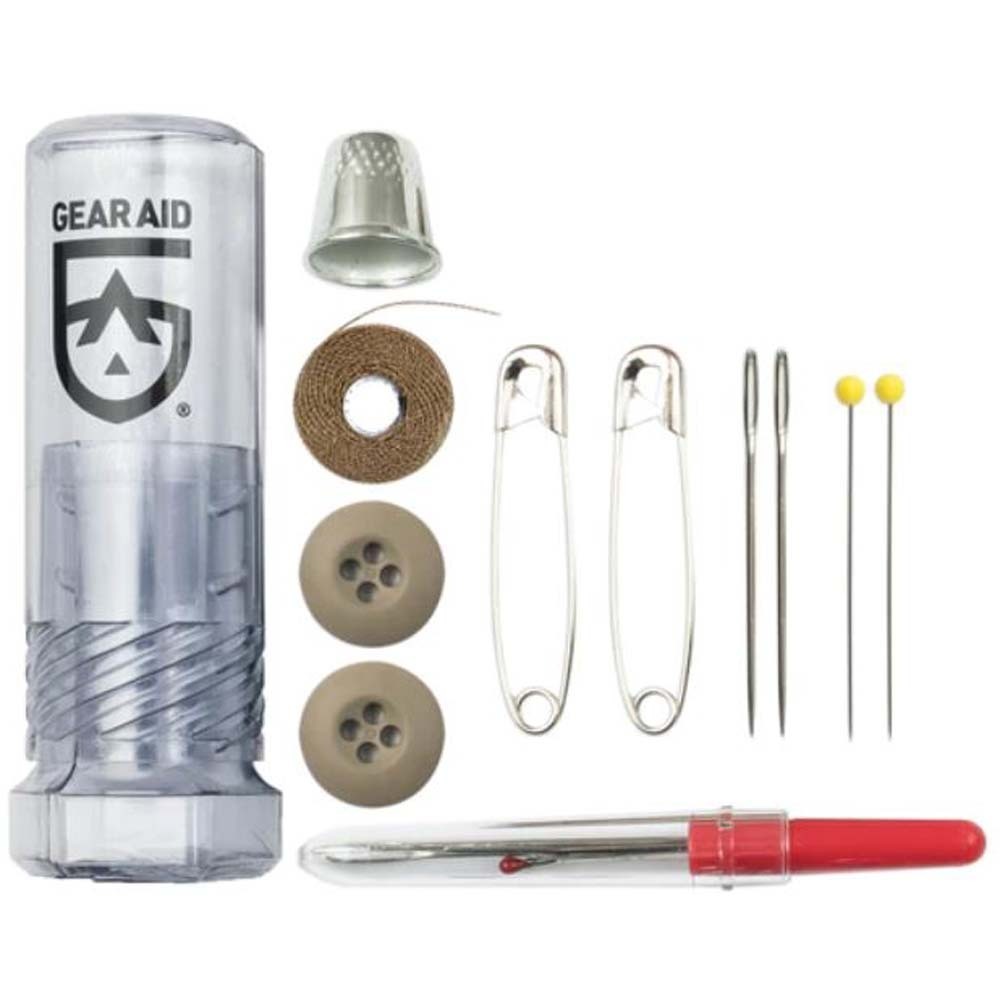
This technique is super simple and something everyone should know about. You thread through the blister, drain the fluid, and leave the thread briefly to allow continued drainage. Once it stops draining, remove the thread and protect the blister.
This technique helps prevent that big flap of skin from rubbing off and leaving you with an open wound, which is when infections and real trouble can start. This Gear Aid sewing kit has everything you need to deal with blisters and any on trail gear repairs.
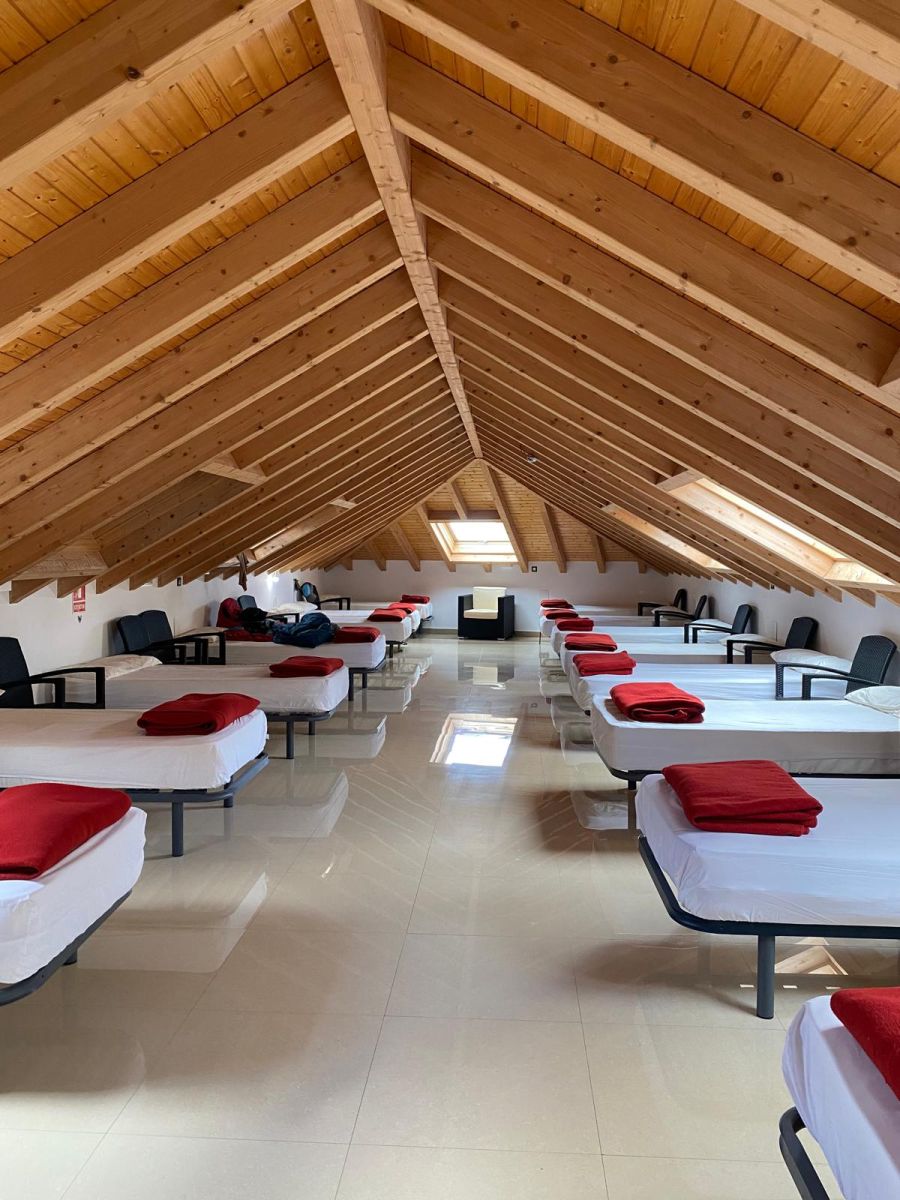
An albergue is a pilgrim hostel along the Camino and it's there that you'll spend most nights. They're communal, simple, and designed for walkers and cyclists. You check in with your credencial, stash your pack, and get settled into a routine.
Some albergues are municipal which makes them cheaper, expect more basic facilities with lots of beds. Whereas some are private but still affordable and these sometimes come with a shared meal. Albergues vary a lot, and that is part of the fun, just go with an open mind.
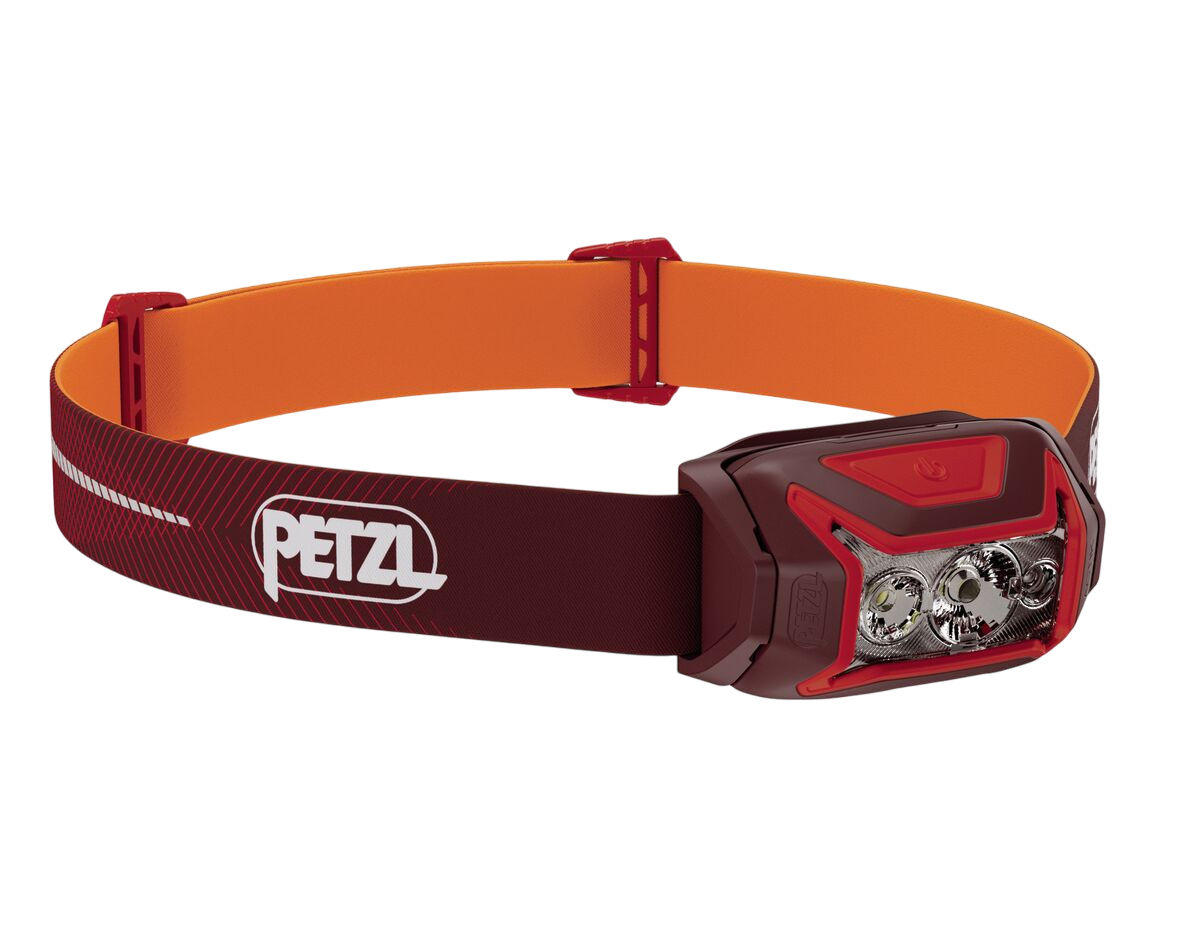
A red light headlamp matters because you do not want to blast everyone when you are up early or moving around at night. Charging is usually fine, but outlets can be in awkward places, sometimes above your head so a longer cable makes life easier.
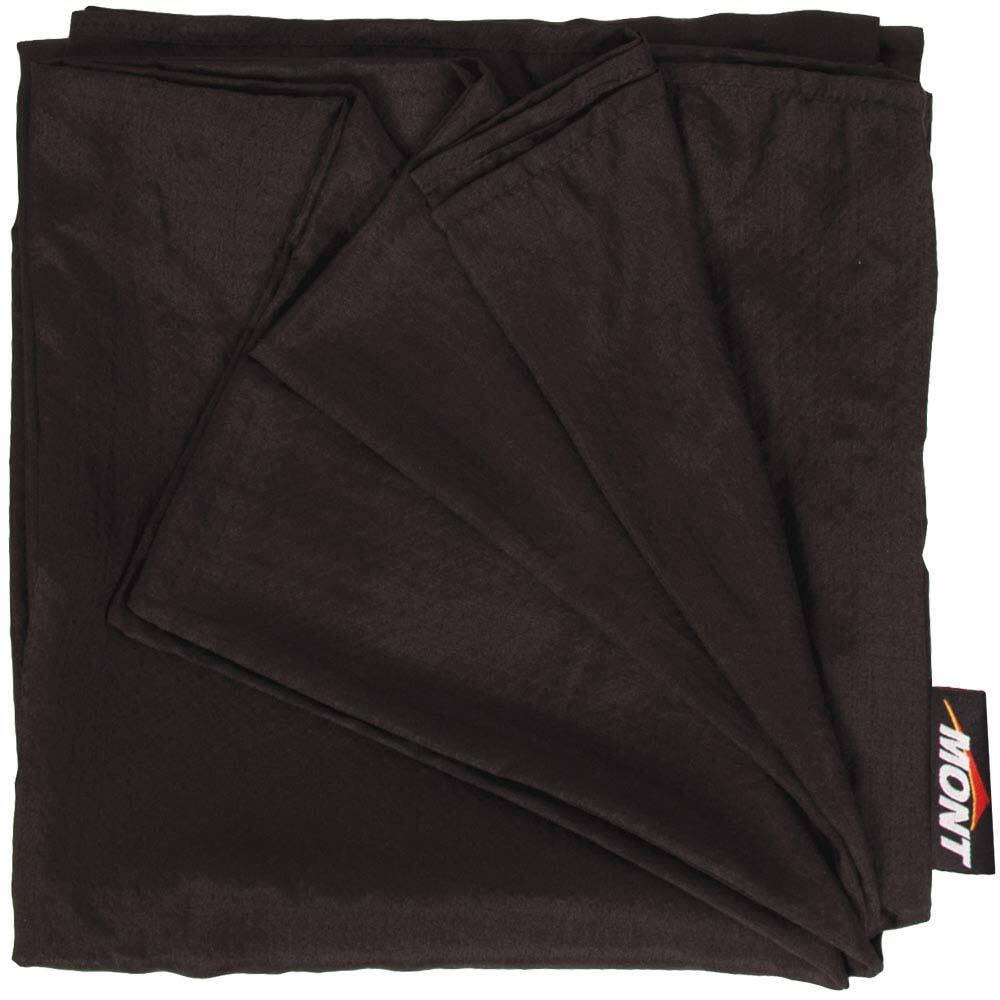
I slept in a sleeping bag liner every night and I brought a lightweight down blanket.
Some albergues give you disposable sheets and there is often a blanket on the bed. I avoided using communal blankets because of the bed bug issue, even though bed bugs were not a problem in my group during that season at all (but I have heard many rumours).
A sleeping bag liner is a must. If it is not cold, you can just sleep in the liner. If it is chilly, add your quilt or sleeping bag.
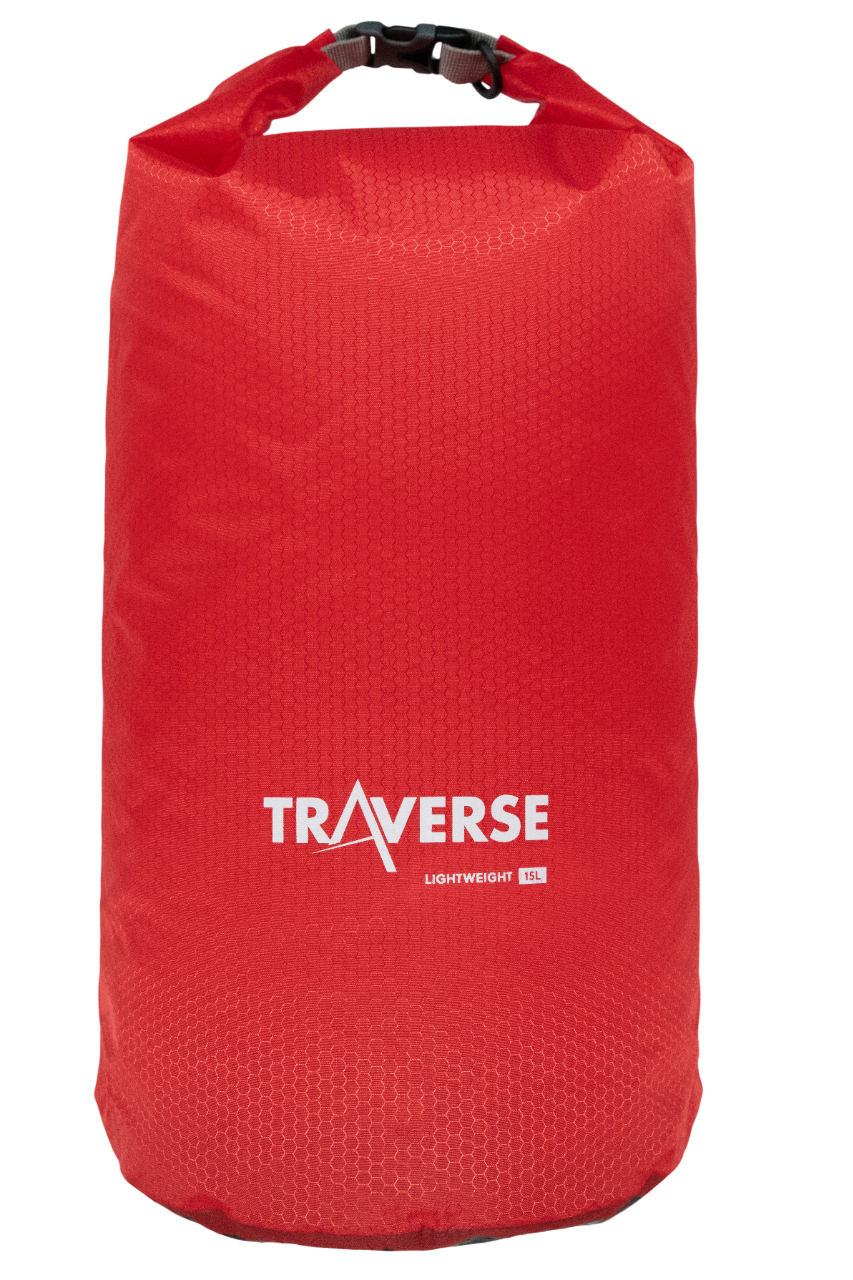
Everyone needs a pack cover, but if it really pours, water can seep in through pockets and straps. Anything you cannot afford to get wet should be in a dry bag.
I am a dry bag queen. Colour coding made my life easy. Pink for sleep. Orange for clothes. Yellow for first aid. I always knew where everything was and I could pack and unpack fast.
You will see a pilgrim menu advertised everywhere but I found the only great ones, were the ones offered by albergues. Private albergue communal meals can be incredible! Home cooked Spanish meals around a table with pilgrims from all over the world is a totally different experience and my best meals were not fancy, they were shared.
If you are choosing where to spend your money, I’d rather pay for a good communal albergue meal than another bland pilgrim menu out in town.
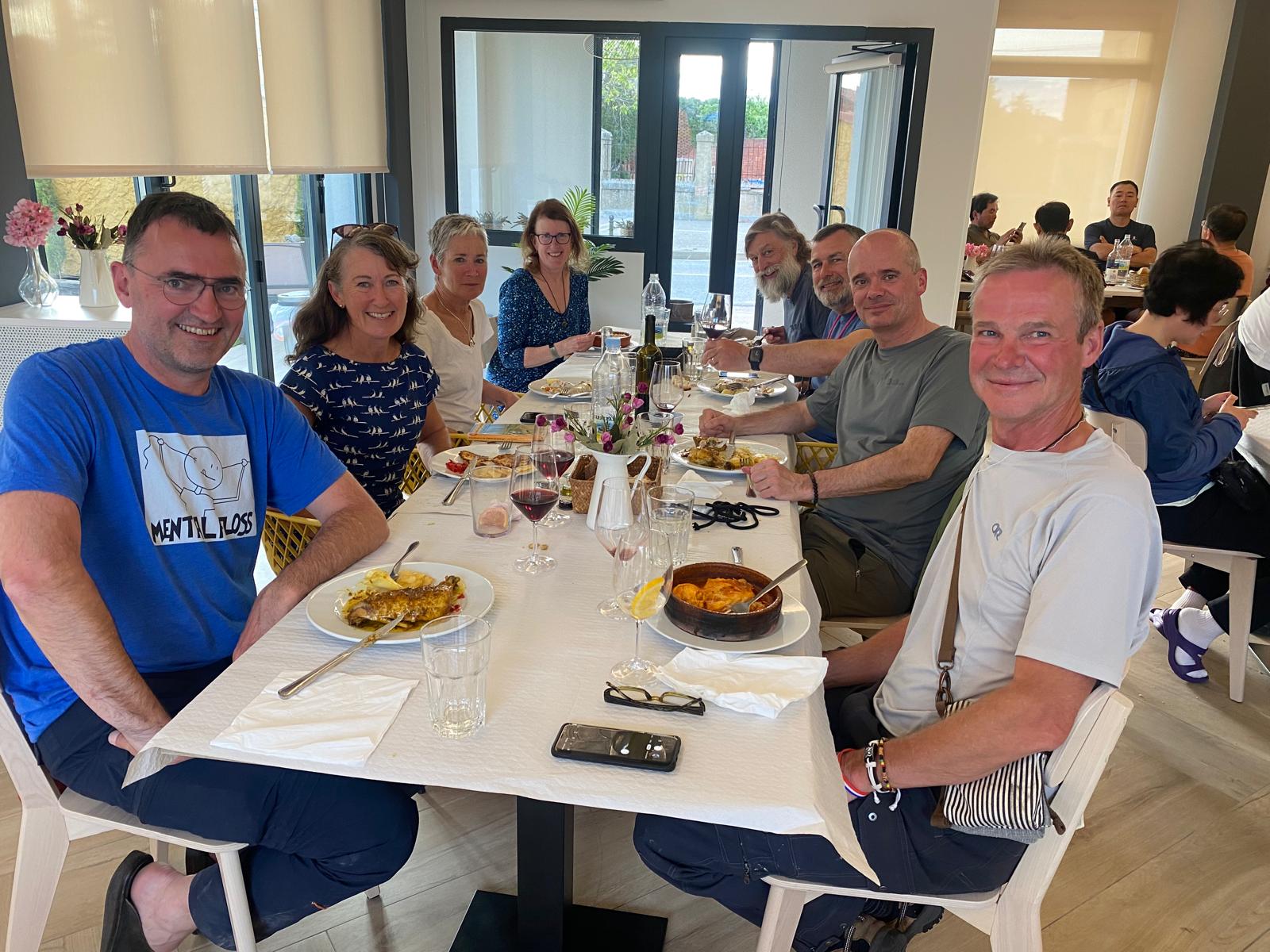
Dinner with friends.
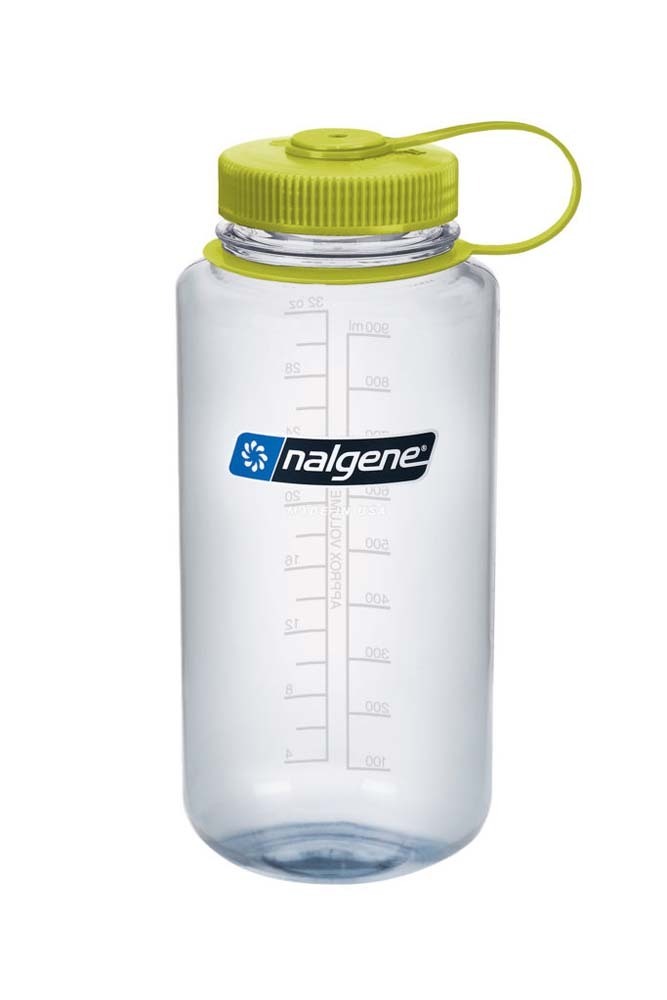
My hydration system looked like this:
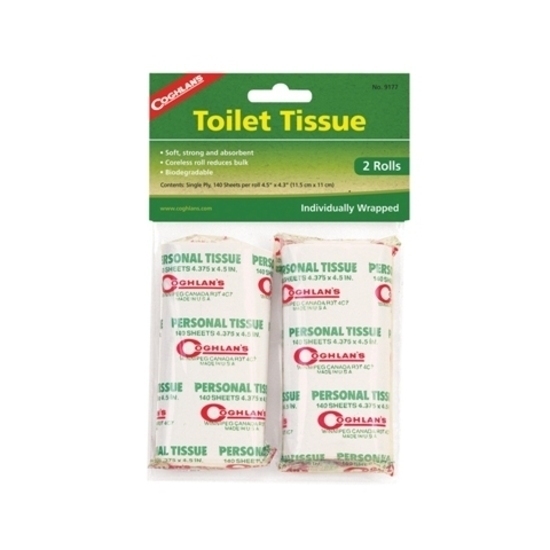
There are heaps of toilets on the Francés because there are cafés and towns so often and as I mentioned, the infrastructure is all there. The main thing is to make sure you leave no trace (that means do not leave paper beside the track if you need to go in an emergency)! If you need tissues, carry a little zip lock bag and dispose of it properly when you can.
My camino routine was simple:
It is amazing how quickly you fall into the routine.
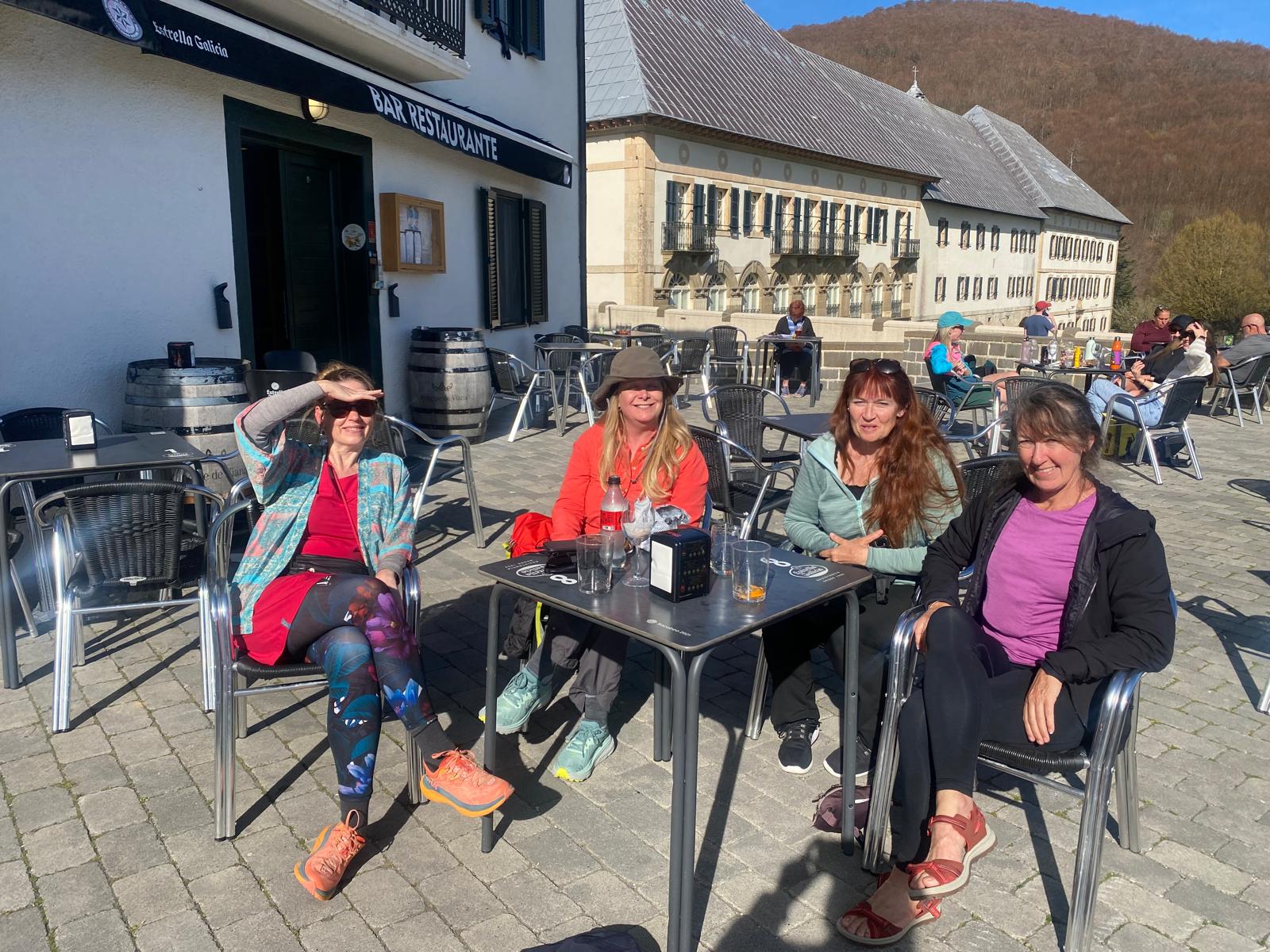
Chilling in sandals after big day of walking
Some guides talk about the Camino in thirds. Physical, mental, spiritual. The Meseta is often in the mental part because it's long and flat. People say it is boring or particularly hard mentally... but I loved it. I absolutely loved it…
I listened to one audiobook and then mostly I just watched the world, chatted, wandered, and did birding. Spain has so many storks on church towers to birdwatch, I was delighted.
If you go into it expecting it to be awful, you will notice every dull bit. If you go into it curious, it becomes its own kind of beautiful.
If you're curious to get into a spot of birdwatching along the way I recommend some binoculars too.
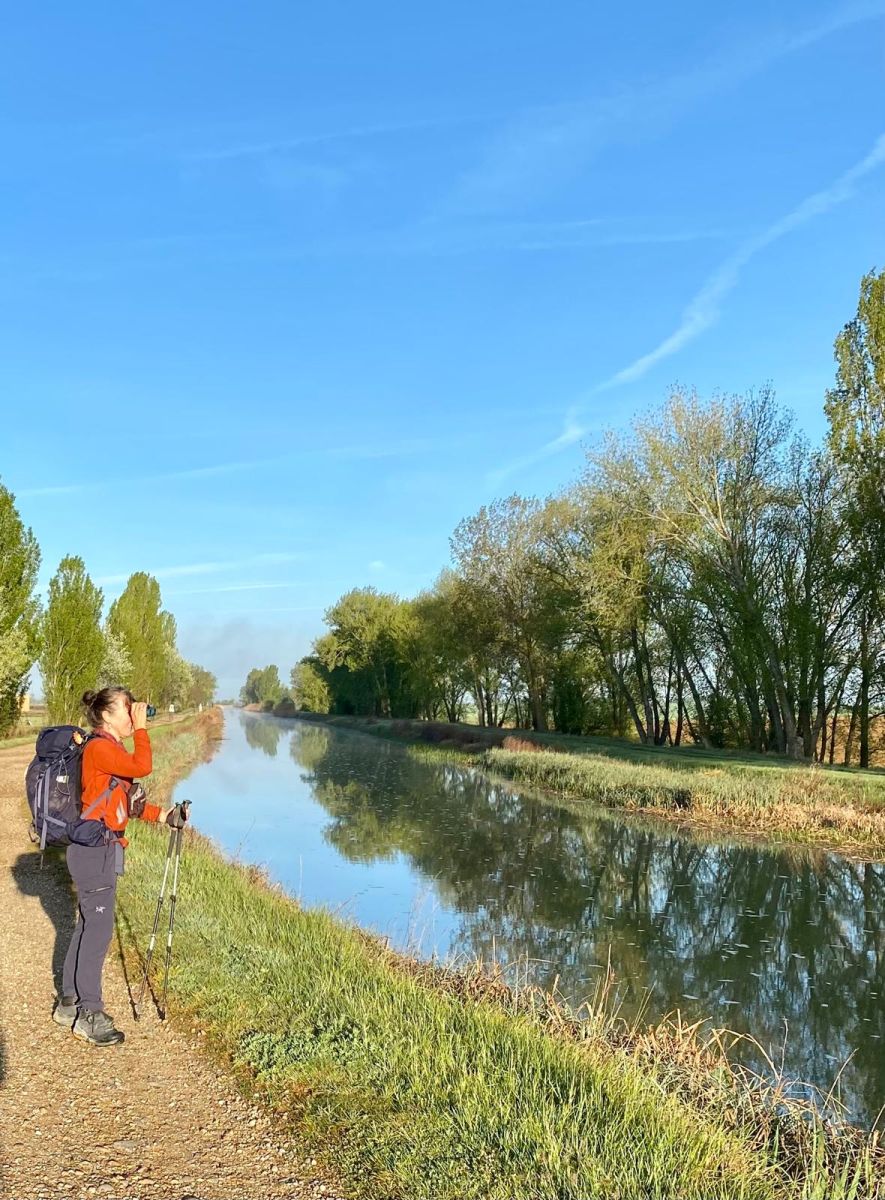
Bird watching
The last 100km can be a culture shock because there can be bus loads of school kids, tourists, and people doing only the last section. Cafés can be packed, toilets can be busy and the track can start to feel like peak hour.
If you want it quieter, leave earlier in the morning because the big groups don't usually start that early. Try to keep in mind, it's still their Camino too. Those kids are out walking, carrying packs, doing something real and I came to respect it, even through sometimes I wanted to stride past everyone.
I had five things I was excited to reach and it gave me motivation and momentum. It turned the walk into a series of small wins which felt more managable for me.
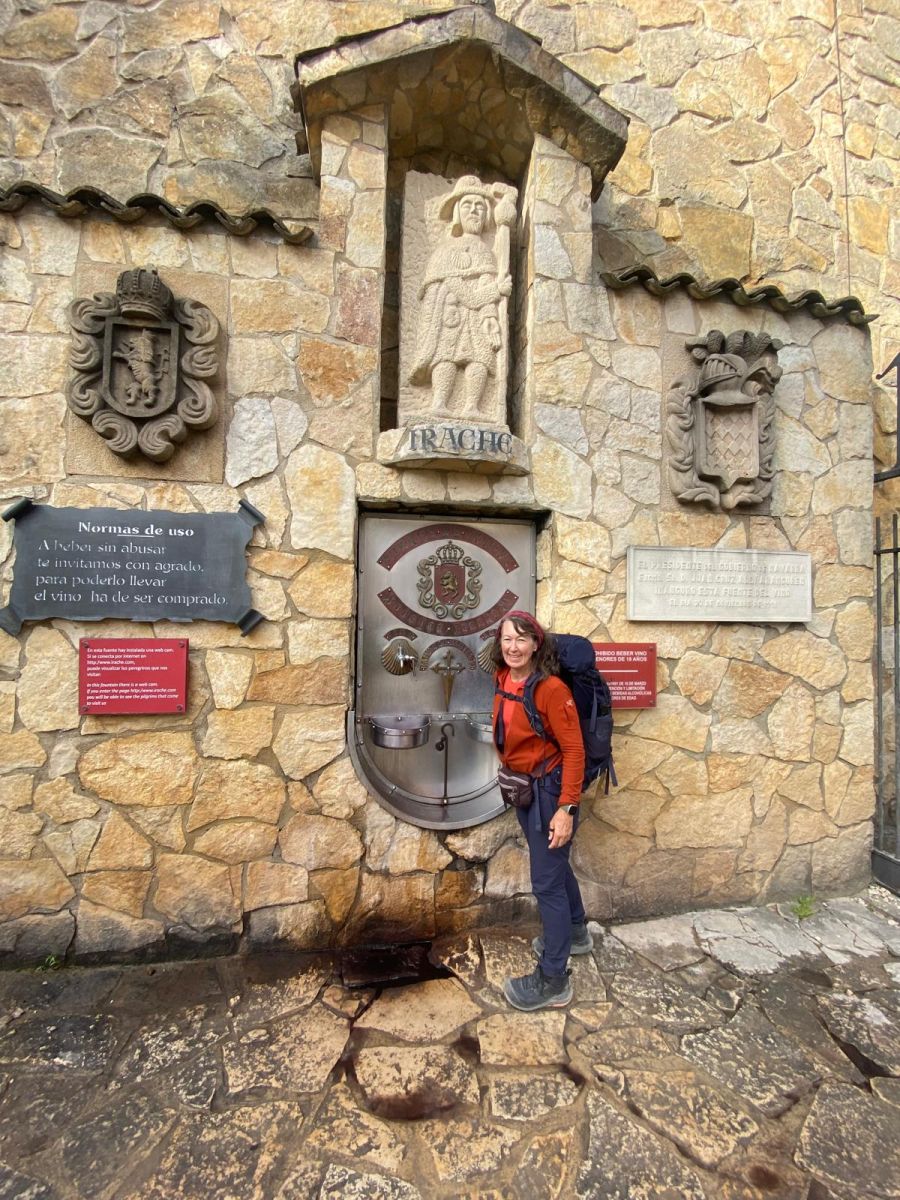
Ready for a fountain of Wine
The idea is you carry a stone and you leave something behind. I took two stones, one was from my parents who were dairy farmers (not travellers, they had only been on one overseas trip). Dad had dived down in the Mediterranean and brought up a small stone for Mum and she had written on it, so she gave it to me to leave at Cruz de Ferro and that is what I left there.
The other stone was mine and what I chose to leave behind was the feeling that being single made me less of a person. I had been on my own for a long time and I wanted to be properly comfortable with that. I left that there, and then the Camino did what it does...
If you want to be there at dawn, set your alarm and go. It was the only morning I got up before dawn on the whole walk and I am glad I did.
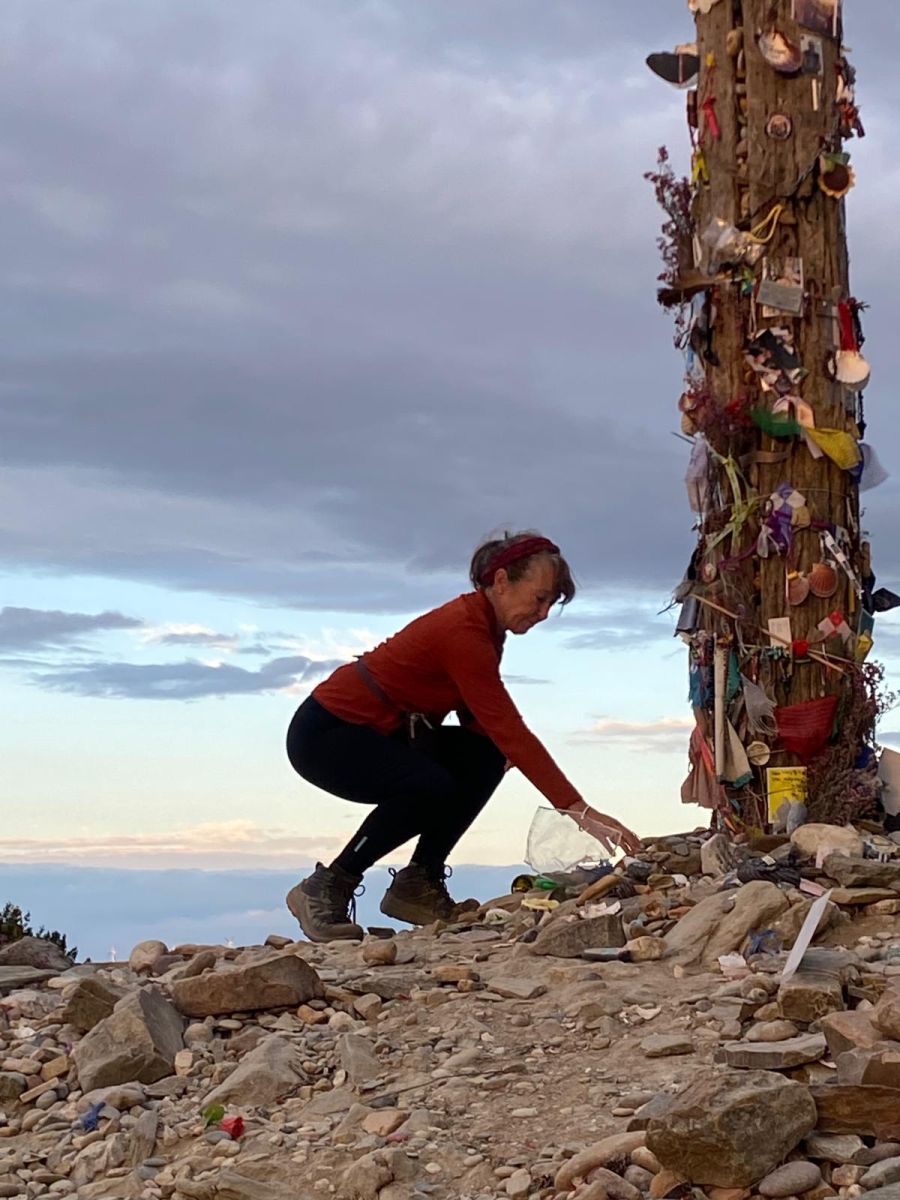
Leaving something behind at the Cruz de Ferro
When you arrive, make sure you go to the pilgrim office and get your Compostela certificate! It is such a good feeling knowing you made it.
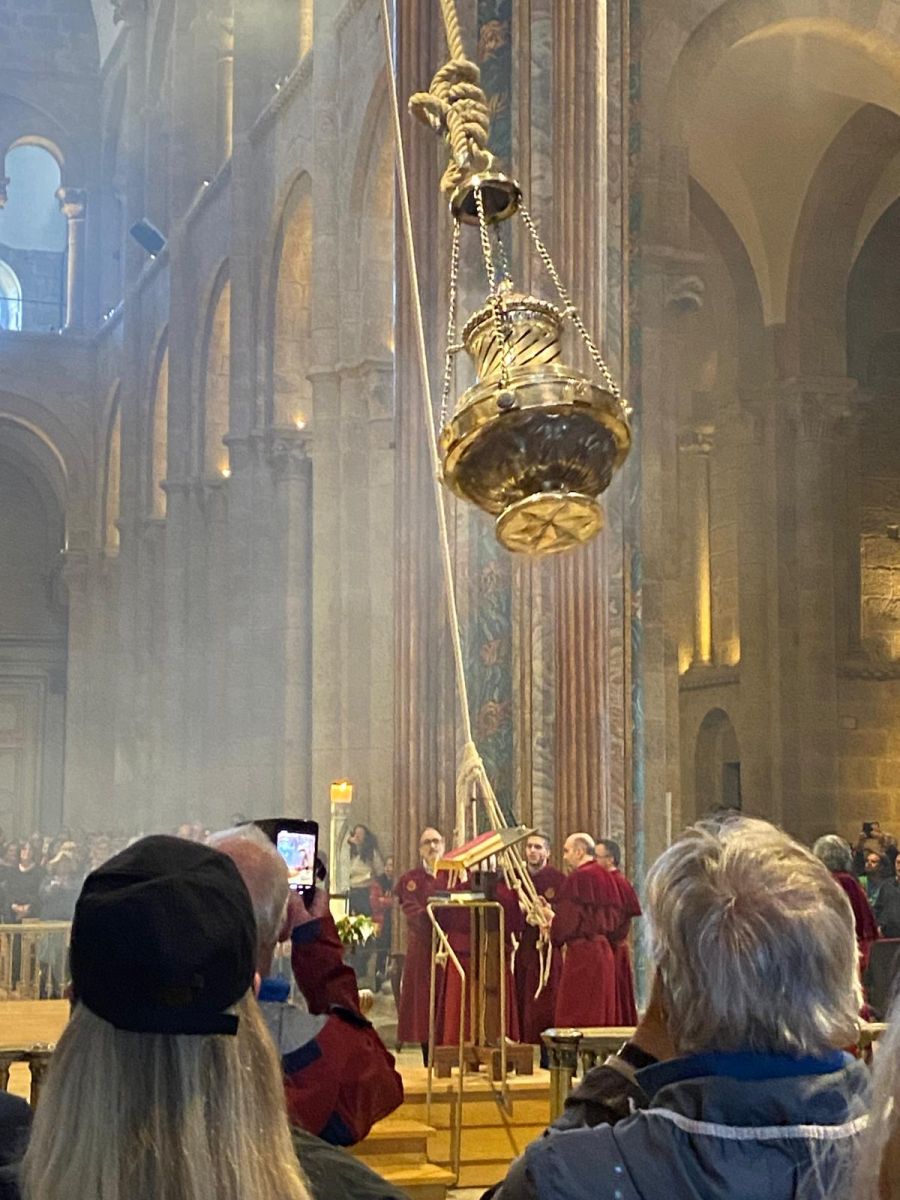
If you can, go to mass at the cathedral. The Botafumeiro is the giant incense burner but it doesn't swing every day. It is the luck of the draw and sometimes groups pay for it.
When it swings, it is full on and if you want the best view, sit in the side sections. It can swing right over your head and it is intense!
I started a WhatsApp group called The Last Supper and a big bunch of us had dinner together in Santiago. It was one of my favourite nights of the whole experience!
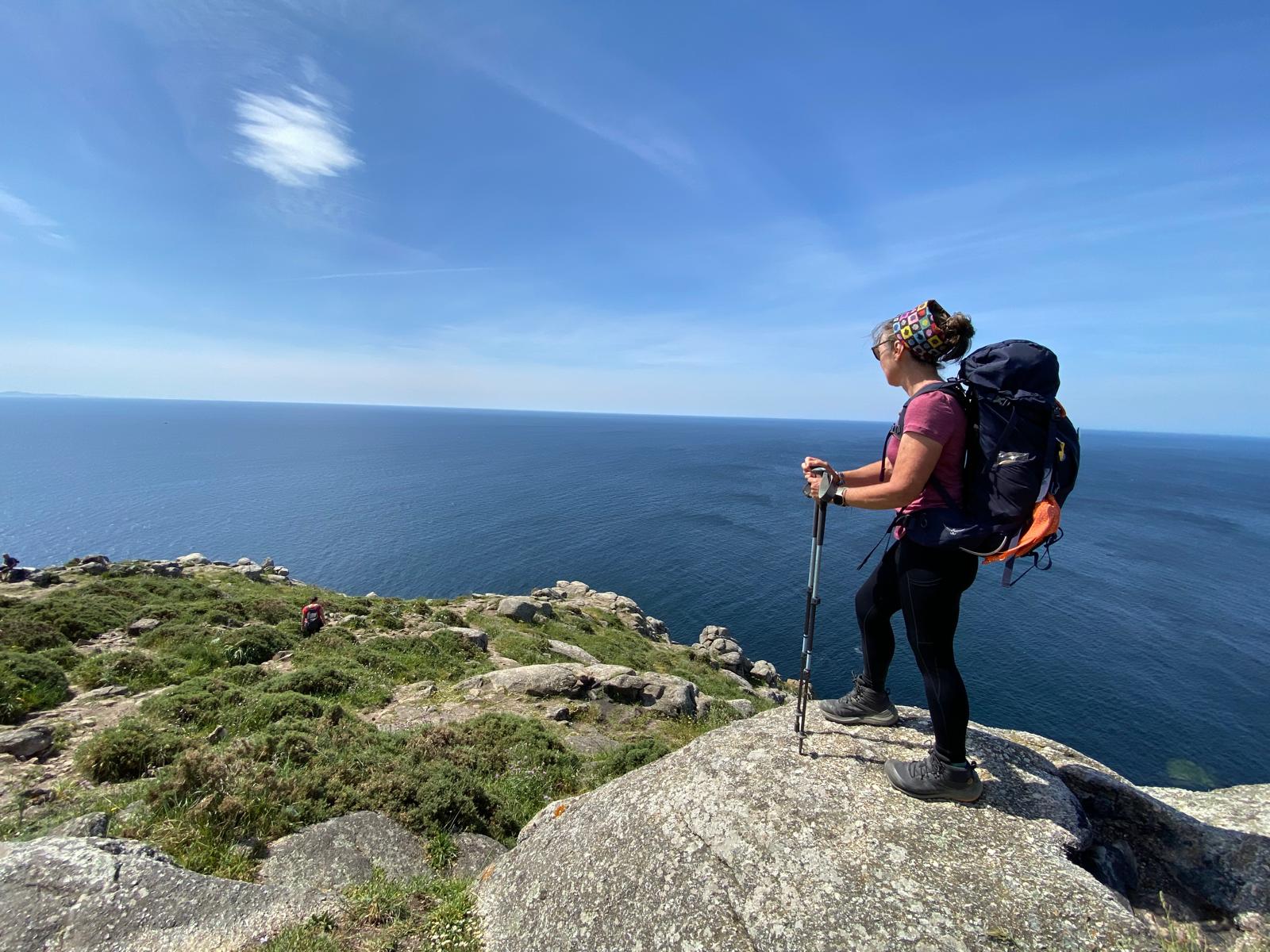
After Santiago, I walked on to Finisterre. I did not lock it in as a plan beforehand but I kept my Camino flexible and decided as I went.
Finisterre really does feel like the end of the world in the best way possible. It is absolutely worth it if you have the days and you are feeling good enough to get through it.
Someone asked me about trepidation for the first couple of days and I understand that so much. The funny thing is, when I look back at a video I took in Saint Jean the night before I started, I really don’t know what I was worried about.
The Camino has a way of meeting you exactly where you are and once you start walking, it feels like you have been doing it forever.
Get your gear sorted before you go, keep your pack a reasonable weight, make sure you protect your feet and be flexible…. But most importantly, just go!
Because once you are out there, you will understand why so many of us finish and immediately start planning the next one!!
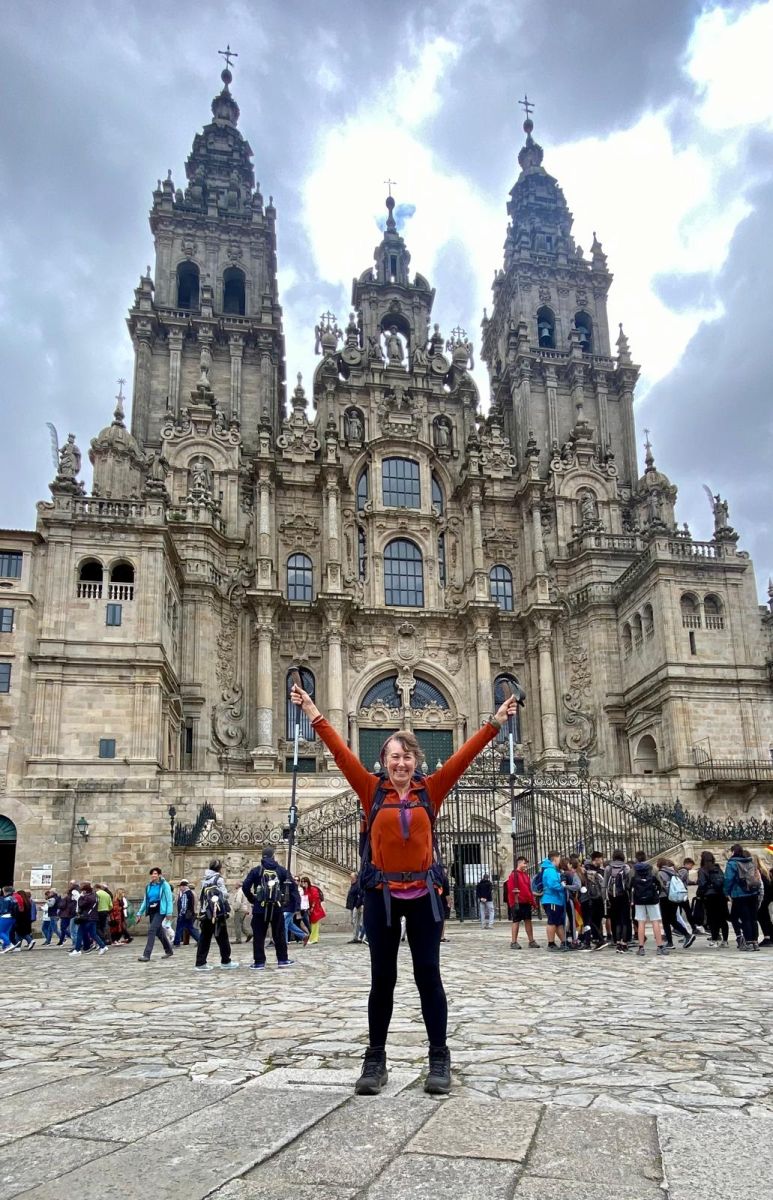
Outside Santiago de Compostela!
Not sure what gear you need for your Camino adventure? Chat with our friendly team of Outdoor Gear Specialists in-store or online today, and don’t forget to share your adventures with us on Instagram by tagging @wildearthaustralia in your next post.
Q Is 2026 a good year to walk the Camino Francés?
A Yes, 2026 is shaping up to be one of the best years to walk the Camino Francés. Because 2027 is a Holy Year, many pilgrims expect a major surge in numbers the following year. Walking in 2026 gives you the chance to enjoy the social atmosphere of the Camino without the extreme crowding, packed albergues, and daily bed race expected in 2027.
Q How long does it take to walk the Camino Francés?
A Most pilgrims take around 33 to 35 days to walk the full Camino Francés, which is roughly 790 kilometres from Saint Jean Pied de Port to Santiago de Compostela. Your timeline depends on your pace, rest days, fitness, and how much time you want to spend exploring villages along the way.
Q Do I need to book accommodation in advance on the Camino in 2026?
A In 2026, a flexible but smart approach works best. You do not need to book every night months ahead, but booking one day in advance can reduce stress, especially in busy stages. Many pilgrims use apps like Wise Pilgrim or contact albergues directly by WhatsApp to secure a bed for the next stop without losing all spontaneity.
Q What is the best Camino route for beginners?
A The Camino Francés is still the best route for most first time pilgrims. It has the strongest infrastructure, frequent cafés, clear waymarking, plenty of albergues, and a large pilgrim community. That makes it easier to settle into the rhythm of walking and feel supported if challenges come up.
Q What is the two stamp rule for the final 100km of the Camino?
A To receive your Compostela, you must walk at least the final 100 kilometres into Santiago and collect the required proof in your Credencial. In 2025 and 2026, pilgrims are strongly advised to collect two stamps per day during the final 100km. A good routine is to get one stamp where you sleep and another at a café, church, or municipal stop along the way.
Q What if Orisson is fully booked for my first day on the Camino?
A If Orisson is booked out, do not panic as you still have solid options. Some pilgrims take the Valcarlos route, which stays lower and often has more flexibility while others stay an extra night in Saint Jean Pied de Port and use a shuttle the next morning to shorten or break up the first mountain stage.
Q How safe is the Camino de Santiago for solo female walkers?
A The Camino Francés is widely considered one of the safest long-distance walking routes for solo female travellers. That said, basic precautions still matter. Keep your passport, phone, and cash on you at all times, especially in shared dorms, and stay aware of your surroundings. Many pilgrims also download the AlertCops app for extra peace of mind while walking in Spain.
Planning to walk the Camino De Santiago this year? It could be the best decision you ever make.
Ultralight backpacking is basically the art of minimalism on the trails. It's about bringing less so you can hike without feeling like your pack is weighing you down. For some people, this feels more like freedom. For others… the trade-offs just aren’t wo
If you only upgrade a few pieces of kit this year, start here. These are the Gear of the Year 2025 winners.
You don’t need a passport (or a perfectly dialled kit) to find real adventure. Beau Miles’ best stories come from ordinary places, simple tools, and the courage to do the ‘weird thing you keep thinking about.’












Using Afterpay you can pay for your order over 8 weeks. There's no interest or added fees* and nothing to pay today. Payment will be automatically taken from your debit or credit card in four equal payments each fortnight over 8 weeks, and you will receive your order immediately.
You simply need:
To use this service simply:
Approved AfterPay buyers will require the funds for the first payment to be available on their card at time of checkout, however the first payment won't be deducted for 14 days. First time AfterPay buyers will need to make the first instalment payment at the time of their purchase.
If you wish to return your goods you can choose to receive an exchange, or the Afterpay payment plan can be cancelled before the first payment at no charge. *If you fail to have sufficient funds available for AfterPay to automatically deduct payment on due instalment dates you will be charged a late fee of $10, and if the instalment payment remains overdue, an additional $7 will be charged one week later.
With AfterPay, there's no waiting and we'll ship out your order immediately as normal.

When you want to go now, sometimes it's handy to pay later. That's why, we offer interest free payment plans from two of Australia's favourite Buy now, Pay later services.