Total Items: 0
Sub Total: $0.00


Thinking about visiting China? This 15-day itinerary covers Shanghai, Beijing, Datong and Pingyao, plus the essential apps, transport tips, costs and practical advice every Australian traveller should know before they go.
Table of Contents
China was absolutely nothing like I was expecting and that’s why I loved it. I assumed travelling independently would be complicated, expensive and difficult without speaking Mandarin. But that wasn't the case at all, I found rich historical sights and culture, affordable hotels, excellent public transport, incredible food and genuinely warm, curious people.
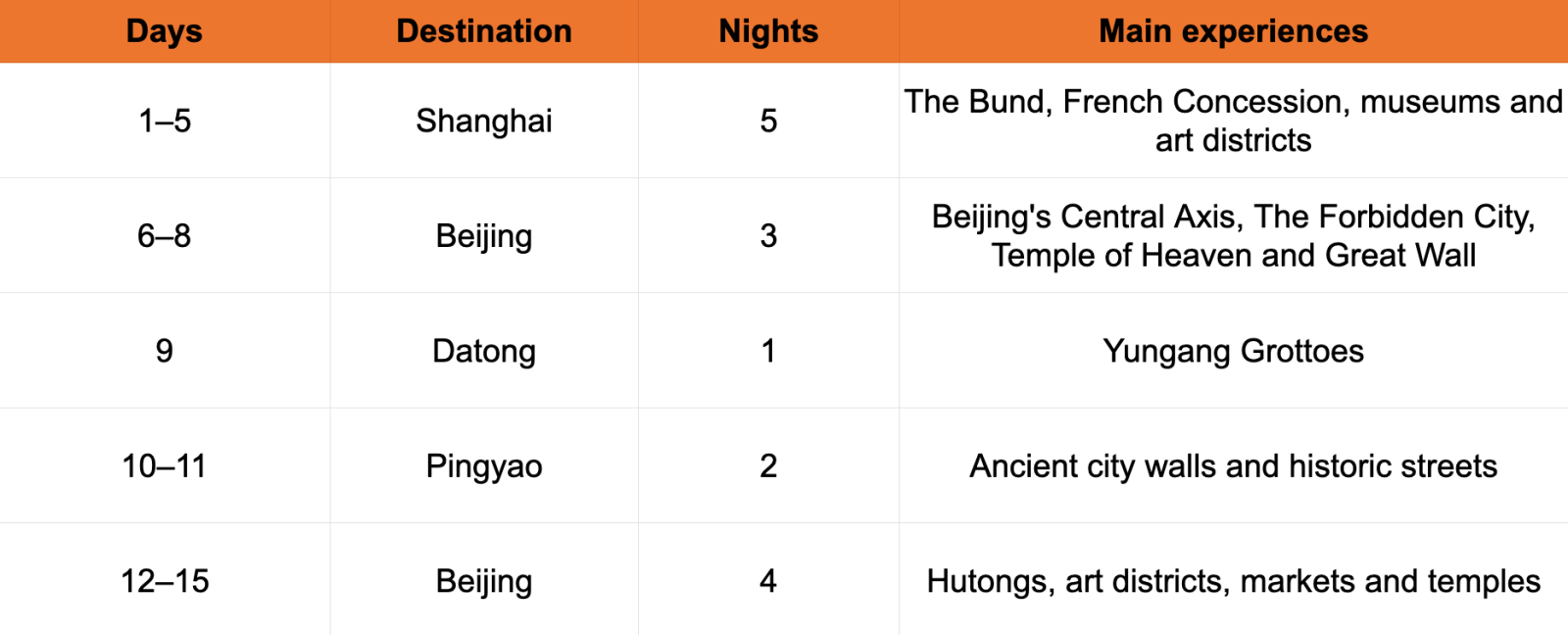
This 15-day China itinerary takes you from the futuristic skyline and Art Deco streets of Shanghai to Beijing’s imperial landmarks, the ancient Buddhist caves of Datong and the best preserved ancient city in China, Pingyao. It combines modern megacities, famous historical sites and smaller destinations that still receive relatively few international visitors.
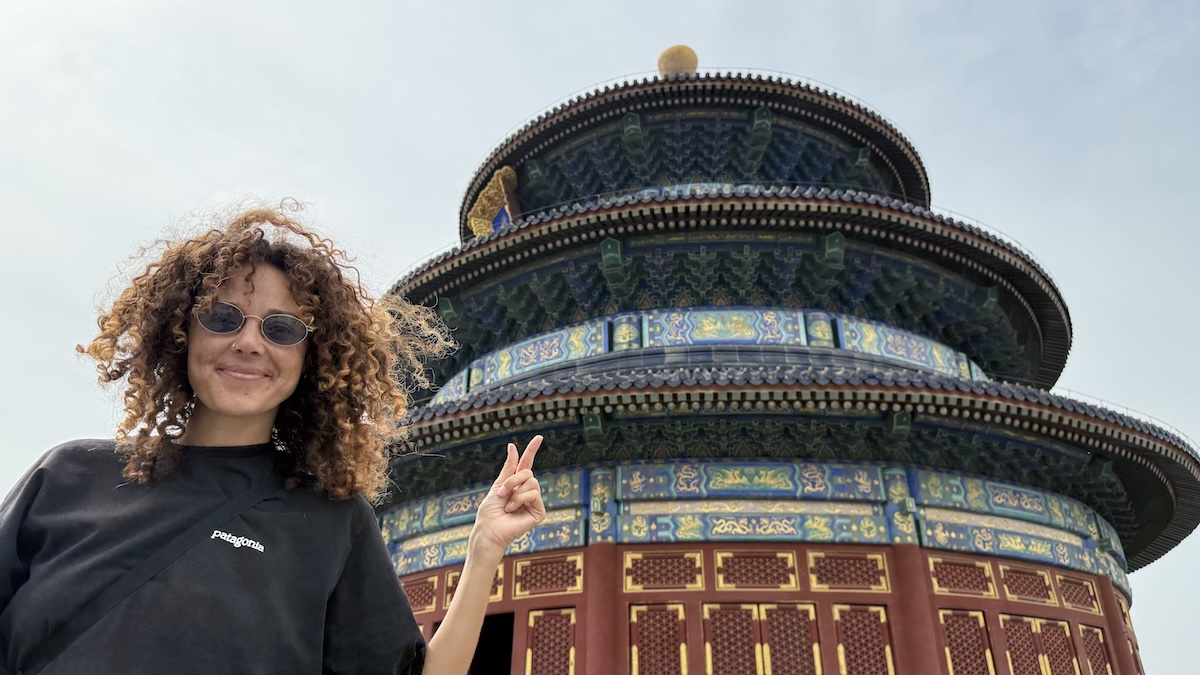
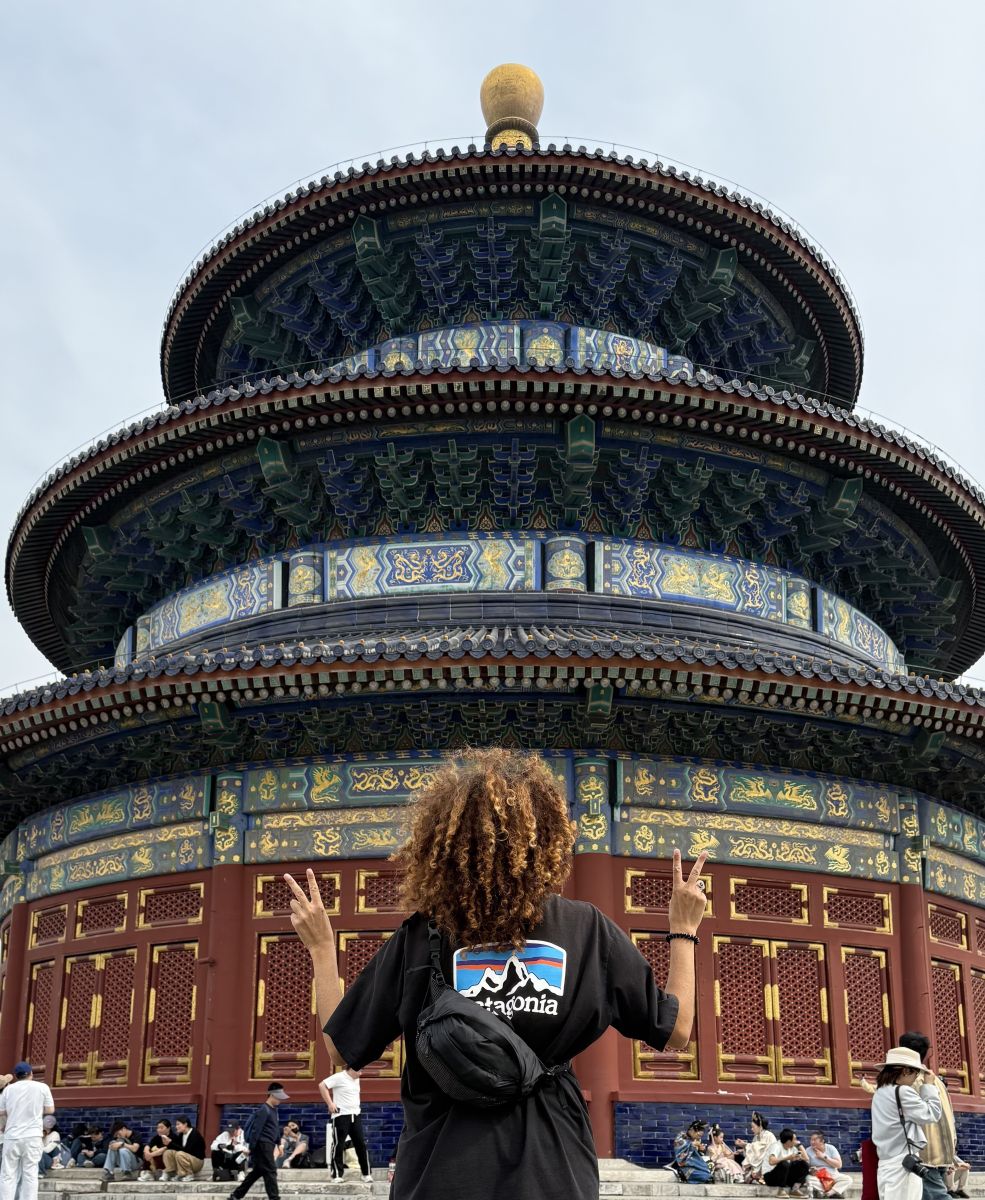
Selfie at the Temple of Heaven, Beijing
It’s an ideal first trip for Australians who want to see more than Beijing and Shanghai without rushing through the country. I’ll also share where I stayed, how I booked the trains the apps you need before arriving and how I completed the entire trip for under A$1,200 (excluding international flights)!
Totally, in my opinion, China is one of the most underrated travel destinations for Australians right now. There’s visa-free entry for up to 30 days, it's easy to get around, the transport is super efficient and there are so many awe-inspiring things to see and do! China such an exciting destination because it offers so much variety. It’s not simply visiting one country or one version of its culture, there’s thousands of years of history, from ancient dynasties and Silk Road trade to European concessions, industrial cities and some of the most advanced urban infrastructure in the world.
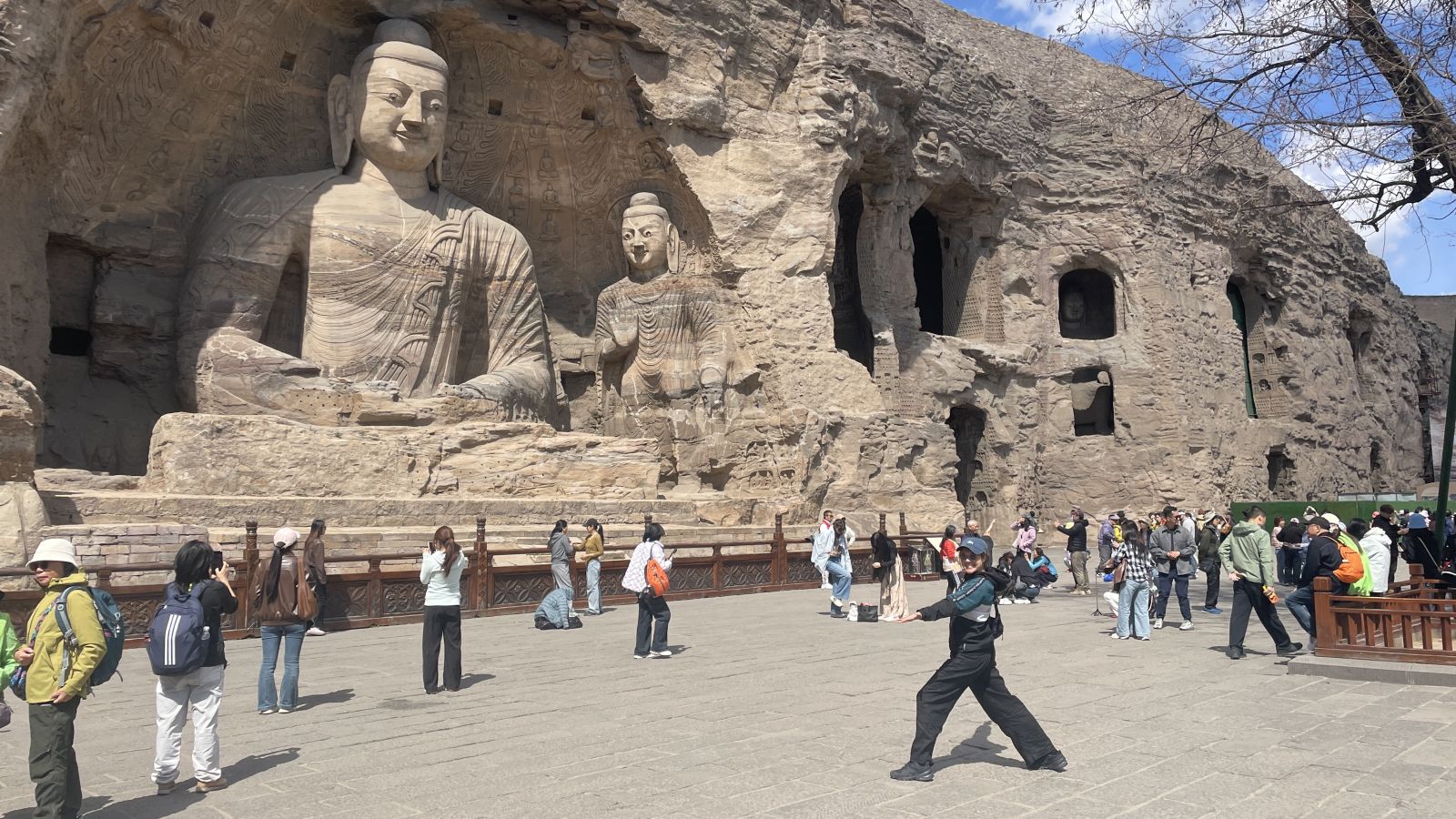
Ancient Buddhist temple grottoes in Shanxi, China
According to Smart Traveller, ‘China has included Australia in its visa waiver program. If you hold an ordinary Australian passport, you may be able to enter China without a visa for no more than 30 days for business, tourism, visiting family and friends or transit.’
I think most Australians assume it’s complicated to visit and have yet to clock how easy travel in China can be. I found 15 days to be the perfect itinerary for a soft landing into Shanghai, to dip into some seriously underrated smaller cities, and finish strong in the capital of Beijing without feeling rushed.
China's internet and payment systems work differently to almost everywhere else. This issue is easy to overcome with some simple apps, but the catch is that none of this can be set up when you’re in China. It MUST be set up BEFORE you arrive.
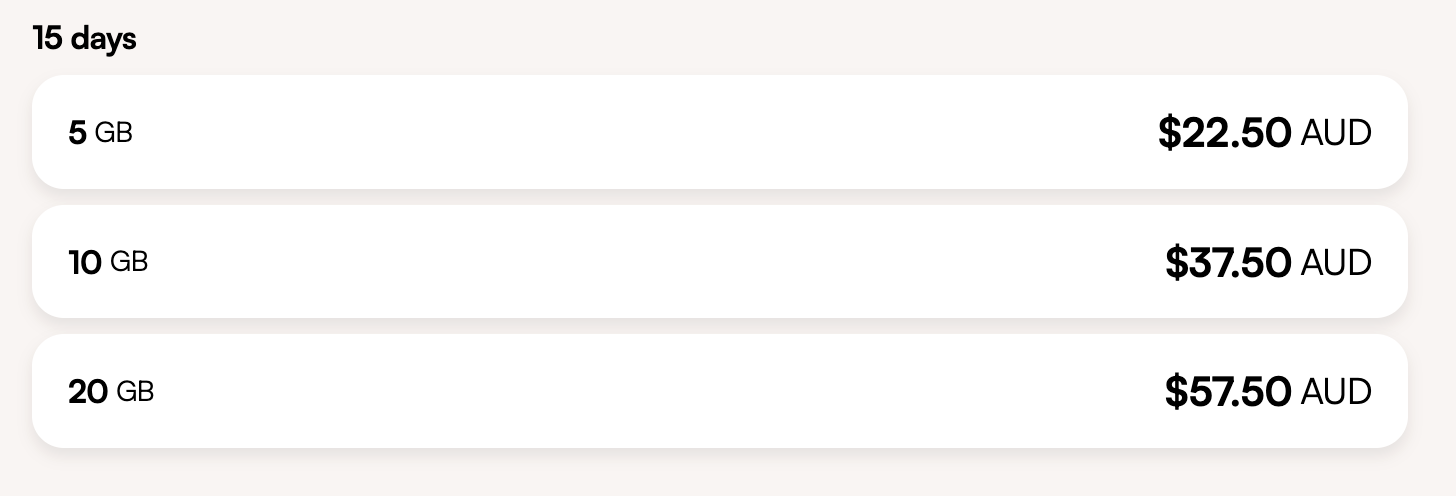
Normal tourist SIMs and standard VPNs are hit and miss in China, since apps Australians use daily, like Google, Gmail, WhatsApp, and YouTube, are blocked on the regular Chinese network. The simple workaround I used, and would recommend to anyone, is to download the Airalo eSIM app and get one for China. I paid around $60 for 15 days and could access everything I needed and use my phone data as normal. This basically re-routes your connection through Singapore and once that's set up, your phone behaves exactly like it does at home. You can check emails, message people, and generally forget you're dealing with the Chinese firewall completely. Download the Airalo app, buy your eSIM, follow the steps and install it while you're still on Australian wifi.
Alipay is the app that runs most of daily life in China. It’s like a combination of your applepay, metro card, bike rental, restaurant menu translator, uber and much more. I didn't carry a single note of Chinese cash the entire trip. It links to your Australian card and works as a digital wallet, but again the account verification process needs to be done BEFORE you arrive, since it's far more difficult to complete once you're on Chinese soil.
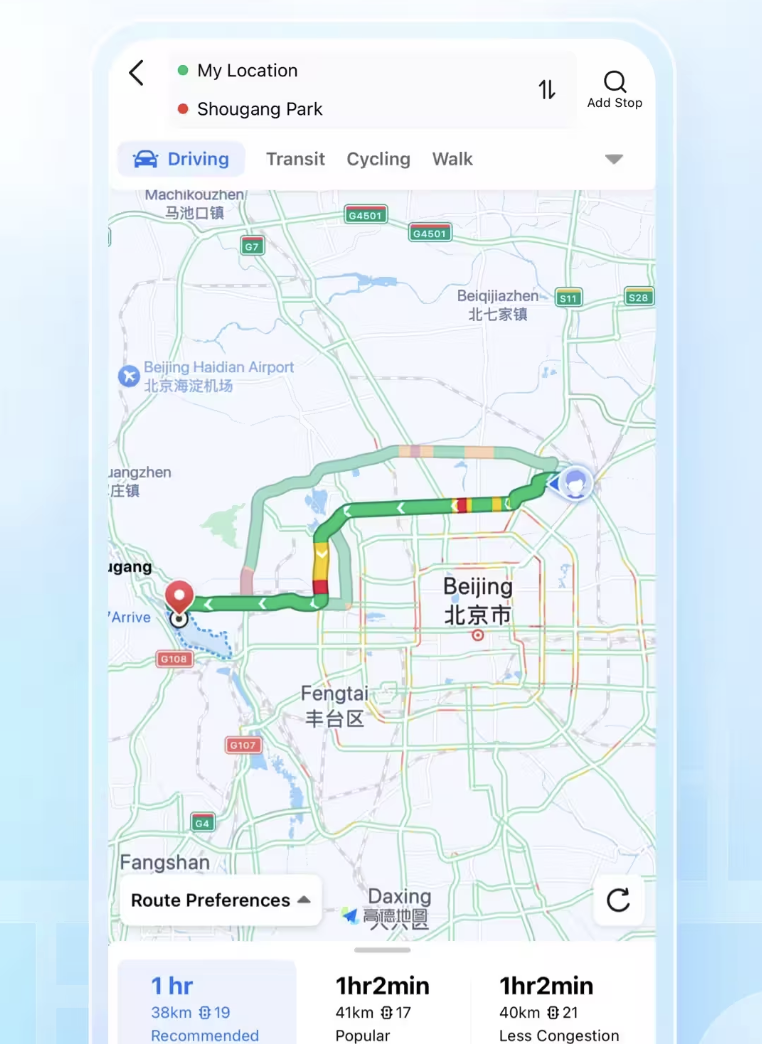
Google Maps doesn't really function inside China, and while Apple Maps sort of works, it's not what you want to be relying on. Amap is the Chinese equivalent, is the one that foreigners need to download. It's genuinely simple to use even without reading Chinese. Type in ‘coffee shop’ or the name of a tourist site and it'll route you there with public transport, walking, or driving directions.
I booked every train ticket and every hotel in China using the Trip.com app and had a smooth run across the entire trip. It's a Chinese company, which is exactly why it's so reliable for navigating Chinese train timetables and accommodation listings that don't always show up properly on Western booking sites. I've used it for five years, the customer service has always been rock solid, and the reviews have matched my actual experience every time. It's also a great discovery tool for things to do in China. If you click on the 'Travel Guides' tab you'll see lots of user-generated uploads of cool places.
Note: When you book your bullet train tickets, if you're booking more than a few weeks ahead you will only be reserving them. Make sure you check they actually go through. Sometimes they don’t get them for your allocated time and if you don’t check like me, you can find out late in the trip!

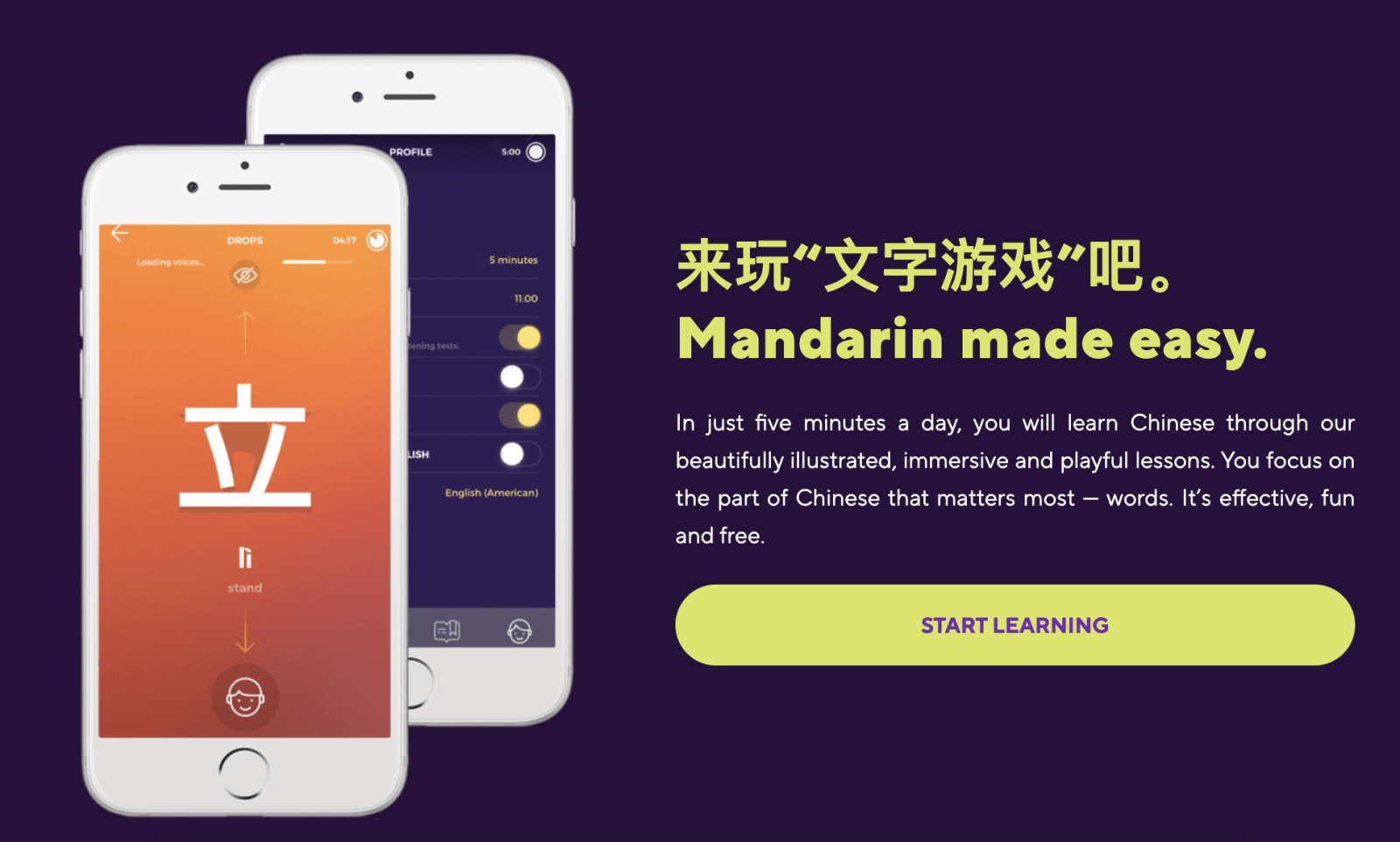
I have loved this gamefied language learning app called Drops (it's like Duolingo bust better). Before arriving in China I tried to brush up the basics as much as possible. Chinese people appreciate basic language skills more than any other country I have visited. You get a gold star just for some hello, please, thank you's!
If you're only going to learn a few words, try:
If you get these five key things locked in and set up before you board your flight then China becomes extremely easy to travel. Skip this step, and you'll spend your first two days figuring this out.
Shanghai is the best value megacity I have ever visited. It’s on par with cities like London, Paris, Tokyo when it comes to culture, history, art and things to do but with a very minimal price tag in comparison. I’m glad my trip started here because this is an easy landing into China. Shanghai has been an international hub for over 100 years so this allows time to adjust to a new country and culture before getting more off the beaten path.ss
I expected something closer to the chaotic, high-pollution energy I'd experienced in parts of Vietnam and Thailand. Instead I found a ultra modern city with wide, leafy streets, quiet electric powered traffic, and an old town filled with more neoclassical and Art Deco architecture almost anywhere else in the world. Shanghai has one of the world’s great Art Deco cityscapes, a souvenir from the opium wars and its history as a major international trading port. I was shocked at how much it feels like stepping into Europe in Asia.
There’s so much to do in this city that you’d need to be there for months before you could make a dent. Here’s a short list of my favouite parts of the city.
Make this one of your first stops as this will enable you to better understand the city’s complicated history, including trade, foreign concessions, the Opium Wars amd why there's so much neo-classical architecture in Shanghai.
This is Shanghai’s famous postcard picture. On one side you have European-style banks and trading houses (apparently the HSBC building the the best one to check out, I missed out on that and regret it).Across the river you can see the futuristic Pudong skyline. The Bunds is the best place to get a feeling for the Shanghai’s old-meets-new, East meets West feel everyone talks about. Be sure to visit this area in daytime vs nighttime too.
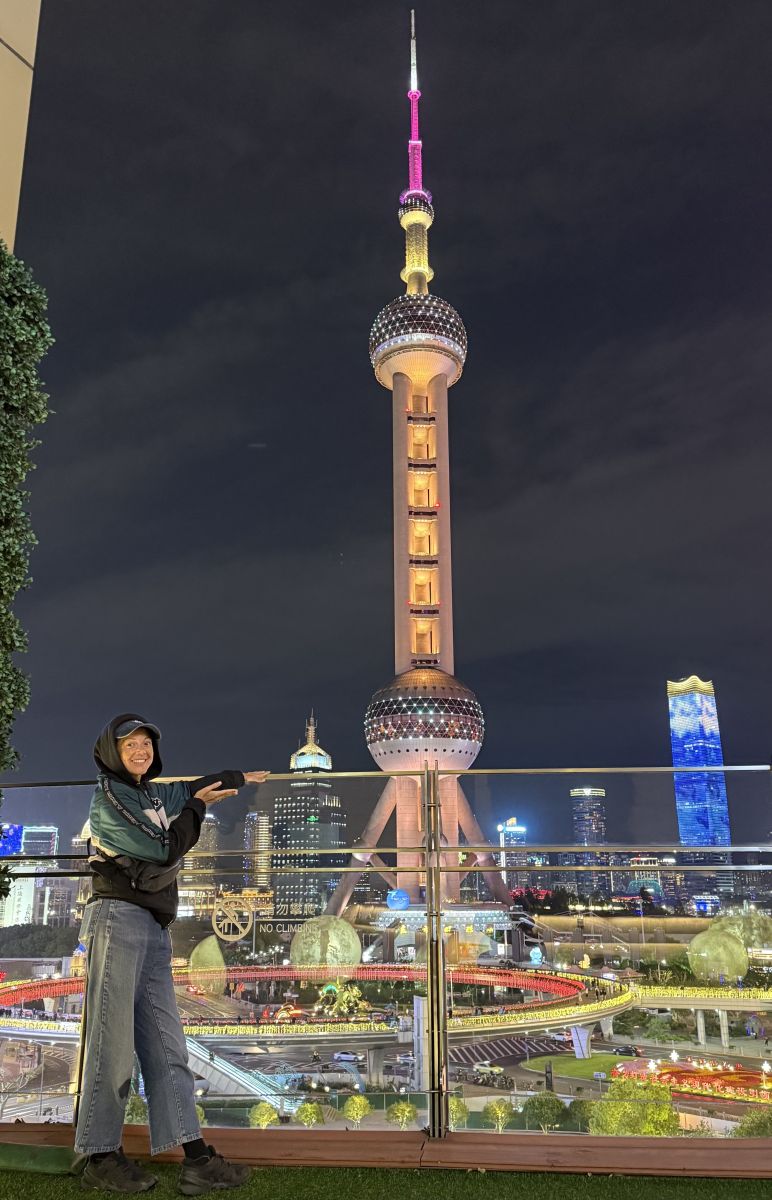
Cross the river to see the sci-fi version of Shanghai up close. This is where you’ll find the Oriental Pearl Tower, Shanghai Tower and the glassy skyscrapers that make the city feel like you're in 2059.
Hot tip: visit the INS shopping centre for prime free rooftop views!
This is probably the trendiest part of the city. It's a leafy, walkable part of the city with old courtyards, tree-lined streets, cafes, boutiques and quiet corners. Tianzifang is a wonderful maze of narrow lilong alleyways lined with traditional shikumen houses. This is a distinctly Shanghainese style of architecture combining Chinese courtyards with Western-style brick terrace homes. I was told by a local that this specific area on the map that was saved from demolition by a bunch of artists, many of whom still have their studios there.
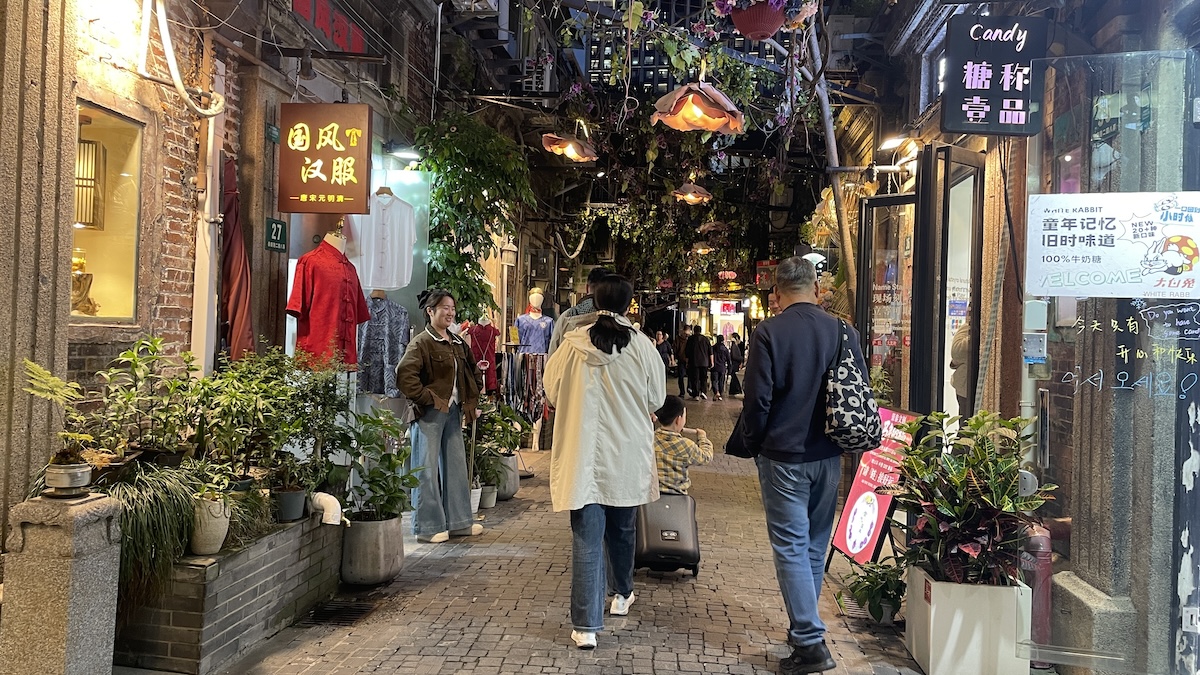
Tanzifang streets in the French Concession
One of the best areas for wandering, there’s old bridges, riverside paths, restored warehouses, galleries and a slightly grittier creative feel than the polished Bund. This is also close to 1933 Old Millfun, one of the strangest buildings in Shanghai and a must-see. It was originally a 1930s slaughterhouse and has been turned into a creative and design space. The concrete ramps, bridges and circular walkways make it feel eerie, industrial and completely different from the rest of the city.
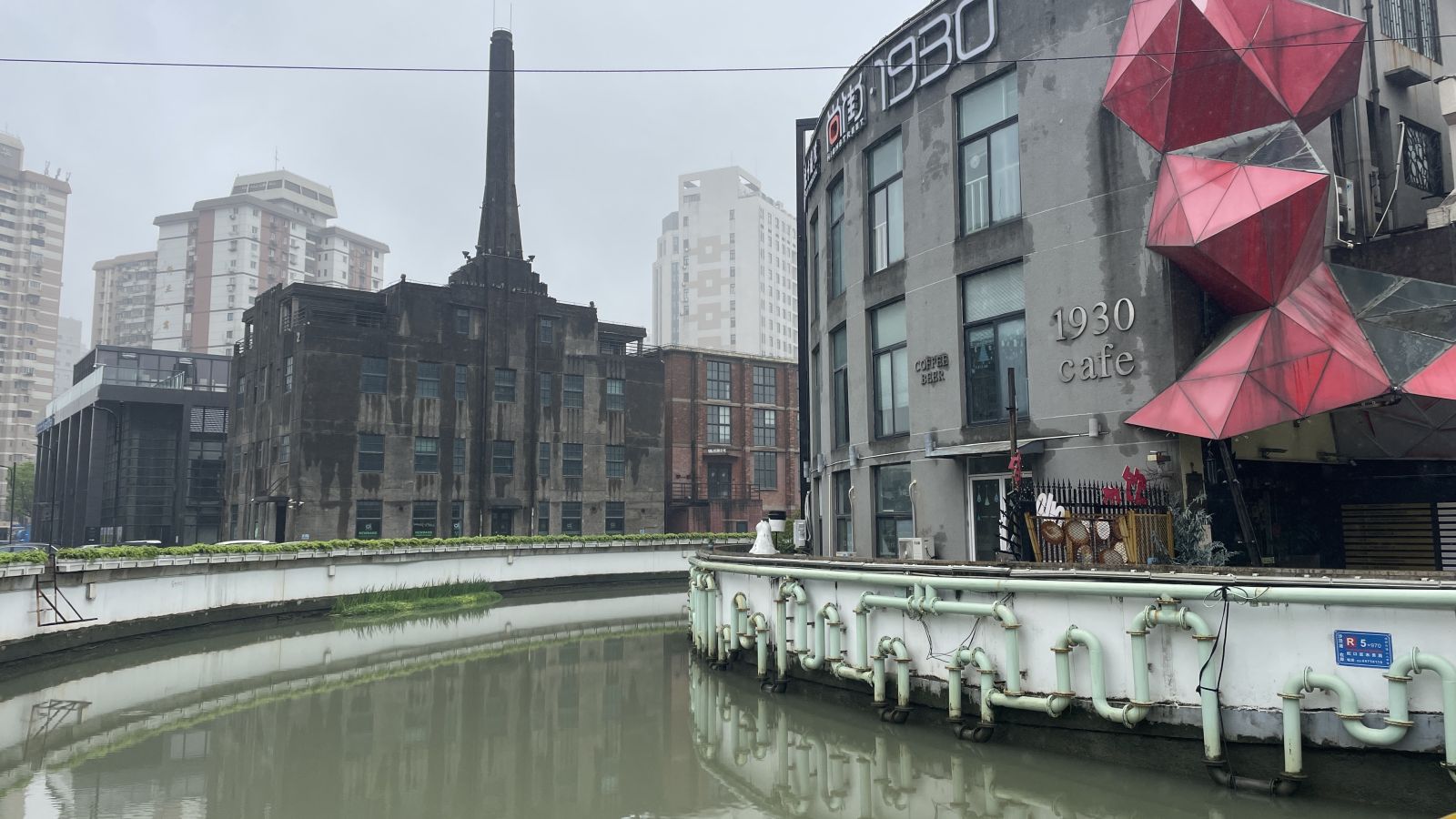
A rainy day at Suzhou Creek
Housed in the huge former China Pavilion from Expo 2010, this is a must-see for the sheer scale of this massive red building alone. It's full of modern Chinese art and the surrounding area is also quite interesting.
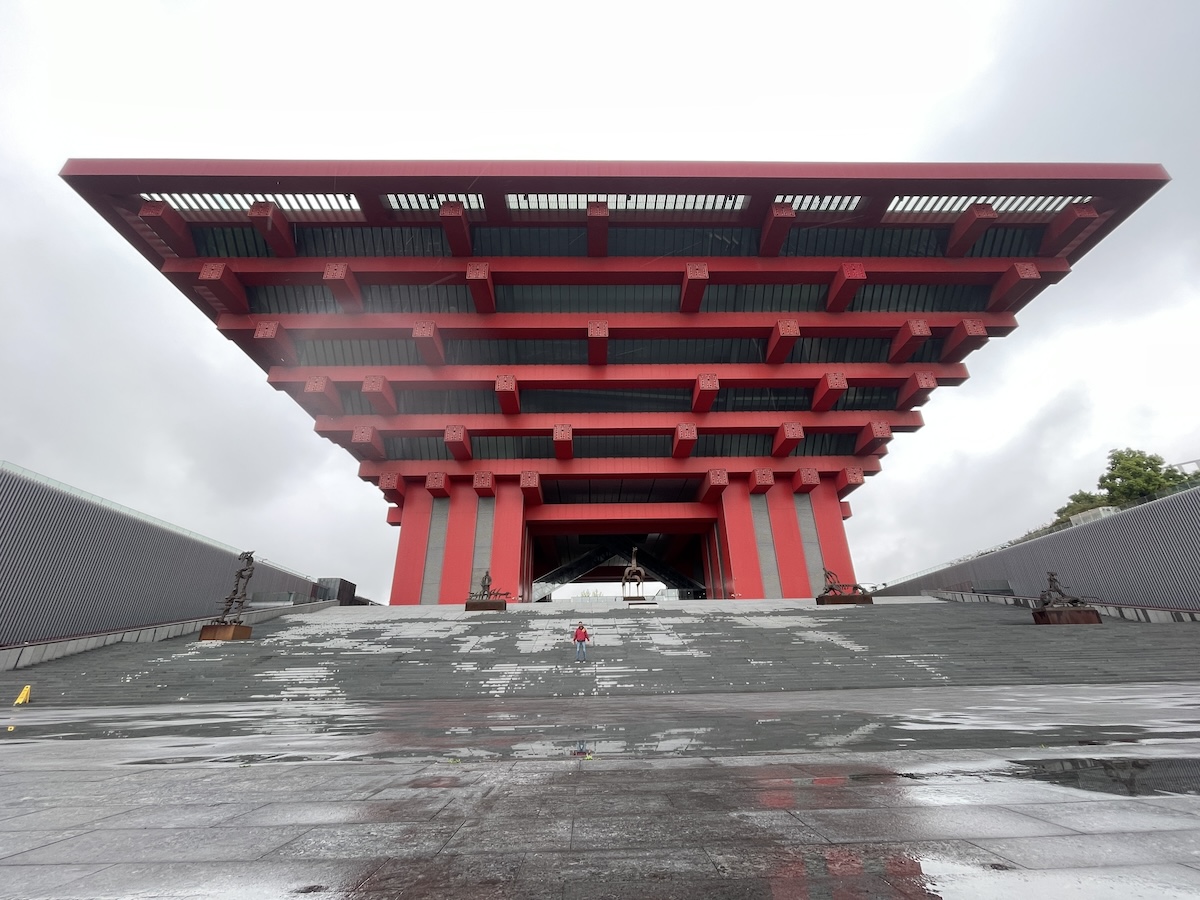
Huge China Art Museum
This area is a bit more crowded and touristy, but still worth seeing on a first trip. I didn't pay for the entry into the Yu Gardens itself as I felt like I had seen enough from the general area. It's surrounded by wonderful parklands and also expect to find loads of yummy street food in this area too!
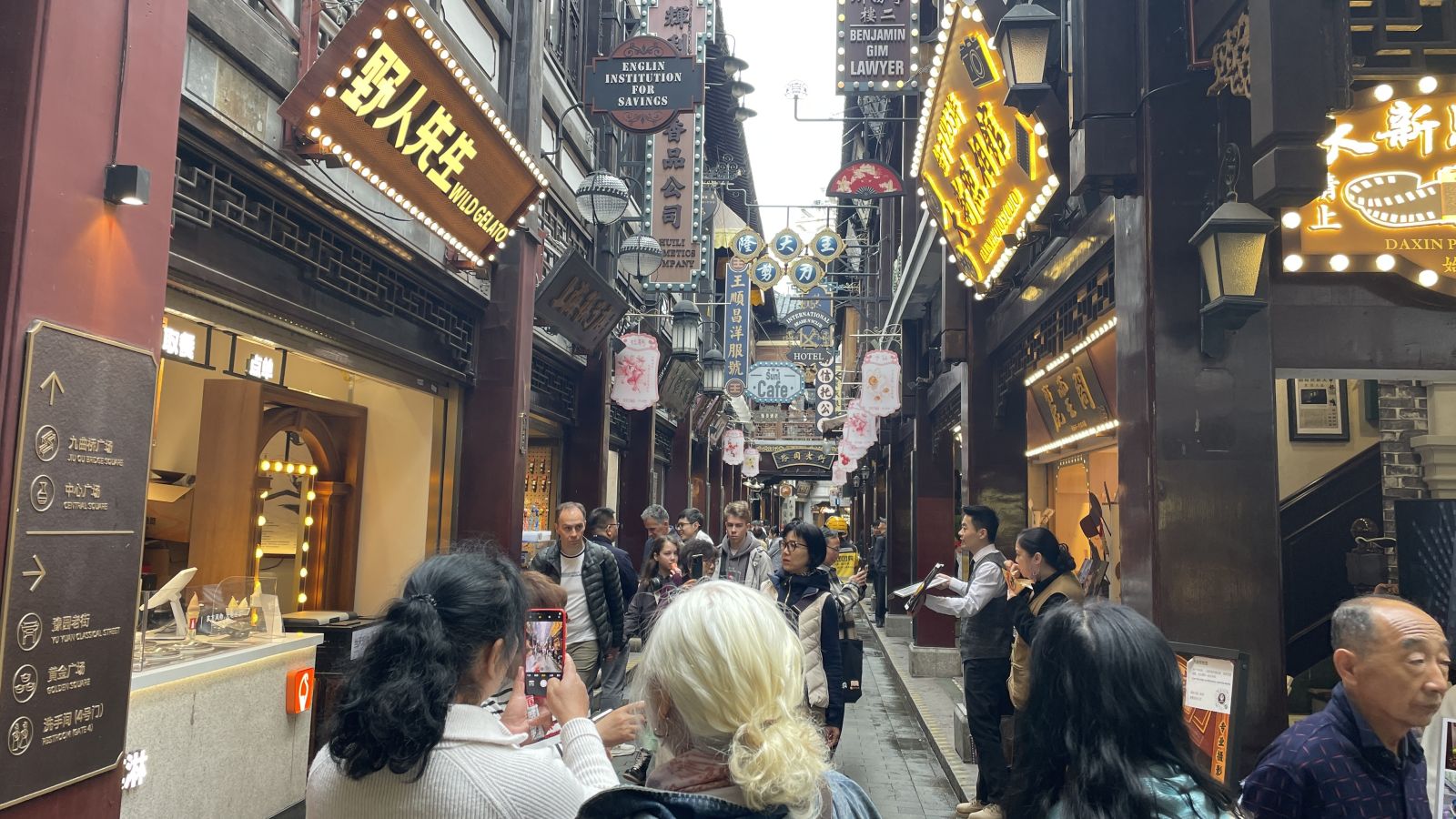
Small alleyway in the Old Town at Yu Garden
Shanghai’s metro makes it easy to get around, so you don’t need to stay beside every attraction. But choosing the right neighbourhood and staying within a short walk of a metro station will save you time and make the trip much more enjoyable.
Best for: first-time visitors, solo travellers and people who want a balance of local life and convenience to all the key sights
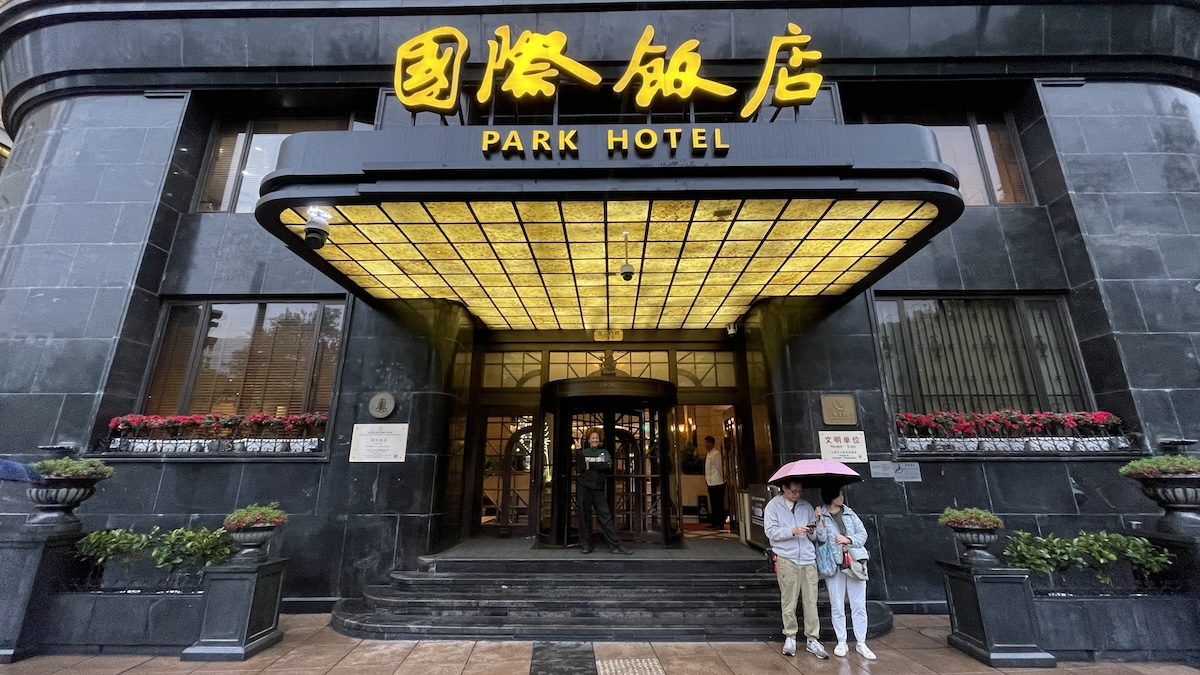
It combines restaurants, shopping, cafés, local streets and strong transport connections without feeling as touristy as the Bund area. Jing’an Temple station connects Lines 2 and 7, while Line 2 is particularly useful for moving across central Shanghai. I stayed in budget hotel called Hibei on the outskirts near Shanghai Railway Station and found it incredibly easy to get around.
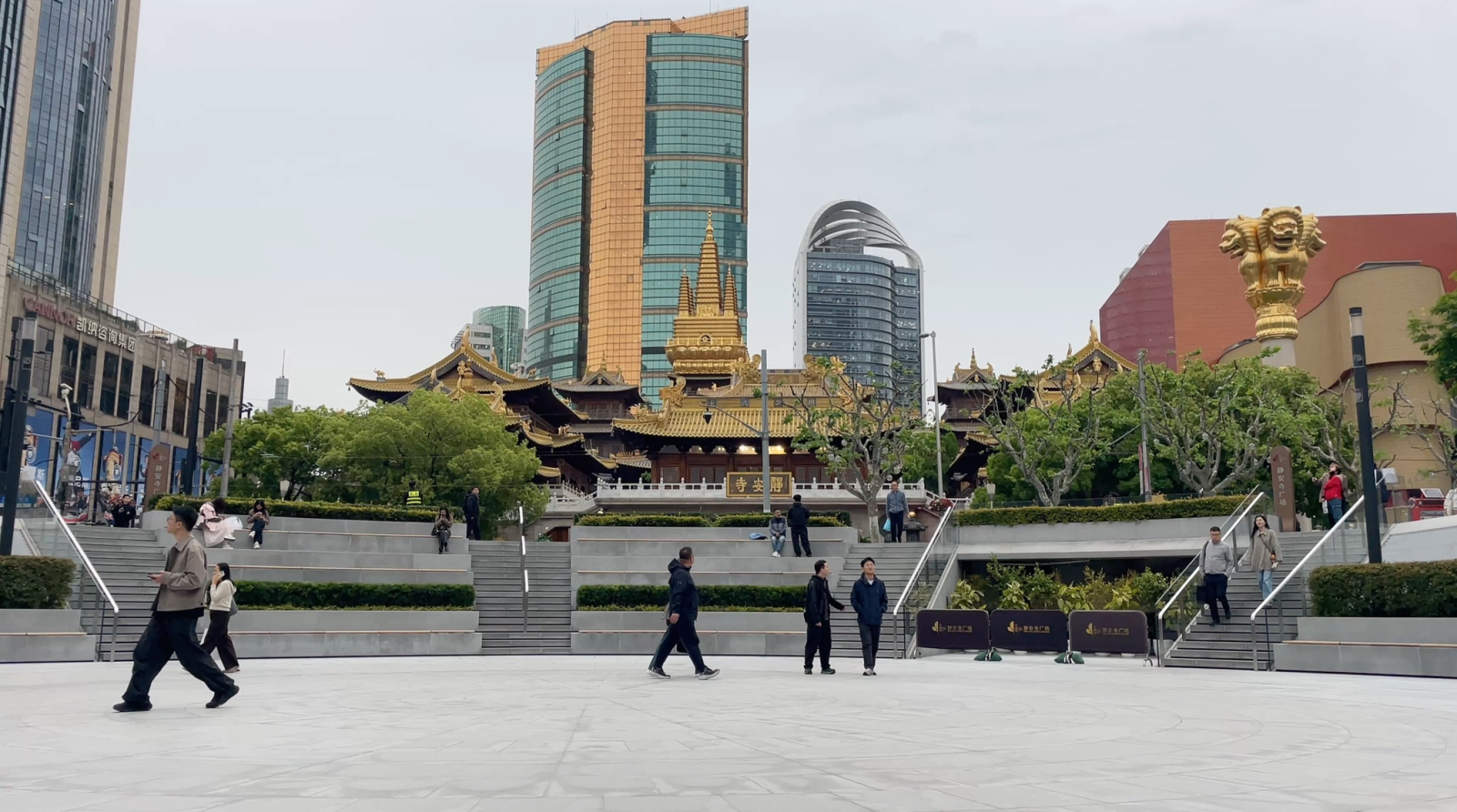
Best for: couples, repeat visitors, café lovers, architecture fans and slow travellers.
This area is super trendy and cool with leafy streets, heritage buildings, cafés, boutiques and some of Shanghai’s most enjoyable walking and cycling areas. It’s where the Hipsters of Shanghai live but was outside of my budget on this trip but I definitely recommend it. Note: this district covers a large area, so look near stations like South Shaanxi Road, Changshu Road, Hengshan Road or Xujiahui.
Some other notable locations:
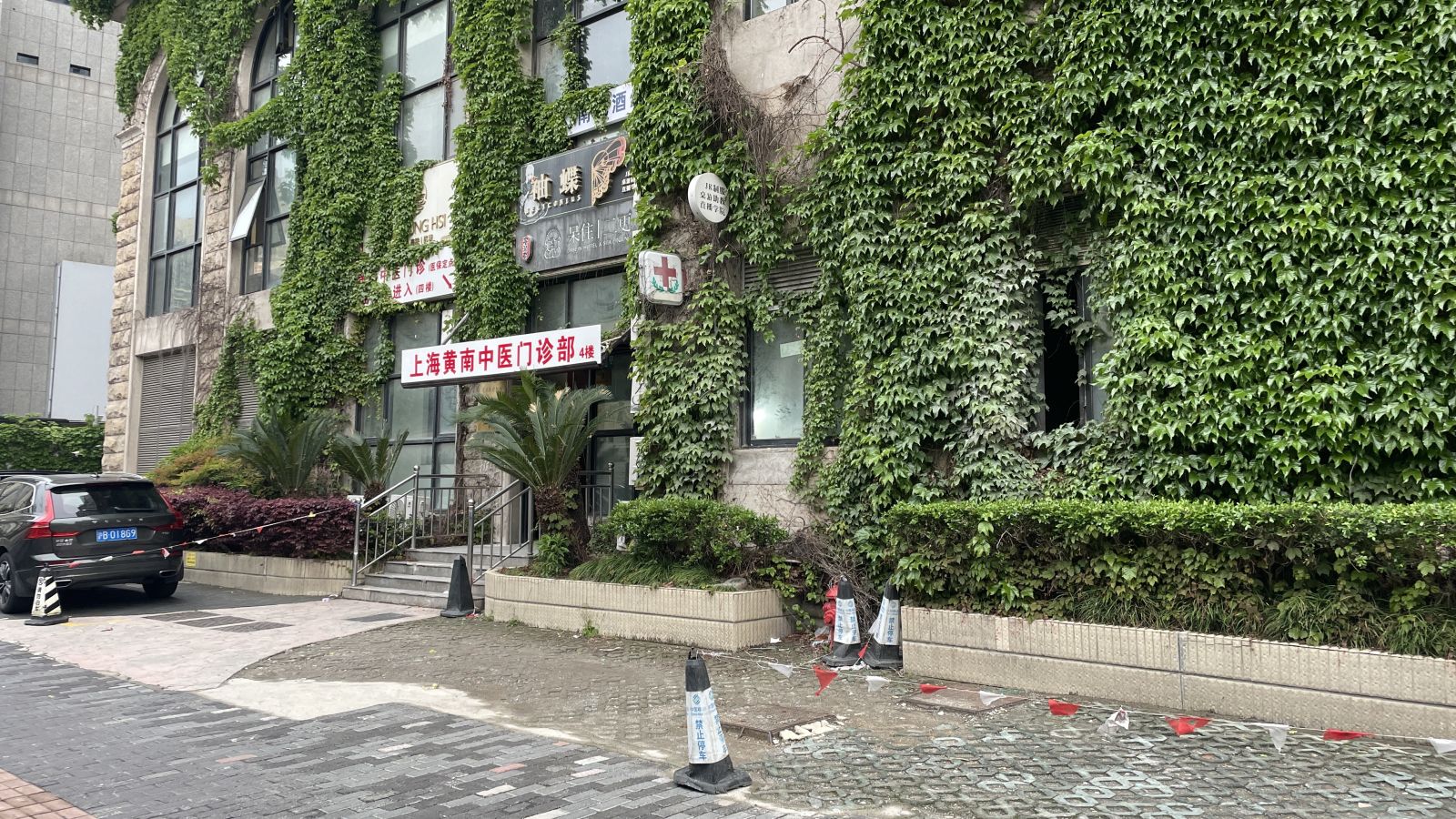
Leafy Building in Former French Concession Area, Shanghai
Beijing is packed with huge historic sites, temples, parks and old neighbourhoods, you could easily spend a week here without seeing everything. For this first part of the trip, I’d focus on the places that best explain China’s imperial history. I really enjoyed breaking up the trip up this way for one simple reason, if you try to tackle all of it in one stretch, it starts to blur into one.
Splitting Beijing into two visits, with Datong and Pingyao slotted in between, keeps everything sharper and gives you a proper contrast between the grand imperial stuff and the more local side of the city.
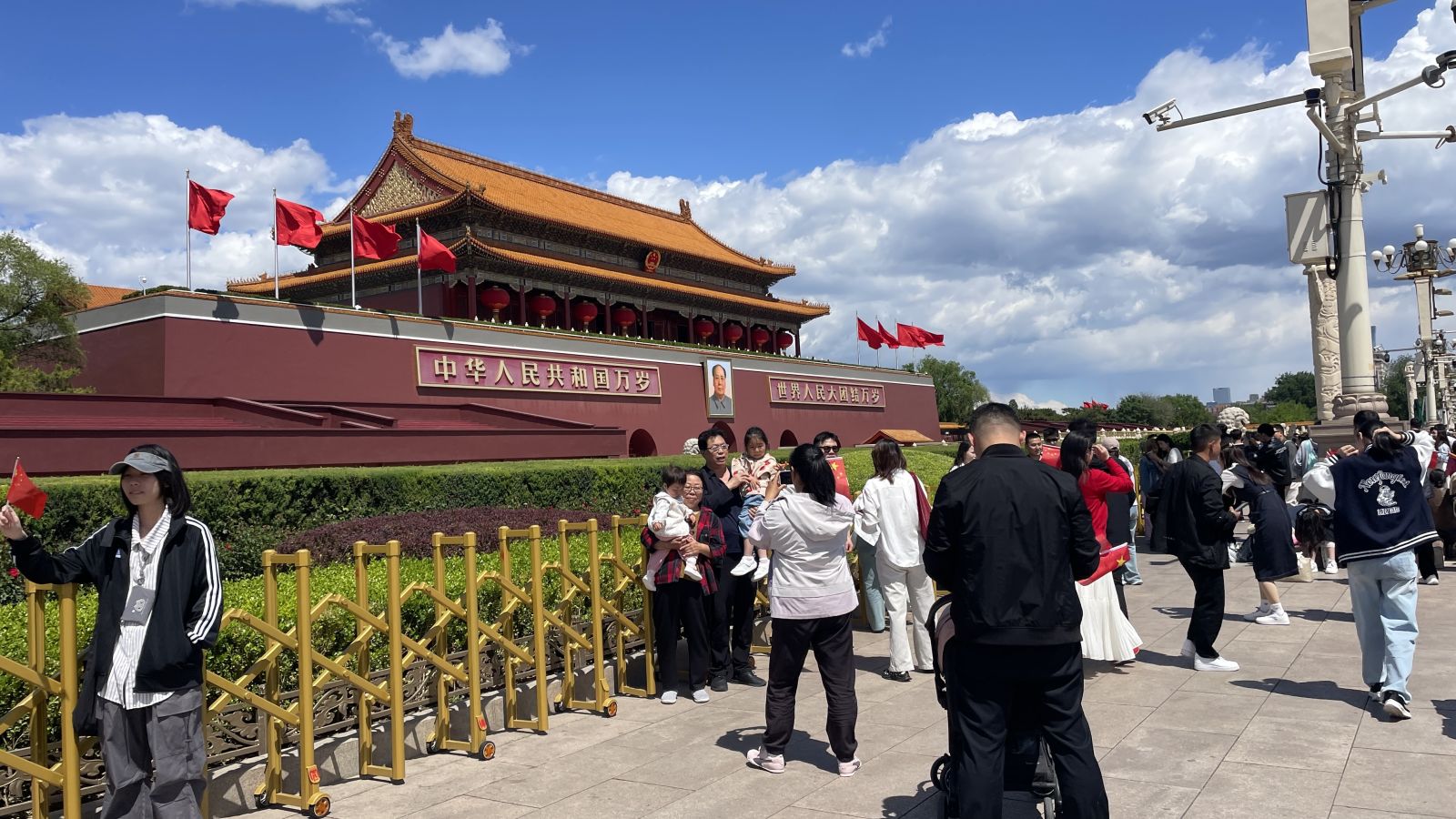
You can't visit Beijing without visiting these two. Expect heightened security, checkpoints and crowds. You'll also need to book this at least a week in advance if you're doing it solo, however, I did a 12 pm GetYourGuide tour and found it really useful. They handled booking all the tickets, helped skip the queues and gave The Forbidden City the context it needs to enjoy it (it’s huge, trust me!).
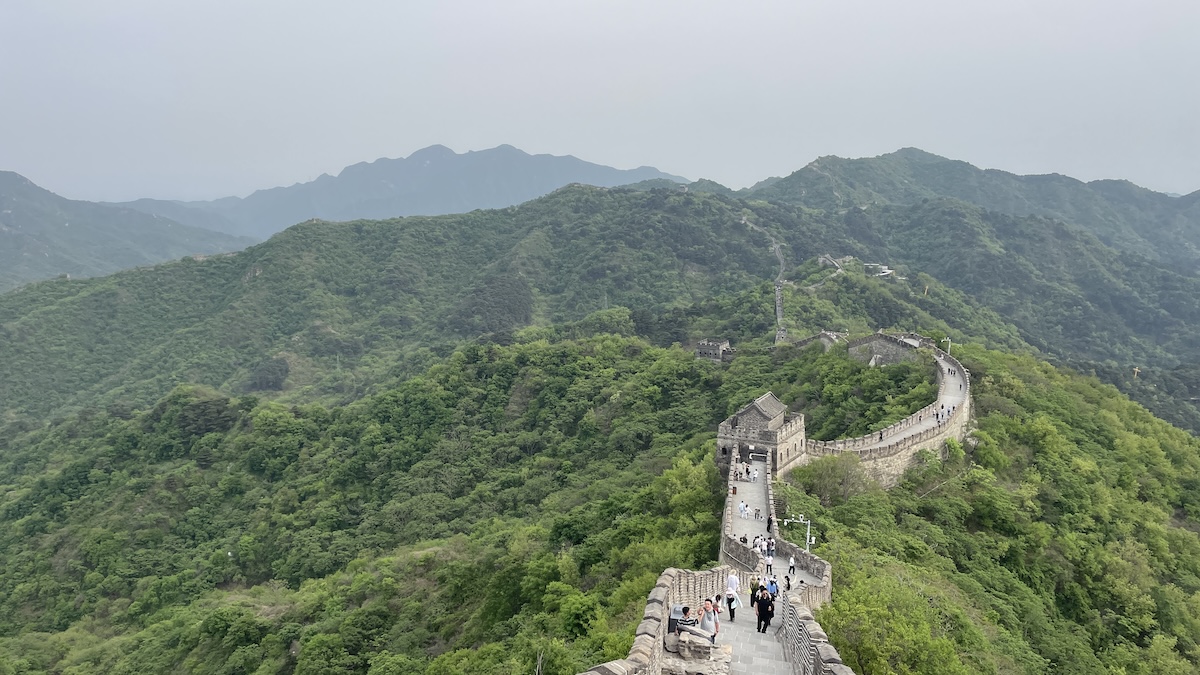
For your Great Wall of China adventure, I’d choose Mutianyu over the Badaling location. It’s a bit further out and not acessible via metro, but that means it’s less busy and the mountain scenery is absolutely stunning. I did a cheap MuBus tour with a guide called Mr Mike, who was excellent (after 10am is the best time because everyone seems to go early.)
One of Beijing’s most beautiful historic sites and a good contrast to The Forbidden City. Go in the morning if you want to see local life in the surrounding park, with people exercising, dancing, playing music and hanging out.
A great historical stop in northern Beijing, especially if you’re already exploring the hutongs nearby. This was one of my favourite spots to people-watch. Locals dance together, learn calligraphy and live stream here. It's a quiet pocket in amongst one of the busiest tourist areas and it gives you a sense of the old city layout and ancient local life too.
These historic streets sit along the southern part of Beijing’s Central Axis. The main pedestrian street is quite polished, but the smaller surrounding lanes are great for traditional architecture, local snacks and wandering. I found an amazing spot for Roujamo, which was a yummy pulled pork pastry right by the station.
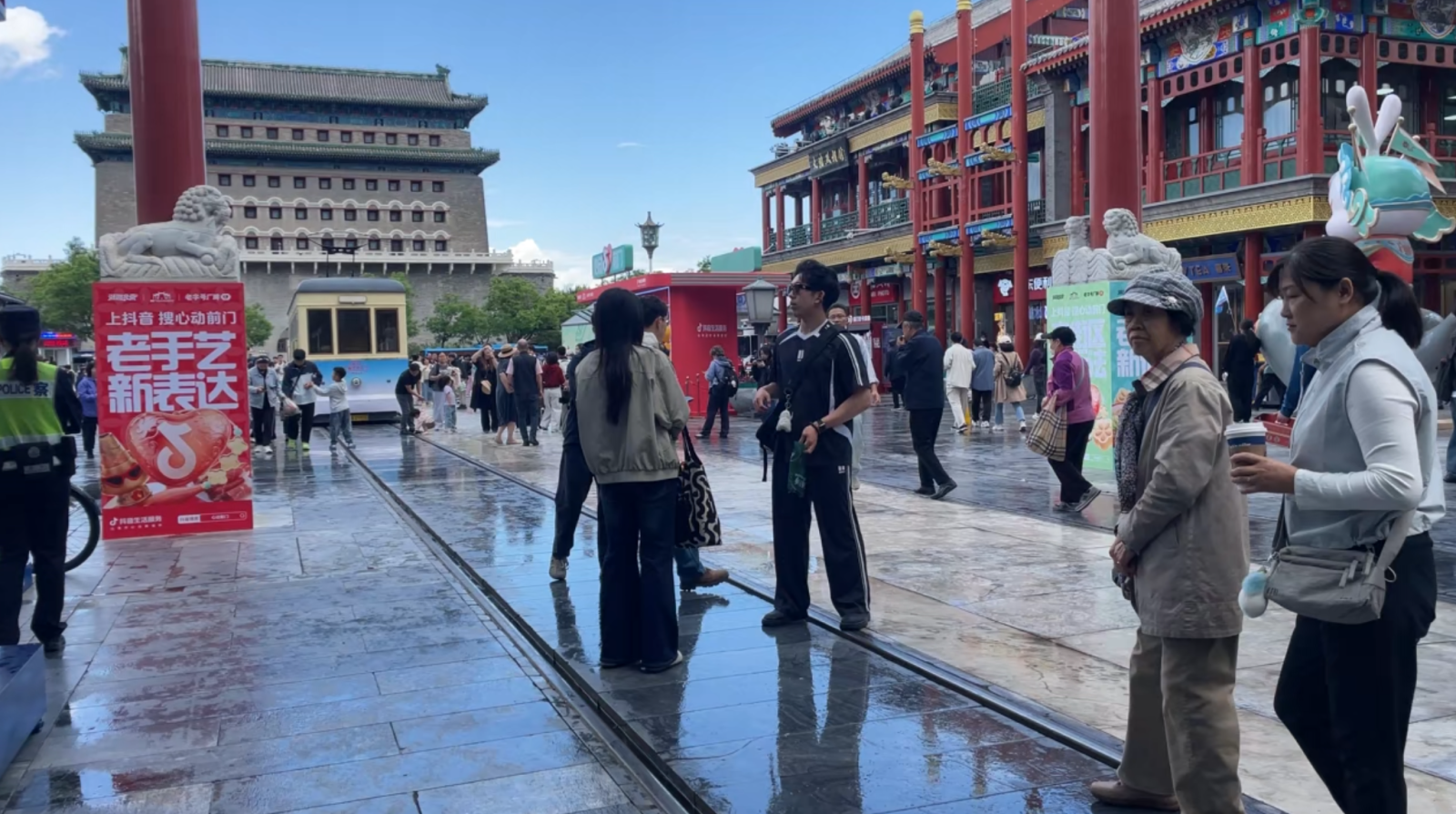
Qianmen Area
Best for: travellers following the Beijing Central Axis, traditional architecture and easy access to the Forbidden City and Temple of Heaven.
This historic area sits just south of Tiananmen Square and is one of the best places to stay if the imperial history of Beijing is your main focus. Qianmen’s main pedestrian street is quite polished and touristy, but the surrounding lanes are filled with traditional buildings, local restaurants and small shops. It’s also well placed for exploring the rest of the Central Axis, including the Temple of Heaven with easy access to all main sights.
Best for: budget travellers, longer stays and people who want a more local experience.
I stayed near Panjiayuan in a budget hotel called Yulai and paid around $30 AUD a night for a comfortable private room with an ensuite. It’s a more residential part of southeastern Beijing and feels much less touristy than the central areas.
It was easy to reach the key sights by metro or bicycle and the famous Panjiayuan Flea Market, was around the corner. I still found it extremely easy to get around and thought it was awesome value.
Some other notable locations:
Next up is the lesser-known industrial city of Datong. This is where the trip starts to feel like a real off-the-beaten-path adventure. You'll notice a shift in atmosphere, since it moves away from the international polish of Shanghai and Beijing to a part of China that most Western tourists miss out on. The locals will be curious about you so make sure you take some time to say hello and use Google Translate to connect.
Datong is your base for visiting a world famous Buddhist site called the YungYang Grottos I stayed in what felt like five star luxurious accommodation here for a fraction of what I'd pay for the same standard back home.
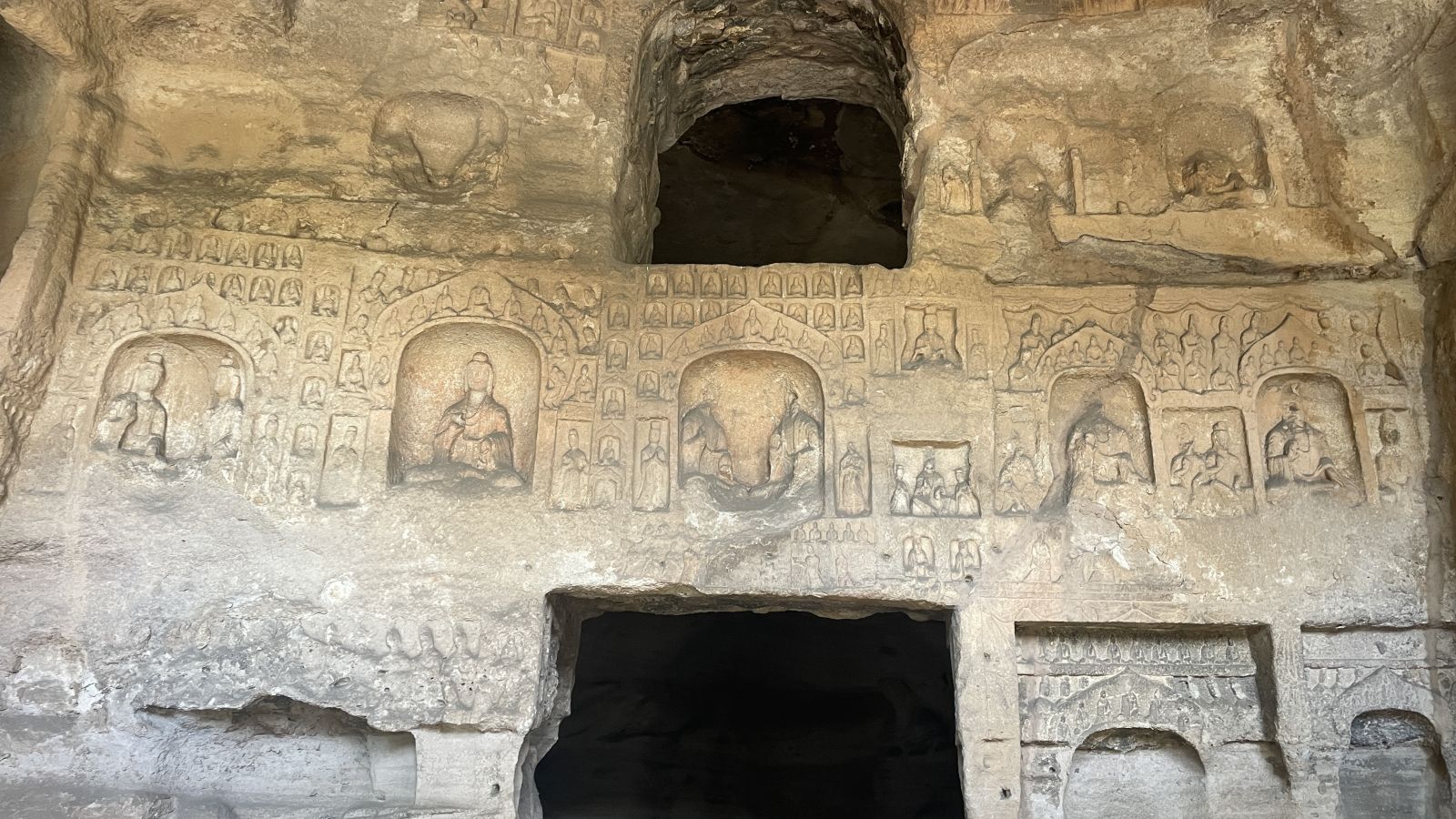
Cave at the Yungang Grottoes
For food, seek out this small hidden gem of a local restaurant called Xiaoshi Restaurant, tucked away from the main streets. It looks rough around the edges at first glance, but it turned out to be some of the best food I ate anywhere in China, cooked by a wonderfully warm local woman.
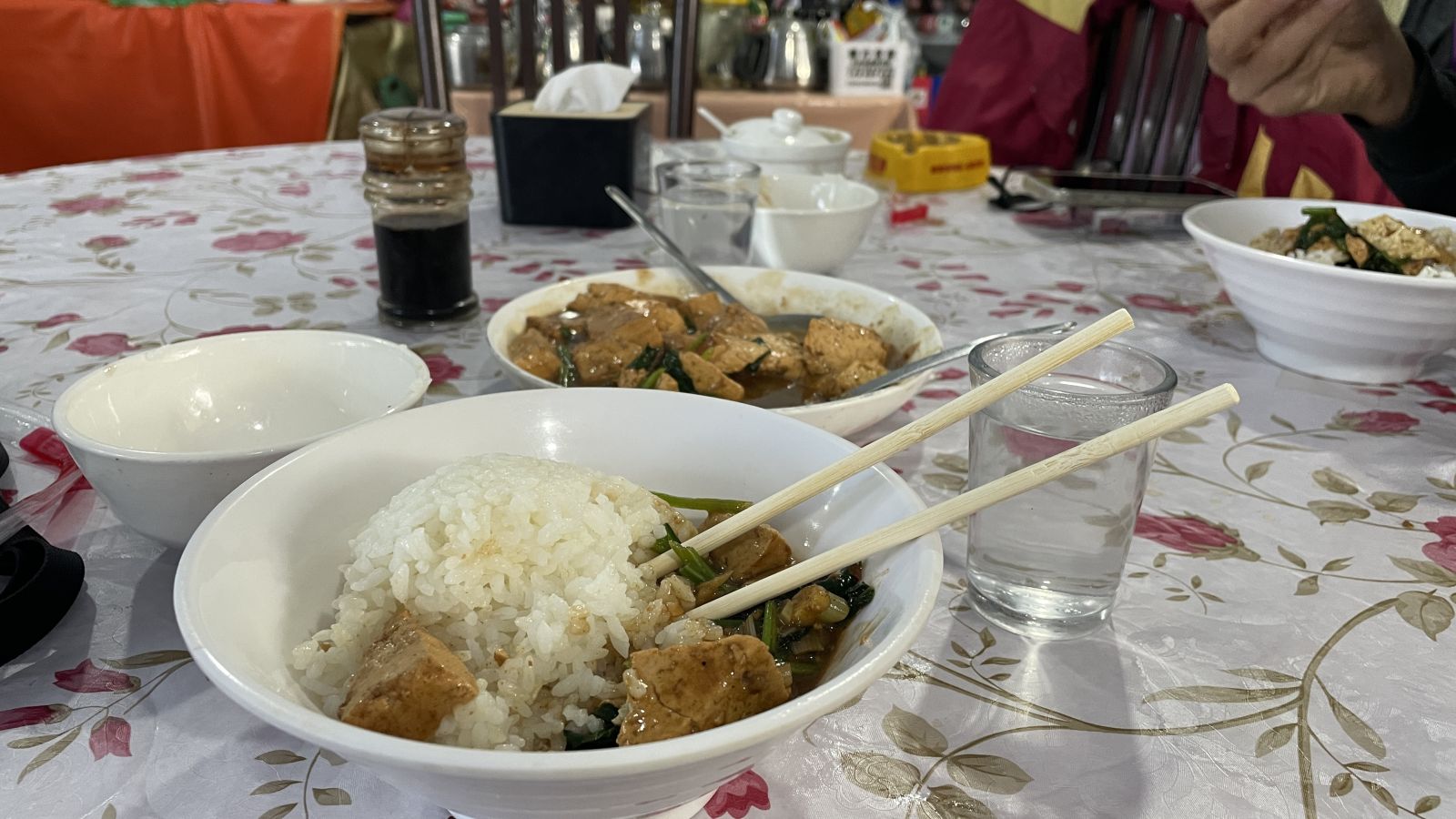
Smoked tofu in Datong's best local cheap eats!
One night in Datong is enough before moving on, but make sure you take time to see how the city has repurposed old mining equipment from its industrial past into a public art display, a small but interesting nod to the region's history.
The highlight of Datong and one of China’s most important Buddhist sites is Yungang Grottoes and Hanging Temple, a UNESCO World Heritage Site. The complex contains 252 caves and around 51,000 statues carved into the cliffs during the 5th and 6th centuries, ranging from tiny figures to enormous Buddhas. Allow at least half a day to explore it properly. Unfortunately, when I was there the Hanging Temple was closed for rennovations but it's build into a cliff face outside Datong and is one of the most unusual temples in China. It clings to the mountain on narrow wooden supports and combines elements of Buddhism, Taoism and Confucianism. It is outside the city, so it is easiest to visit with a driver or tour.
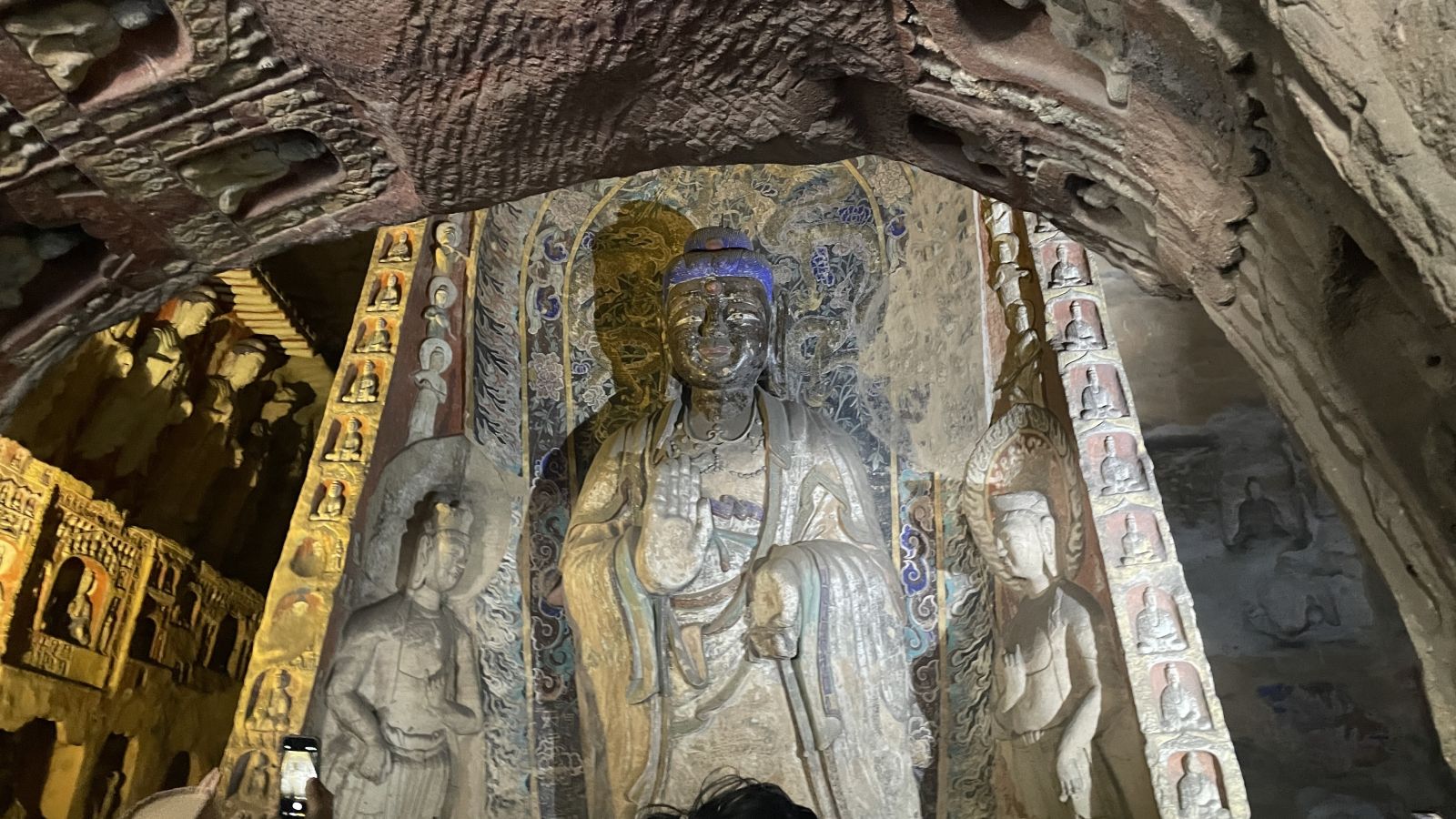
The Yungang Grottoes
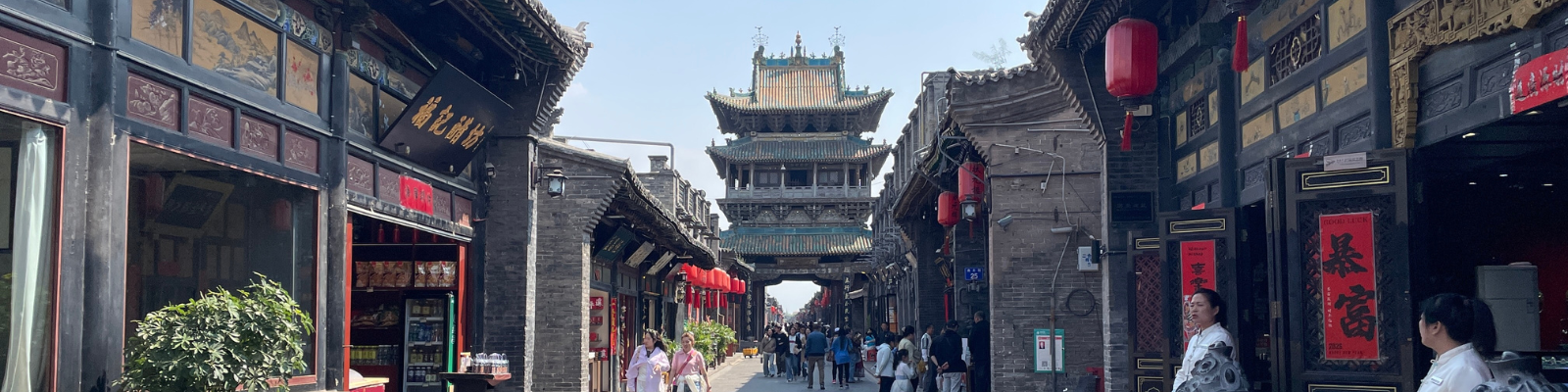
Pingyao is seriously one of the hidden gems of China. Pingyao Ancient City is a UNESCO World Heritage Site in Shanxi Province, China that's one of the most atmospheric historic towns I've ever visited, comparable to somewhere like Dubrovnik, in Croatia but minus the coastline (and the tourists!). The surrounding city walls are still fully intact, and wandering through the cobbled streets feels like stepping back in time to ancient China!
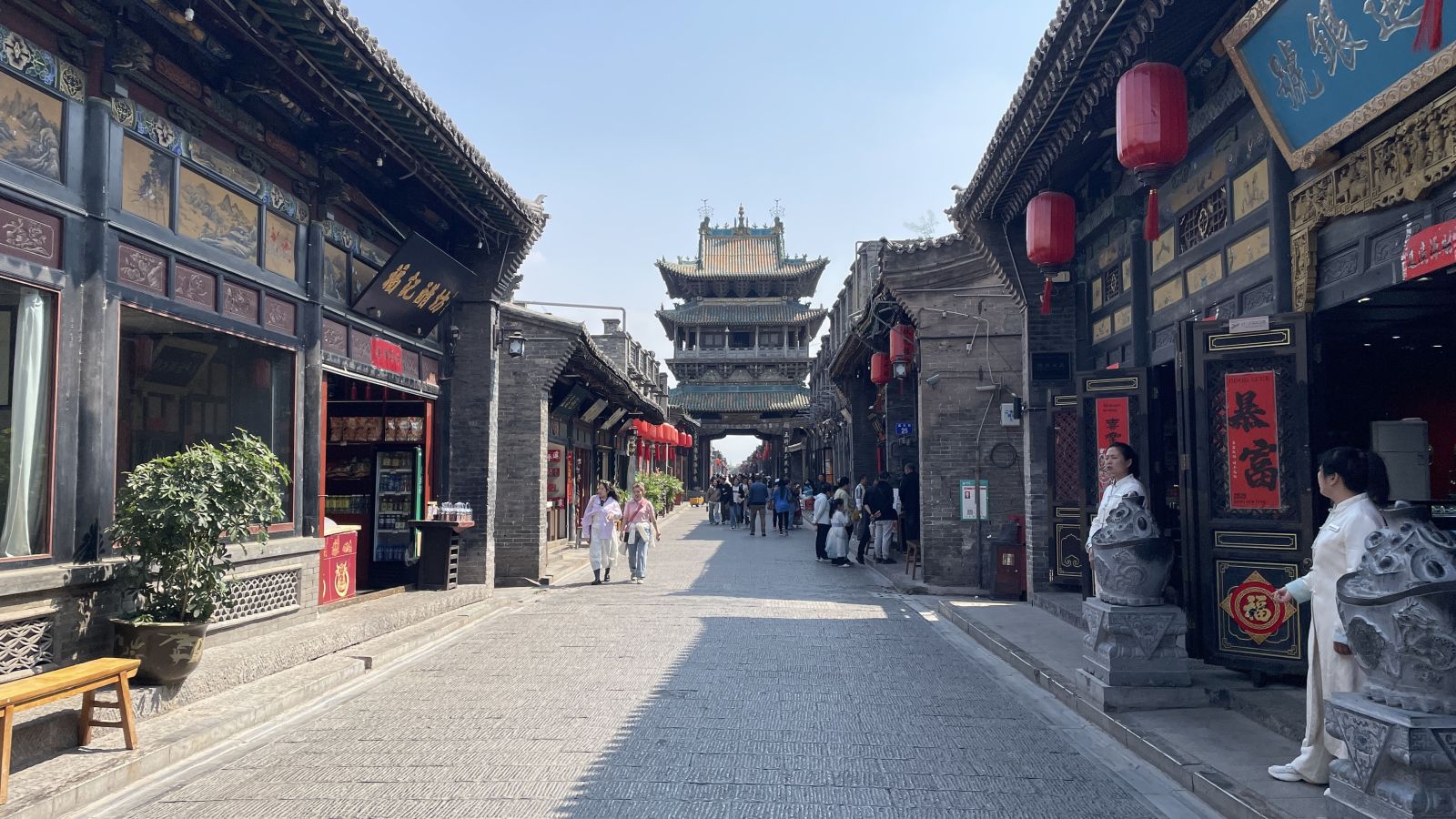
Pingyao Ancient City
Pingyao is packed with small shops, family-run eateries, and buildings lovingly preserved for hundreds of years. Expect to be some of the only western tourists here.
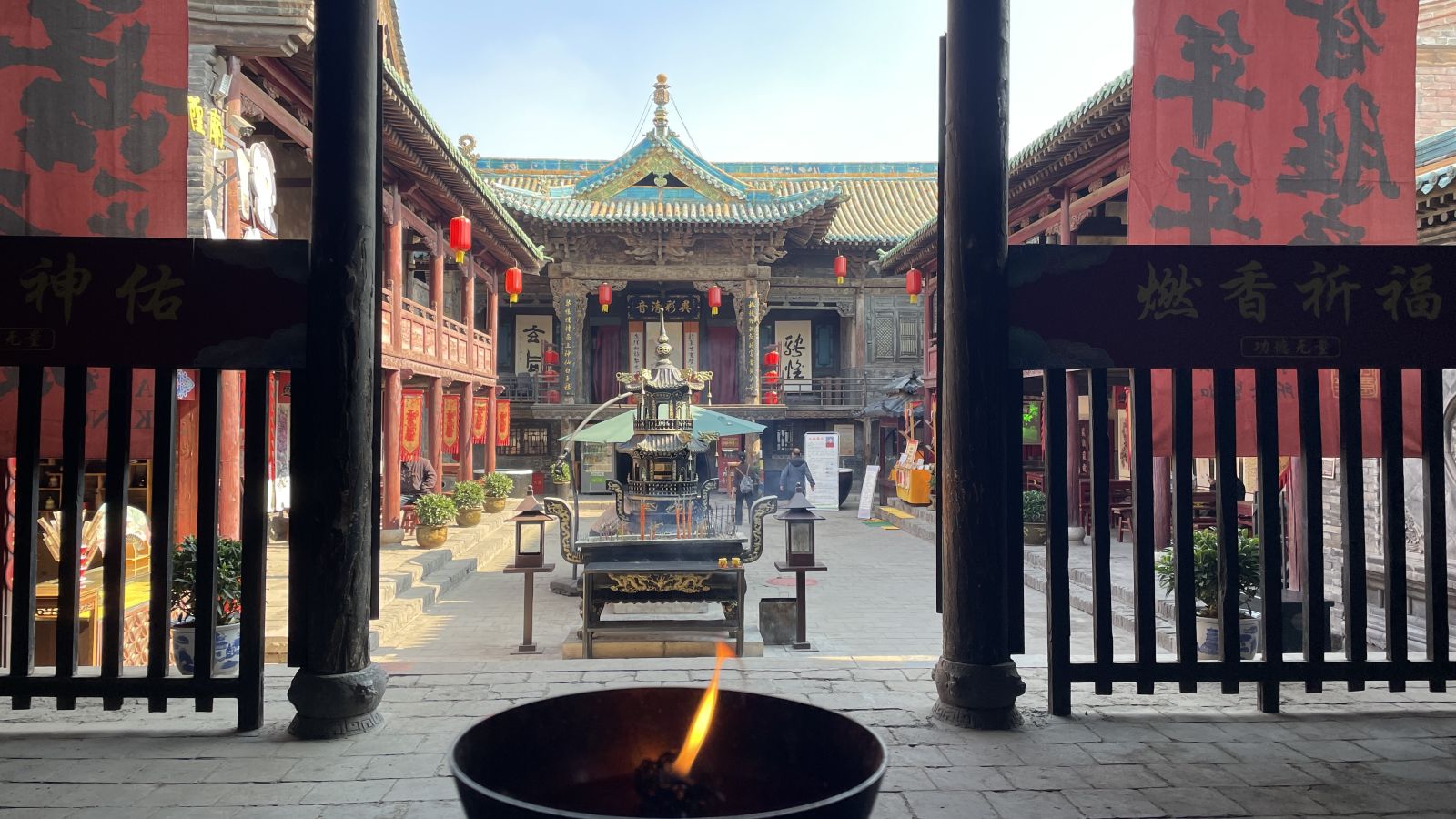
Pingyao Ancient City
Between Datong and Pingyao, you'll notice you're travelling almost exclusively among Chinese tourists rather than international ones which I really enjoyed. On the train, locals struck up conversation, offered us gifts, and kept insisting we try their snacks. It was the complete opposite of the closed-off culture I'd been warned to expect. Getting out into these smaller cities is, in my opinion, essential to understanding the real China, well beyond what you'll see in Shanghai or Beijing alone.
Get the Ancient City Pass which gives you entry to the main historic buildings and museums inside the walls. The pass is currently listed around $27 AUD, covers around 22 attractions, is valid for three days, and each attraction can generally only be entered once.
Then prioritise some of these sights:
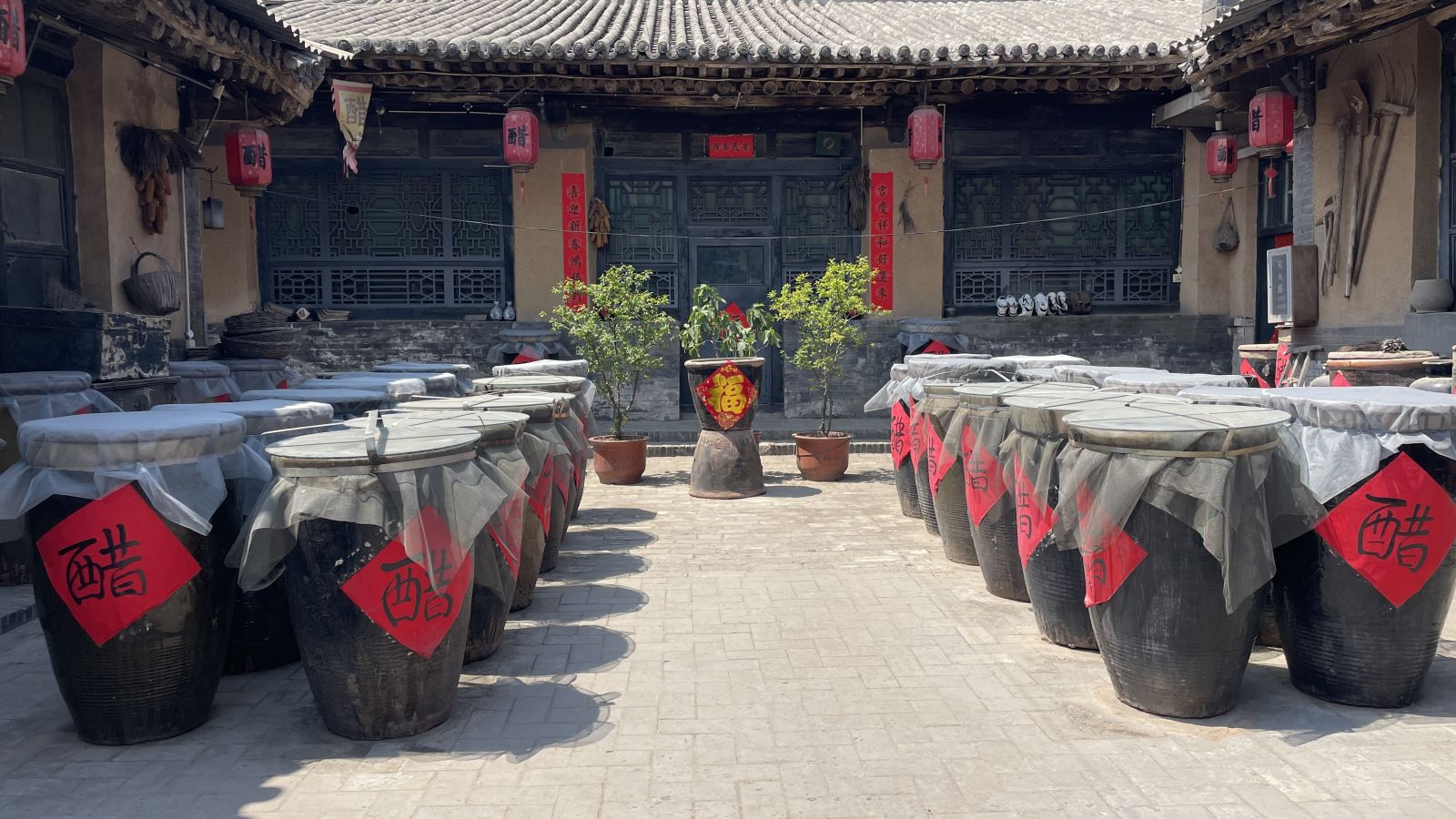
Pingyao's Famous Vinegar
From Pingyao, take the bullet train back through to Beijing and this time focus on the local culture and art scene. It’s a nice contrast to all the imperial sights.
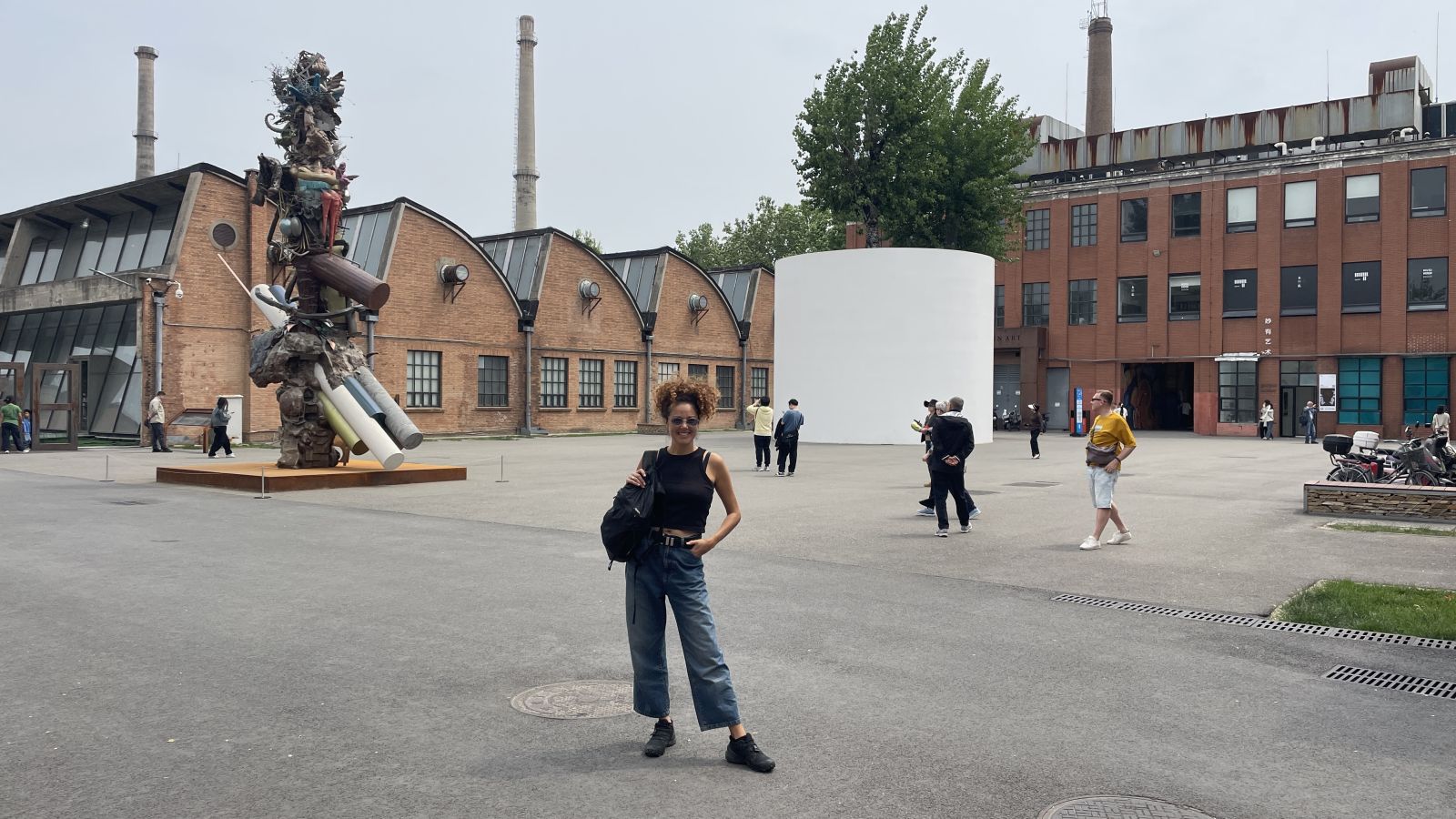
When you need to mix up the scenery and get a feel for the grittier side of Beijing, spend a morning here if you like galleries, studios, street art and old industrial spaces. It’s a former military factory complex turned creative district, and a good place to see Beijing’s modern art scene.
Spend time wandering Beijing’s old laneways around the Drum and Bell Towers, watch local life unfold in this little pocket of calm. It's very close to the Lama Temple and Shichahai Lake. Head to the lake to watch the sun go down and get a bite to eat from some of the local food stalls. This area really comes alive after work hours.
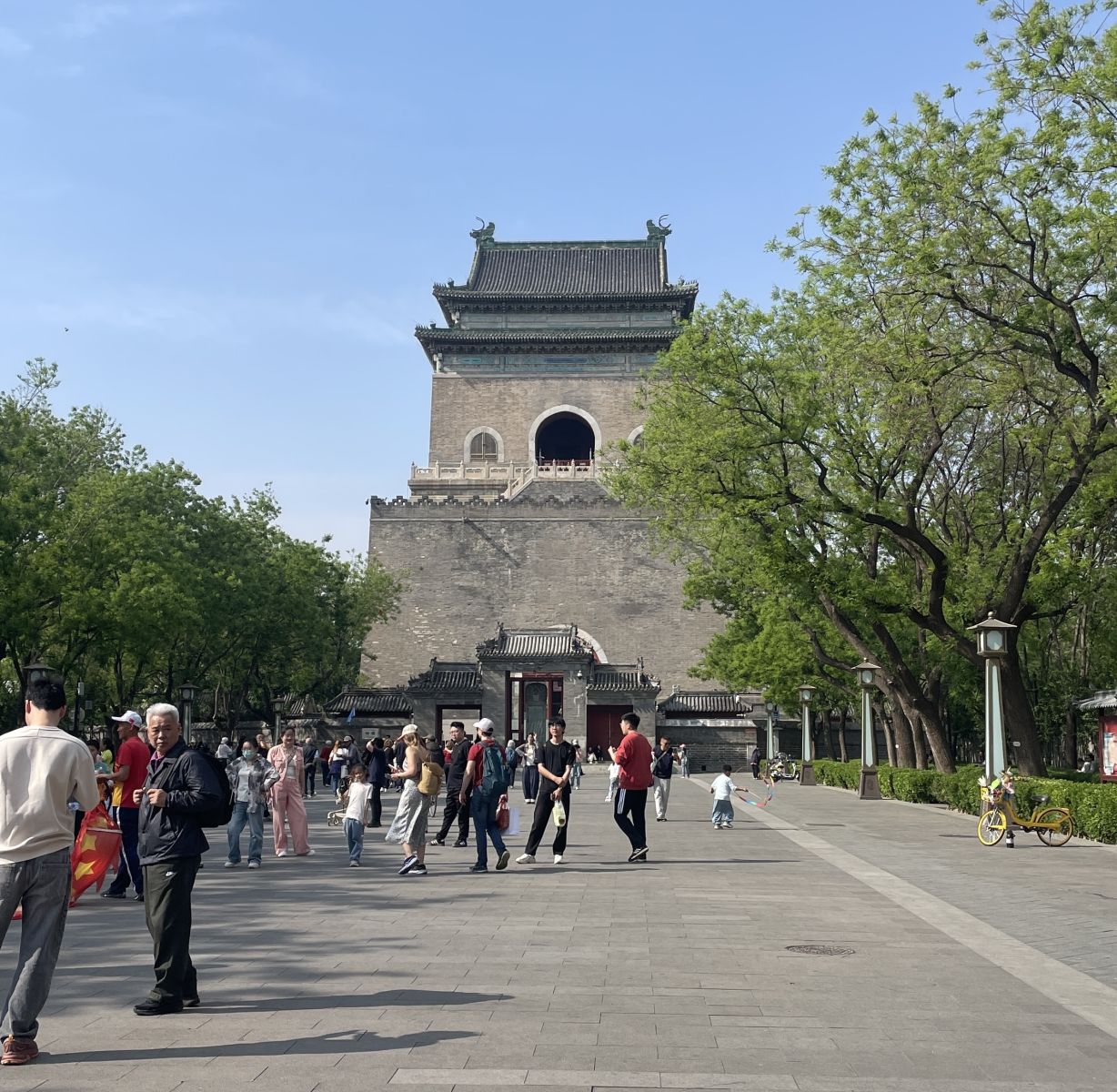
The courtyard between the Drum and Bell Tower, Beijing
This is must if you like antiques, crafts, old posters, ceramics, random treasures and soaking in local life. A fantastic spot for people watching, this is a seriously local area on the outskirts of town. It’s best on weekends when and you can expect to be some of the only tourists there.
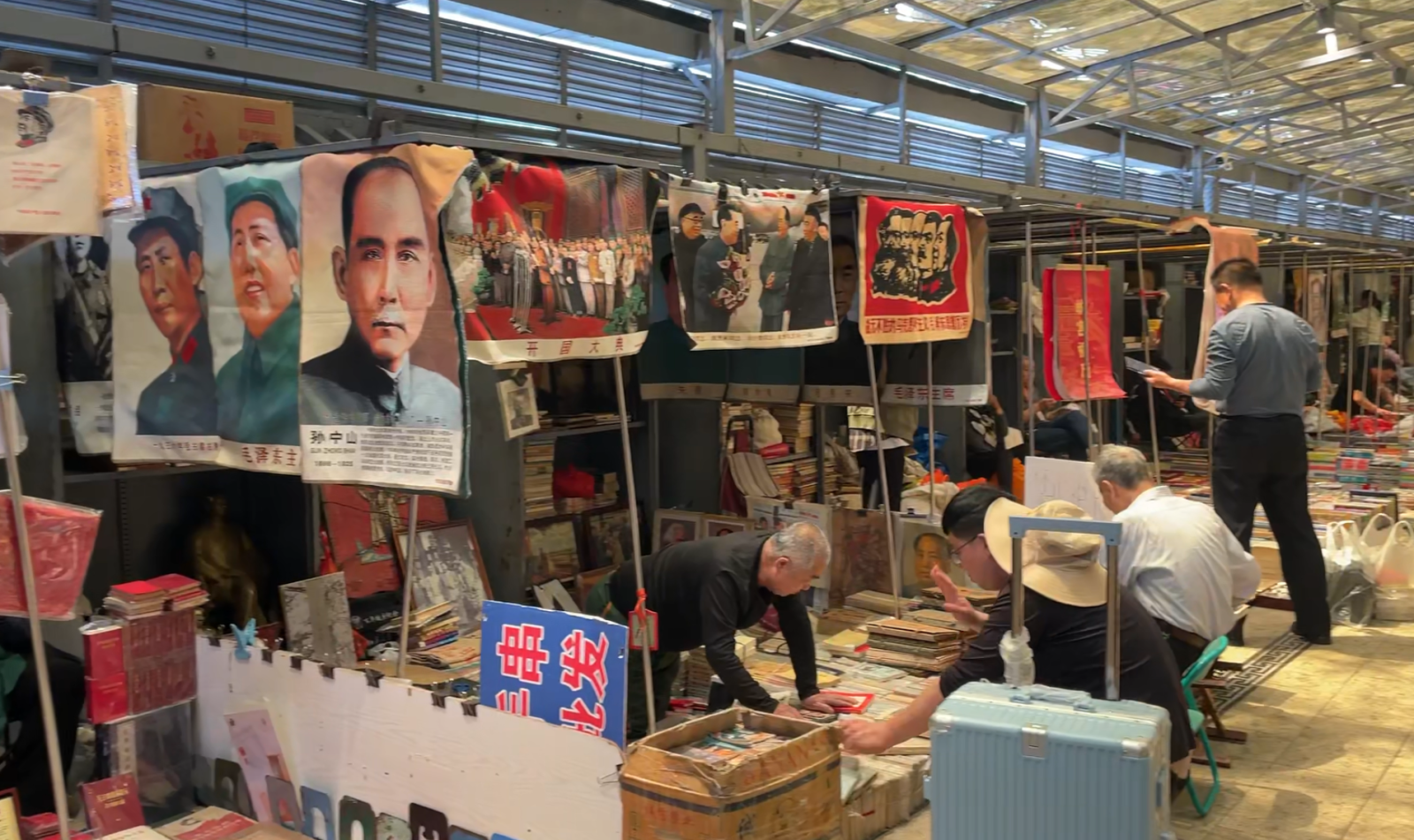
Inside Panjiyuan Flea Market
The Lama Temple is a beautiful Tibetan Buddhist temple with incense, courtyards and a calm spiritual atmosphere, it's still a working temple with locals worshipping. These are of the easiest temple visits to add into a Beijing itinerary because they are close to the central axis and they also show you a different side of Beijing’s history, more scholarly and reflective than imperial.
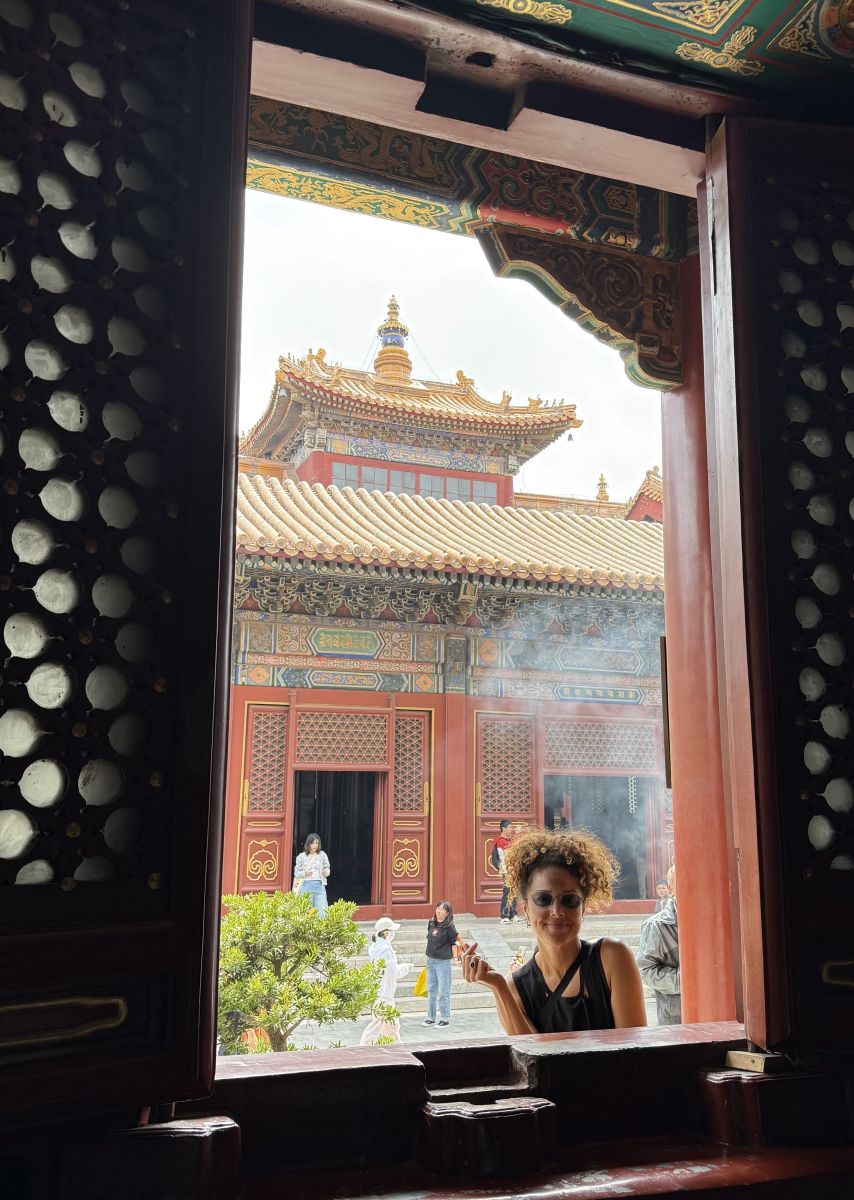
Photo from inside the Llama Temple, Beijing
Getting around is effortless in both Shanghai and Beijing by using well metros or renting a shared Hello Bike to cycle between neighbourhoods on their large bike paths is one of the best ways to get a feel for the place. You can simply scan your Alipay transport QR in the app to rent bikes and take public transport.
If public transport isn’t available, you can use DiDi Car, this is like Uber and you can book within the Alipay app. It’s easy to use and relatively affordable. I used DiDi car to collect me from the airport and drop me off in both Shanghai and Beijing.
Make sure you have your hotel’s address saved in Chinese in case you need to show it to a driver.
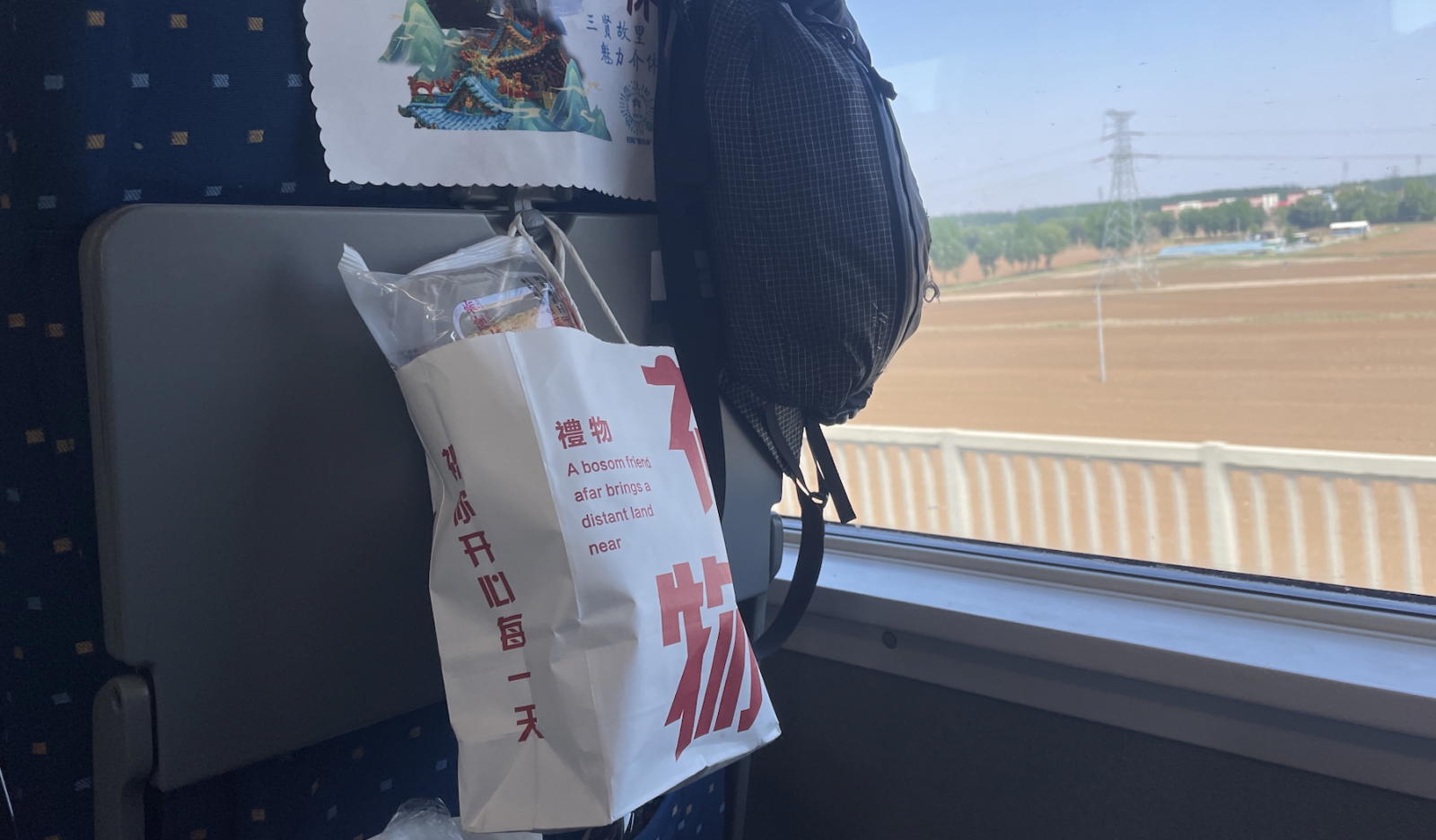
Photo from the Bullet Train between Pingyao and Beijing
The high-speed trains in China are really comfy and efficient so you don’t need to book first class as I found 2nd Class was great. Booking the bullet trains is super easy in the Trip.com app. You simply select your dates and give the app a few different options for times as sometimes they can't secure the tickets when they get released only a few weeks before the travel date.
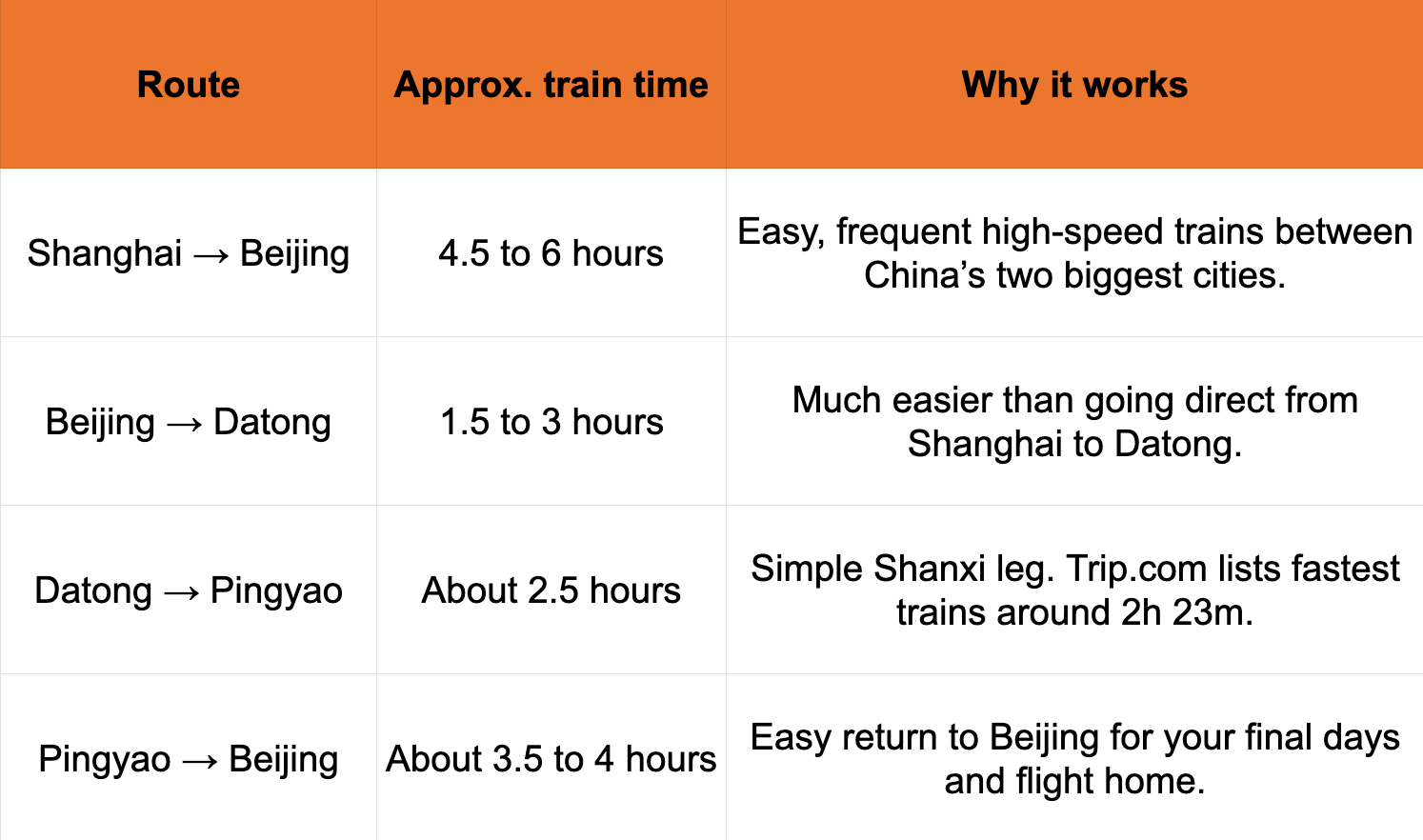
These are not affiliate links, they’re just tried and tested apps from my travels. Just be aware that you can ‘reserve’ the tickets, but they actually only go on sale a few weeks before the travel date so you’ll need to double check the tickets actually get bought. It happened to me once but I would have avoided this if I had kept checking in.
.jpg)
Bullet Train in Shanghai
I travelled with hand luggage only for this trip and with all the train travel, I would highly recommend it. I felt free to move around and didn’t have any problems storing my bag while travelling on the metro and high-speed trains.
My chosen set-up was a lightweight The North Face Borealis Trail 28L Backpack, weighing in at only 845 grams, it's designed with a waist belt to take the weight off the shoulders and back. I paired this with The North Face Terra waist bag, which is a great waist bag with a water bottle strap at the bottom to secure your drink, but I found I still preferred the Pacsafe Eco Anti-Theft Waist Pack because that felt more secure and roomie for urban exploring. The backpack and waist pack combo was the ideal set-up for me because it was so light and flexible.
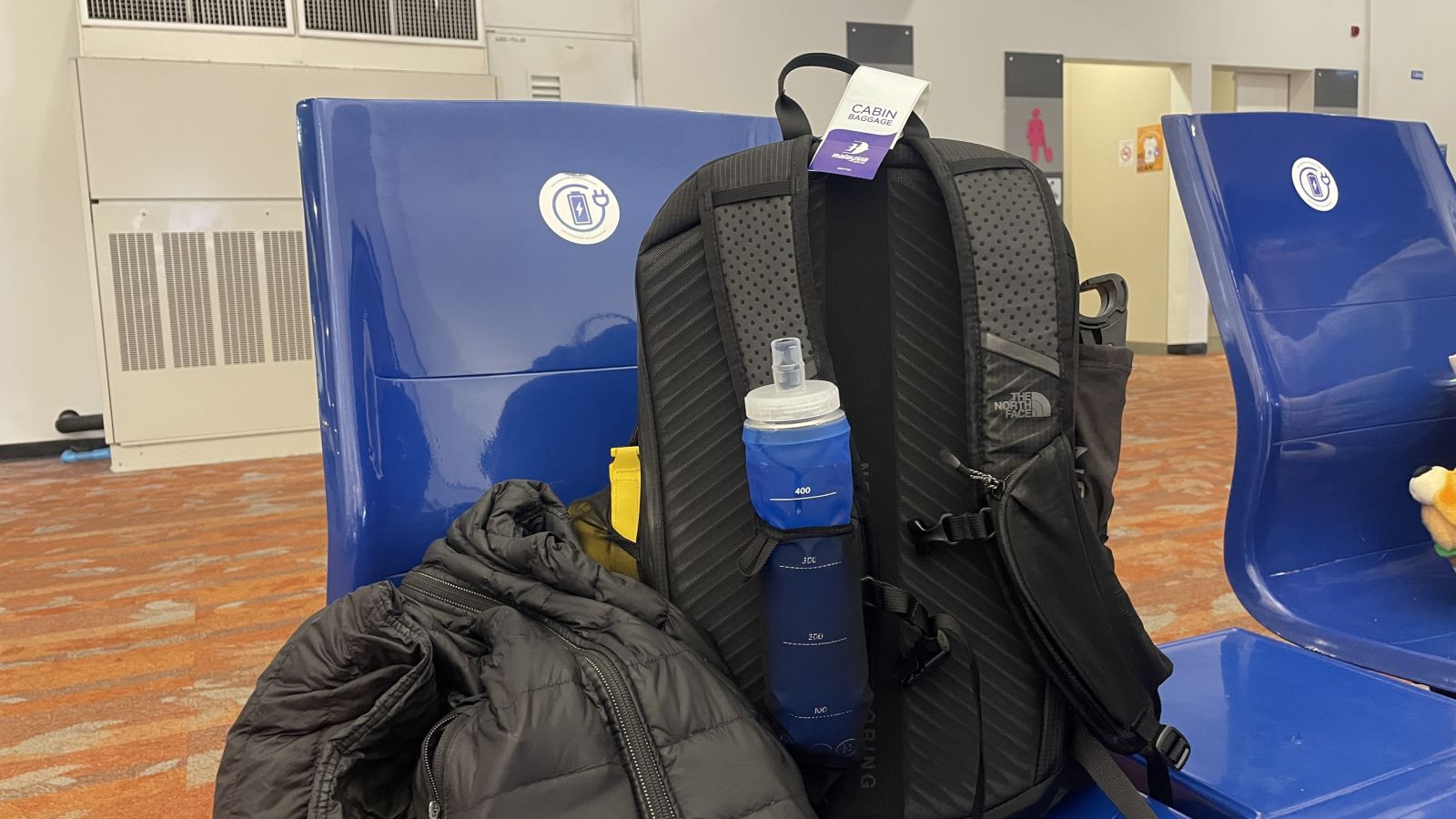
Backpack Set Up at the Airport
China is enormous, so the weather can vary significantly between destinations. Pack layers, comfortable walking shoes and a lightweight rain jacket, especially if Shanghai is on your itinerary.
The best time for this itinerary is Spring, from March to May, and autumn, from September to November. I visited in April-May and found the weather mostly sunny and warm, although Shanghai was a bit rainy and Datong had a cold snap when I needed a jacket.
I’m a pretty serious budget traveler that likes to live as much like a local as possible. On this trip, I spent under $1,200 Australian dollars (including my bullet trains and accommodation but not including flights in and out of china). My hotels in Shanghai and Beijing were clean but a little rough around the edges, I ate Baozi for breakfast every day, got coffee from Luckin’ Coffee, ate at local cheap restaurants and used the bike rental and metro.
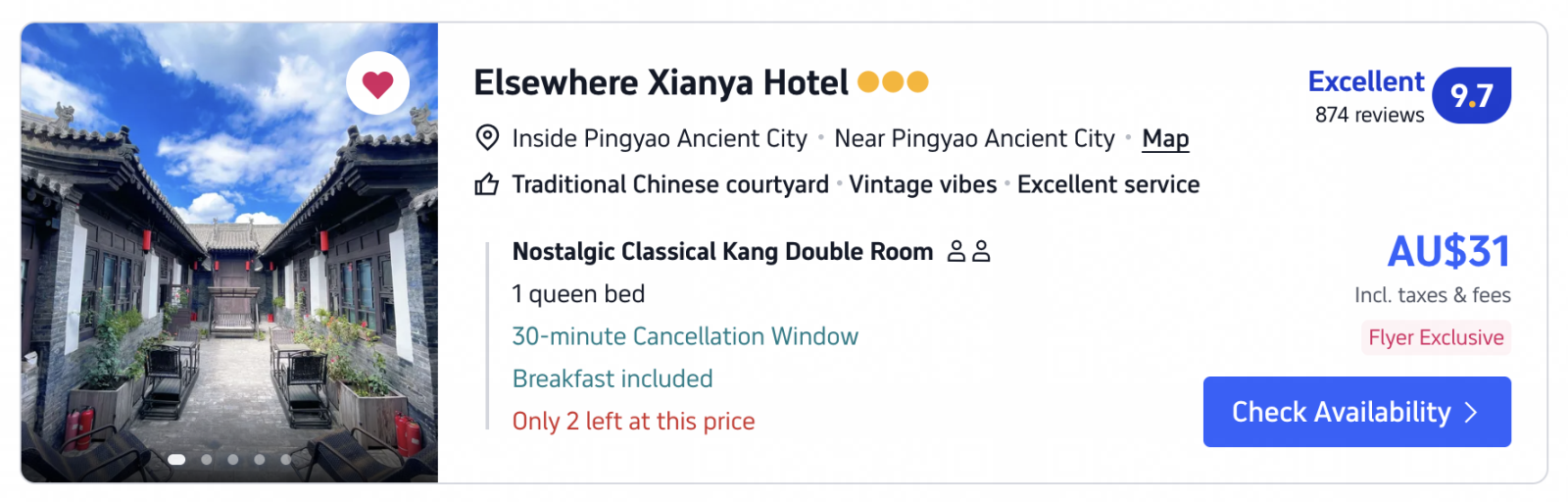
As hotels in Datong and Pingyao are really off the beaten path, I was shocked at the level of accommodation I could get for the price. They felt like 4* and 5* hotels for under $100 AUD a night! Hopefully, you can use my budget as a baseline and scale up depending on the way you like to travel.
I was blown away by my first visit to China. This trip was way cheaper then I expected, food was great, it was easy to navigate and the people I met were much more curious and open than I was led to believe.
So, with 30 days visa-free travel now open to Australians and a route like this one covering some of the most amazing visual, historical, and cultural variety of Shanghai, Datong, Pingyao, and Beijing. Now is a great time to put China on your bucket travel list!
Not sure what gear you need for your adventure? Chat with our friendly team of Outdoor Gear Specialists in-store or online today, and don’t forget to share your adventures with us on Instagram by tagging @wildearthaustralia in your next post.
Australian passport holders can currently visit mainland China visa-free for short tourism trips, but the rules can change. Always check the latest requirements with Smartraveller or the Chinese Embassy before booking.
I felt very safe travelling around China, including when walking around cities alone. Petty crime can still happen, as it can anywhere, so take the usual precautions and keep an eye on your belongings in crowded areas. I also recommend Pacsafe Antitheft products for peace of mind.
Most payments are made through Alipay or WeChat Pay rather than cash or physical bank cards. I found Alipay the easiest option because I could connect my international card and also use it for public transport, taxis and shared bikes.
Many Western websites and apps, including Google, Instagram, WhatsApp and YouTube, may be restricted on local networks. I used an international eSIM and installed a VPN before arriving so I could stay connected throughout the trip.
Yes, but you need to prepare before you arrive. Download Alipay, Amap, Trip.com and a translation app, and save the names and addresses of your hotels in Chinese. Once I had the right apps set up, travelling independently was much easier than I expected.
Duffel bags are a classic workhorse bag here in Australia for very good reason. They’re easy to pack, quick to throw in the boot, and versatile enough to work for everything from a weekend down the coast to Everest Base Camp.
If you’ve ever searched ‘what is a PLB?’ and ended up more confused than when you started, this guide explains the difference, compares the best models in Australia for 2026, and shows how to register and carry them properly.
Washing down gear can feel risky, but it doesn’t have to be. Here’s how to clean down jackets, sleeping bags and quilts without wrecking them.
A guide to the best water filters in Australia for hiking, camping, travel and emergency backup. Learn the difference between filters and purifiers, compare top picks from Katadyn, Sawyer, Grayl and LifeStraw, and choose the right setup for your next adve












Using Afterpay you can pay for your order over 8 weeks. There's no interest or added fees* and nothing to pay today. Payment will be automatically taken from your debit or credit card in four equal payments each fortnight over 8 weeks, and you will receive your order immediately.
You simply need:
To use this service simply:
Approved AfterPay buyers will require the funds for the first payment to be available on their card at time of checkout, however the first payment won't be deducted for 14 days. First time AfterPay buyers will need to make the first instalment payment at the time of their purchase.
If you wish to return your goods you can choose to receive an exchange, or the Afterpay payment plan can be cancelled before the first payment at no charge. *If you fail to have sufficient funds available for AfterPay to automatically deduct payment on due instalment dates you will be charged a late fee of $10, and if the instalment payment remains overdue, an additional $7 will be charged one week later.
With AfterPay, there's no waiting and we'll ship out your order immediately as normal.

When you want to go now, sometimes it's handy to pay later. That's why, we offer interest free payment plans from two of Australia's favourite Buy now, Pay later services.