Total Items: 0
Sub Total: $0.00


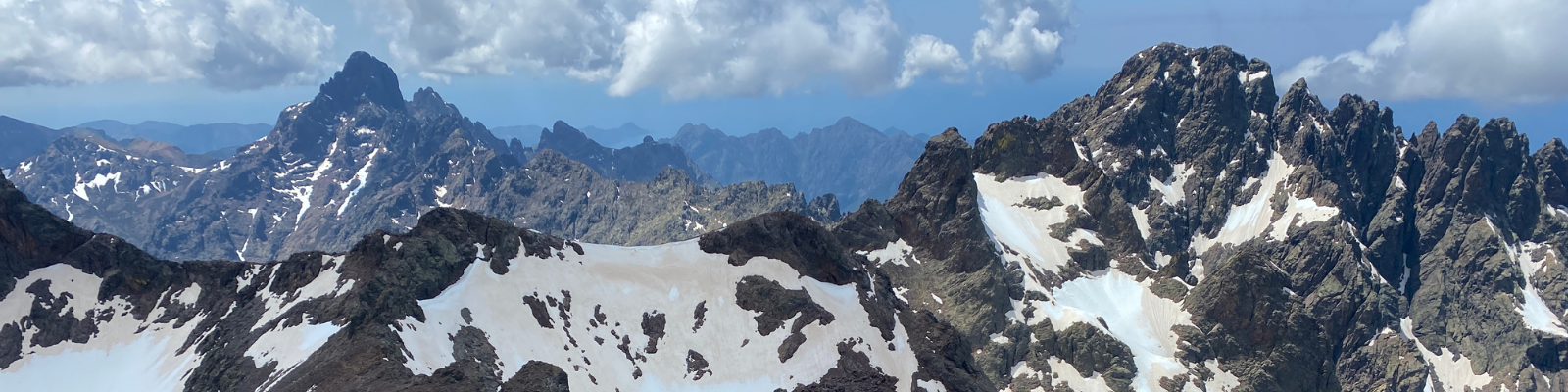
A complete GR20 packing list based on hiking and camping the route in Corsica, including trail runners, waterproof layers, camping gear, food, fuel, safety kit and what I wish I packed more of.
Hi I'm Steph Devery, Wild Earth Ambassador, endurance athlete and big-time adventure lover. After working as a hiking guide in Australia for several years, I took my love of human-powered expeditions all around the world.
I've hiked some of the most rugged, remote and beautiful trails on this planet from the Nepalese Himalaya, to the Australian outback, to tropical Indonesia, lush Rwandan rainforest, remote paths of the Caribbean and rugged peaks of the Alps. Some of the classic long-distance trails I've trekked are the Three Passes, the Larapinta, the Great North Walk, the Kepler-Milford-Routeburn circuit, the Haute Route and the Tour du Mont Blanc.
Last May, I hiked across the French island of Corsica on the GR20, here's what I learned...
The GR20 in Corsica has a reputation for being one of the hardest hikes in Europe and after hiking it, I can understand why.
The terrain is steep, rocky and absolutely relentless. One moment you’re sweating in scorching alpine heat and the next you’re layering up against wind, rain, fog or even snow. It’s beautiful, wild and incredibly rewarding, but this is not a trail where you want to be underprepared.
Table of Contents
Duration: 11 nights/ 12 days
Length: 176.5km
Elevation gain: 12,119 m
Segments: 16
Route: Point to point
.png)
GR20 hiking route across Corsica showing stages from Steph's IG Stories.
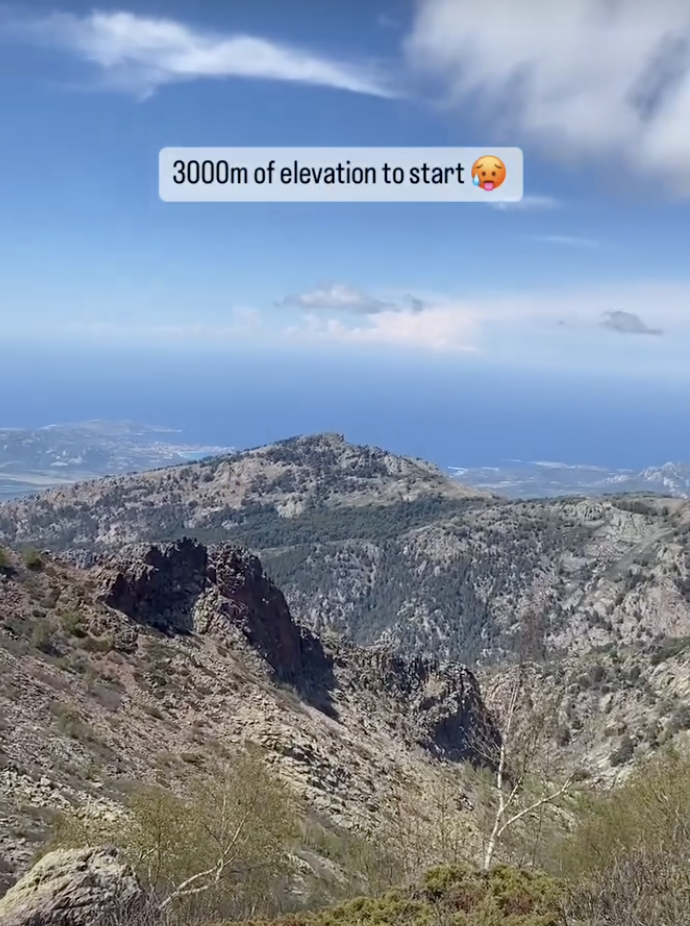
A photo of the elevation hiking the GR20 in Corsica
Quick answer: For the GR20, pack lightweight but durable hiking gear for steep rocky terrain, fast-changing alpine weather and remote campsites. Essentials include grippy trail runners, waterproof layers, trekking poles, offline maps, a warm sleep system, enough food, spare gas and emergency repair supplies.
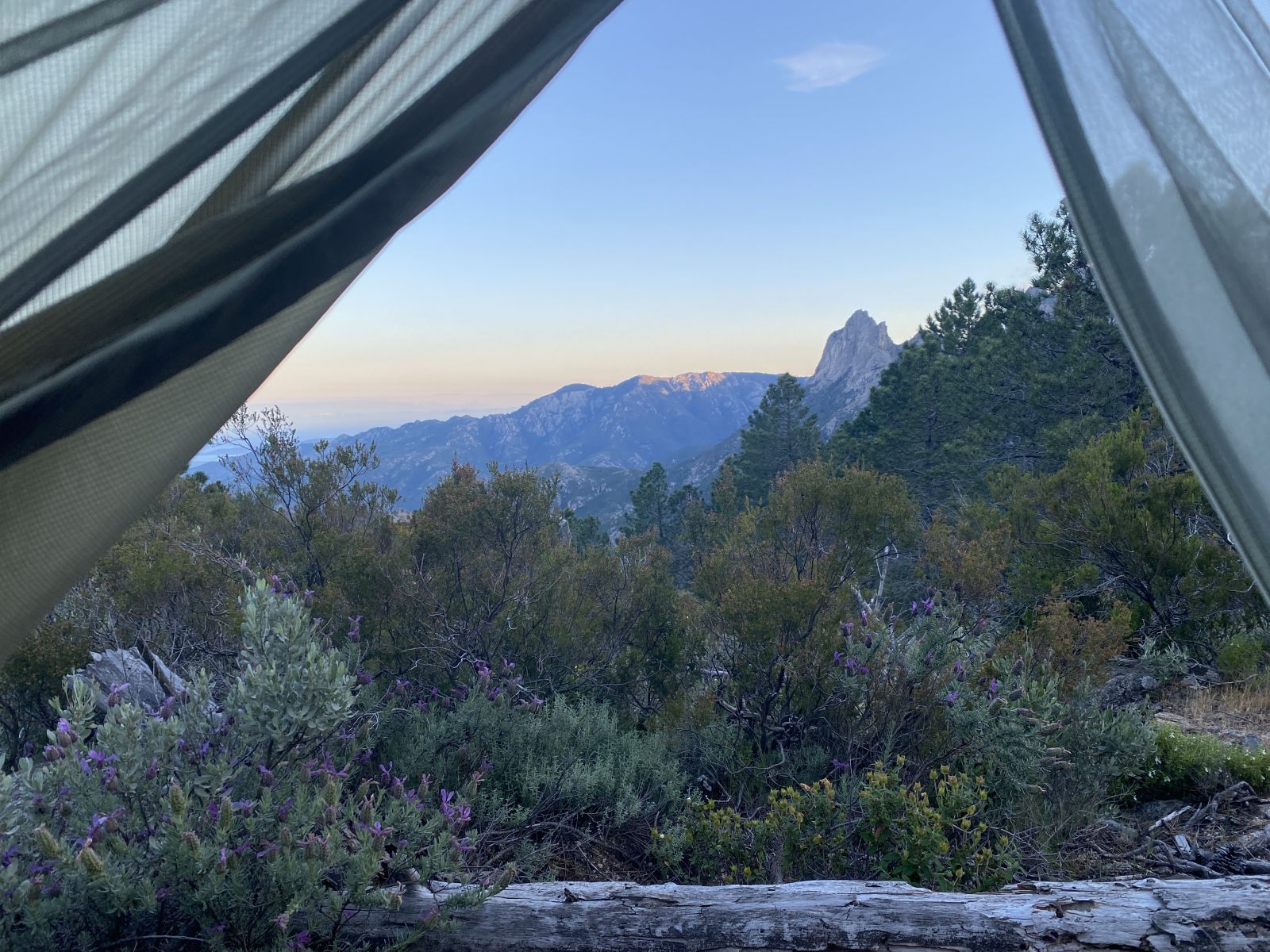
Insanely good views from camp
I carried everything needed to camp the route which made my pack heavier, but dramatically cut costs compared to staying in refuges every night. If you’re planning the GR20 yourself, here’s exactly what I packed, what I was glad I brought and what I wish I had packed more of.
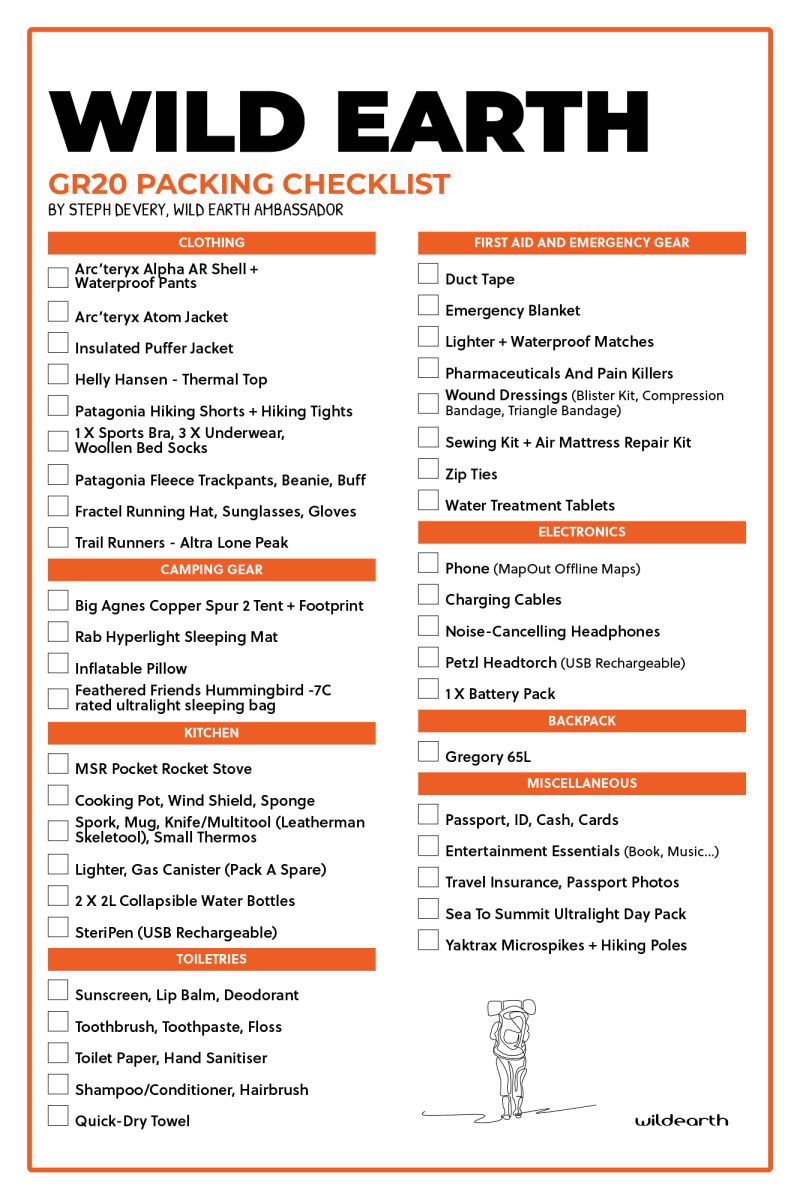
A good pair of trail runners made a huge difference on this trail.
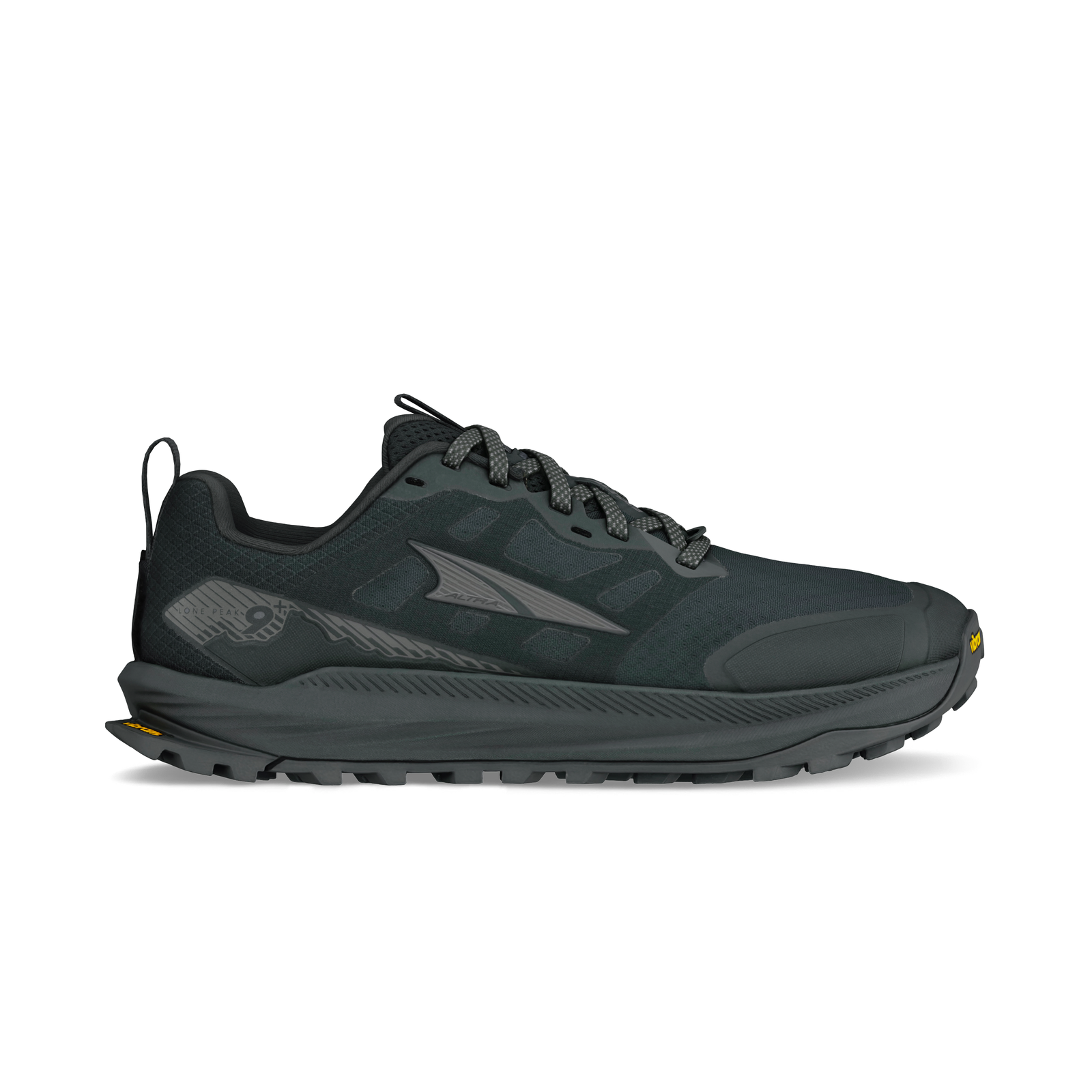
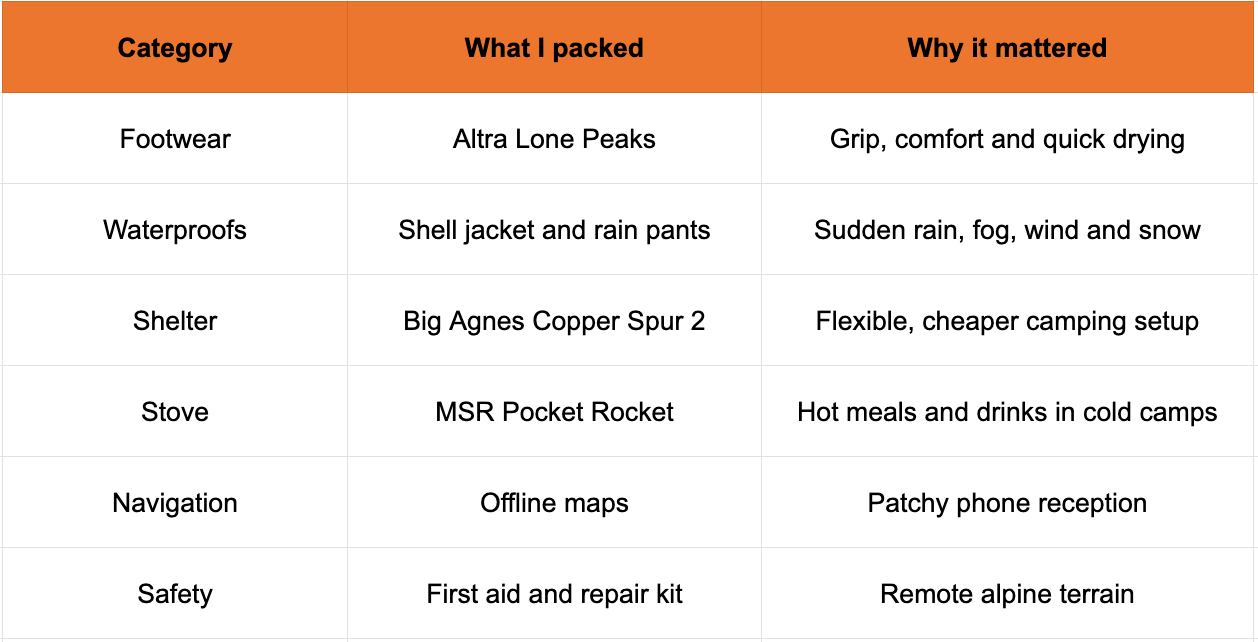
I used Altra Lone Peaks and loved them for the GR20. They dried quickly after rain and river crossings, had great grip on lots of steep up and downs on rocky terrain and stayed comfortable over long days.
There’s constant climbing and descending on the GR20, so comfort and stability matter far more than having a heavy boot.
These should be mandatory in everyone’s pack; it’s Mountain Travel 101 to be prepared for all weather conditions. We had scorching heat, pouring rain, thick fog, extreme winds and snow, all in the middle of summer, and all with a clear weather prediction report.
The weather comes in hard and fast from the ocean and clashes violently with the very mountain range that you’ll be scaling. Be prepared! The trail is remote, and the distances are far between refuges. Make sure you pack smart even if it feels silly when it's 30 °C in the valley when you start.
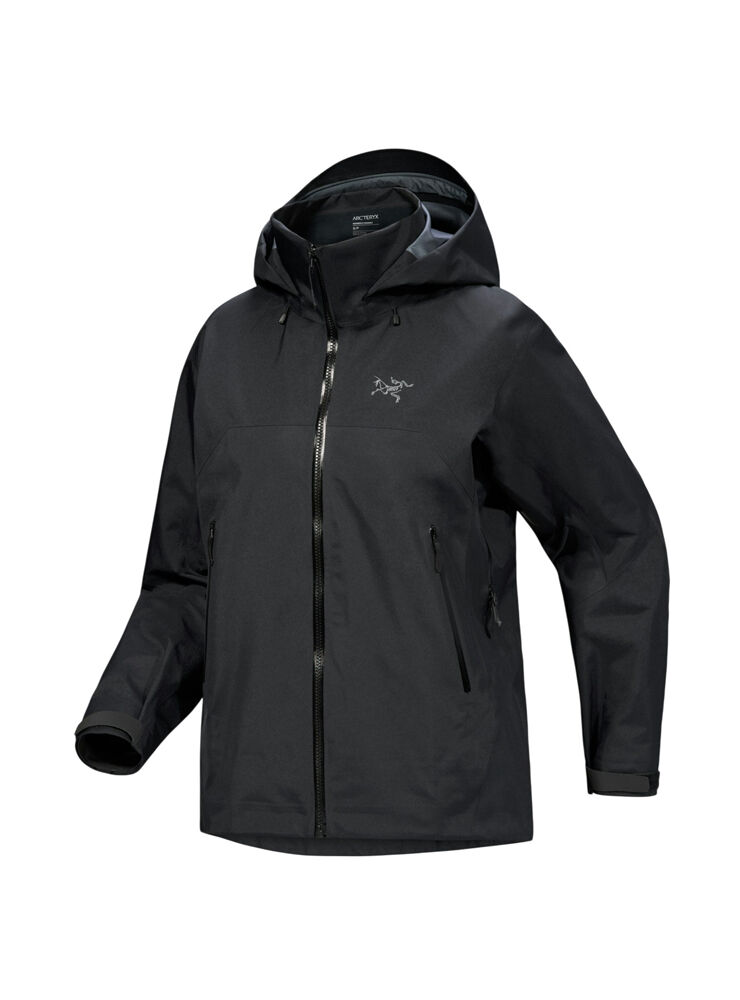
My waterproof setup:
I don’t normally hike in waterproof pants much, but in alpine conditions they’re a lifesaver.
Most of the trail is in the alpine and very exposed to the elements so save those peepers!
.JPG)
Hiking through snow on the trail
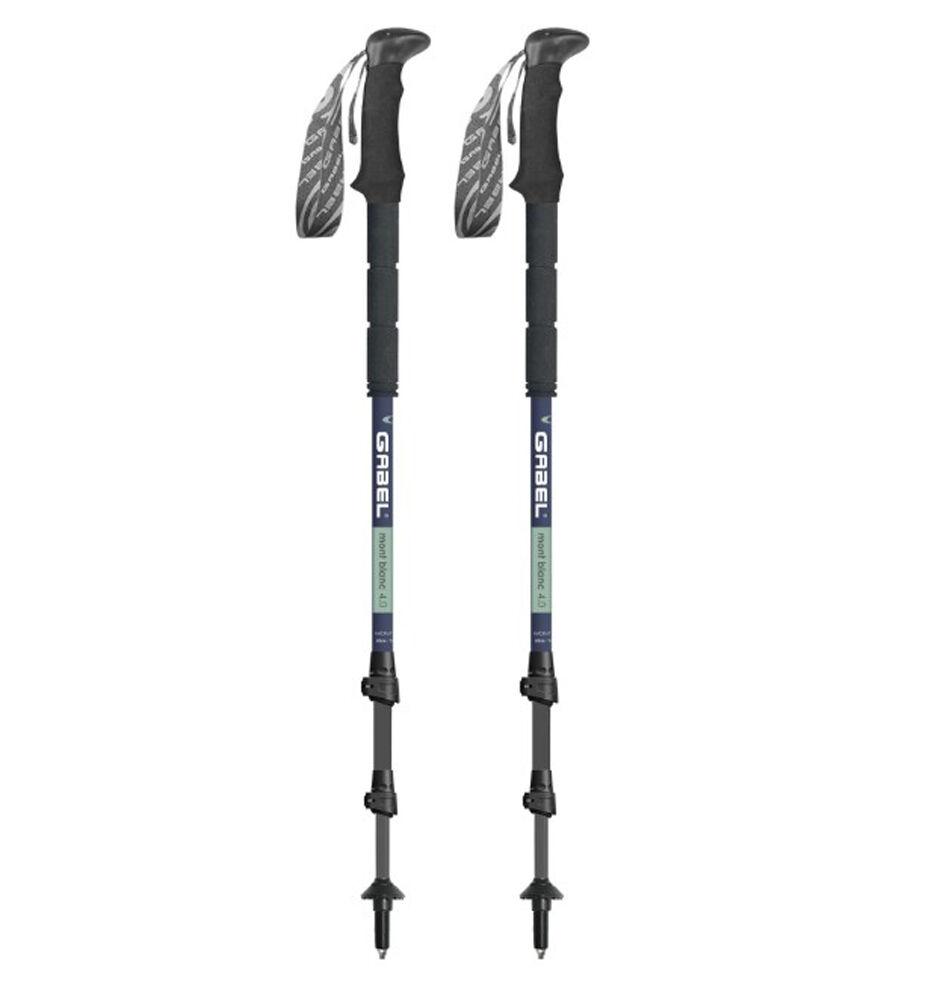
There are some very steep sections on the GR20, made even more technical by shouldering a heavy pack. Hiking poles help utilise the upper body, maintain a good posture and help take the load off the knees which are already working hard enough!
Microspikes are lightweight and compact and are great for the snowy sections. Not mandatory but really helpful when it's icy and steep.
I carried:
Having a larger backpack (65L) worked well because there’s really only one major resupply point across the whole hike. I needed space for extra food and fuel.
That said, if I did the hike again with lighter gear and fewer food carries, I’d probably drop down to around a 40L backpack to keep the weight more compact and manageable.
.JPG)
Steph with her 65L Gregory hiking backpack on the GR20 trek
I chose to camp the GR20 instead of relying on refuges. It’s more affordable and gives you a lot more flexibility.
.JPG)
Perfect sunset views from camp
Note: One thing I really wish I’d packed was more gas! I THINK I took 1x100g and 1x230g. There was two of us and we were drinking lots of cups of tea and having warm meals twice a day. We were also camping at high altitude with some wind most days and there was nowhere to resupply gas, so I would probably take 2X230g (and maybe even an extra 100g if you wanted to just cook freely and drink as many hot choccies as you want). Cold temperatures and exposed campsites burn through fuel surprisingly fast. Many refuges had very limited supplies or were completely closed, so don’t rely on buying gas or meals along the way!
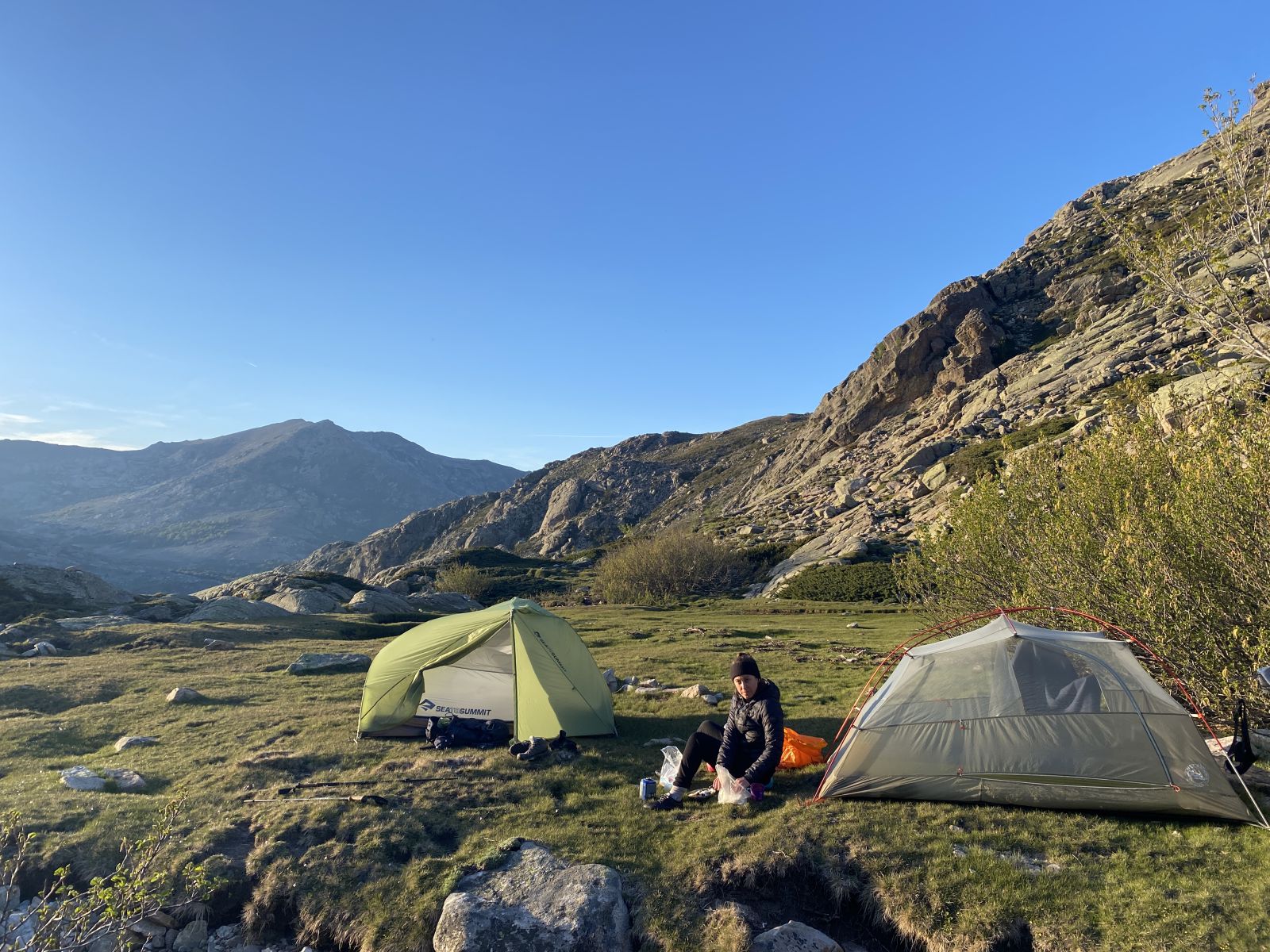
Our campsite on the GR20 surrounded by epic scenery
The mountain water was incredibly clean, but I still carried purification options just in case but I wouldn't take the Steripen if I was to do it again, the water was super fresh.
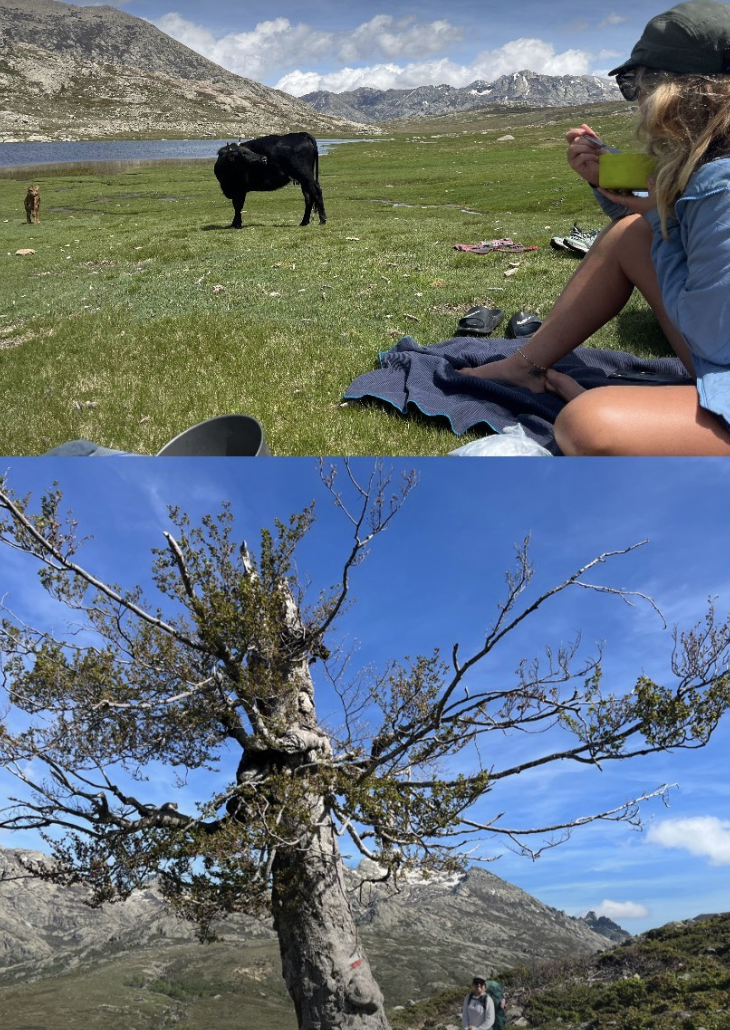
Making friends with the locals
The key on the GR20 is layering for rapidly changing conditions, here’s what was additionally in my pack:
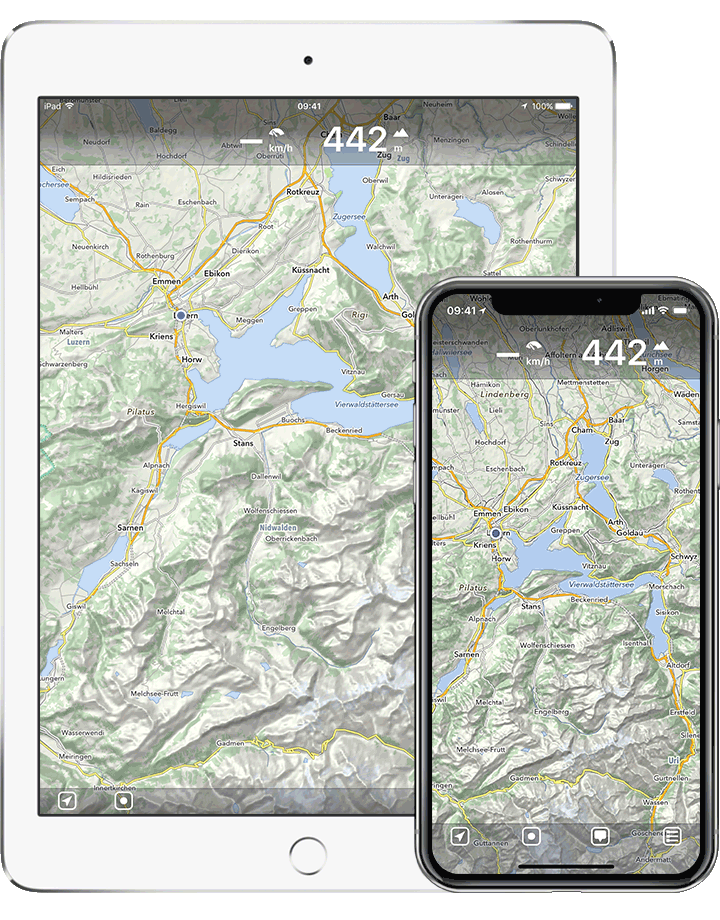
Offline maps are critical on the GR20. Phone reception can be patchy and the trail can be surprisingly technical to navigate in poor visibility.
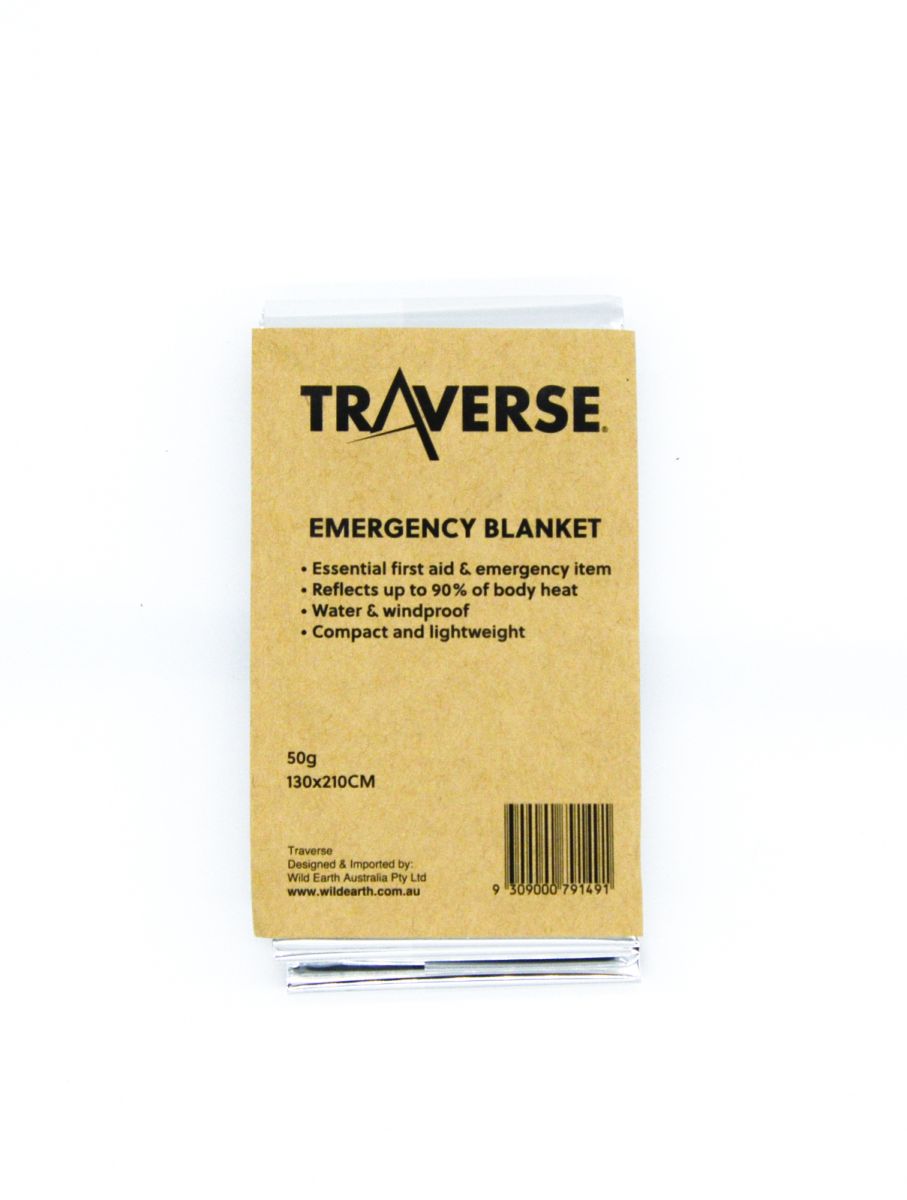
This is remote mountain terrain where small gear failures can quickly become big problems so being prepared is key.
The long summer daylight hours made the eye mask surprisingly useful.
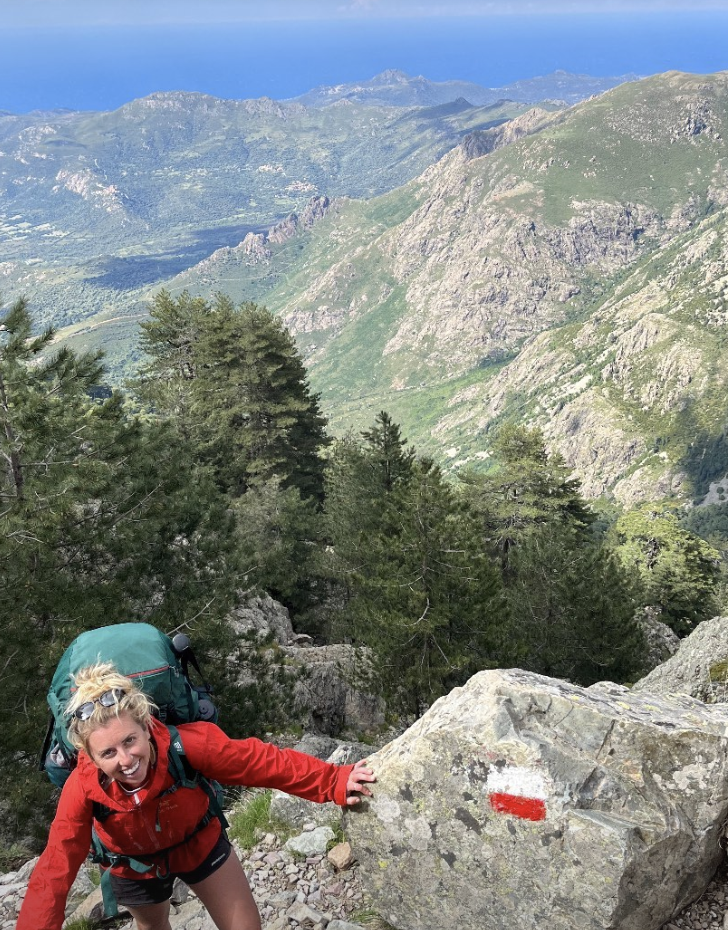
Happy days on the trail
Pack for all weather conditions and check the weather whenever you can, storms can come in hard and fast and you don’t want to be caught on an exposed ridgeline when it does.
.JPG)
Hiking through rocky terrain
Bring cash for the refuges and only use them for snacks or little extras. The GR20 isn’t as popular as other long distance hiking routes like the Tour du Mont Blanc or the Haute Route and we found a lot of the refuges were closed or not serving food which can be disappointing after a long day of dreaming about hot chippies
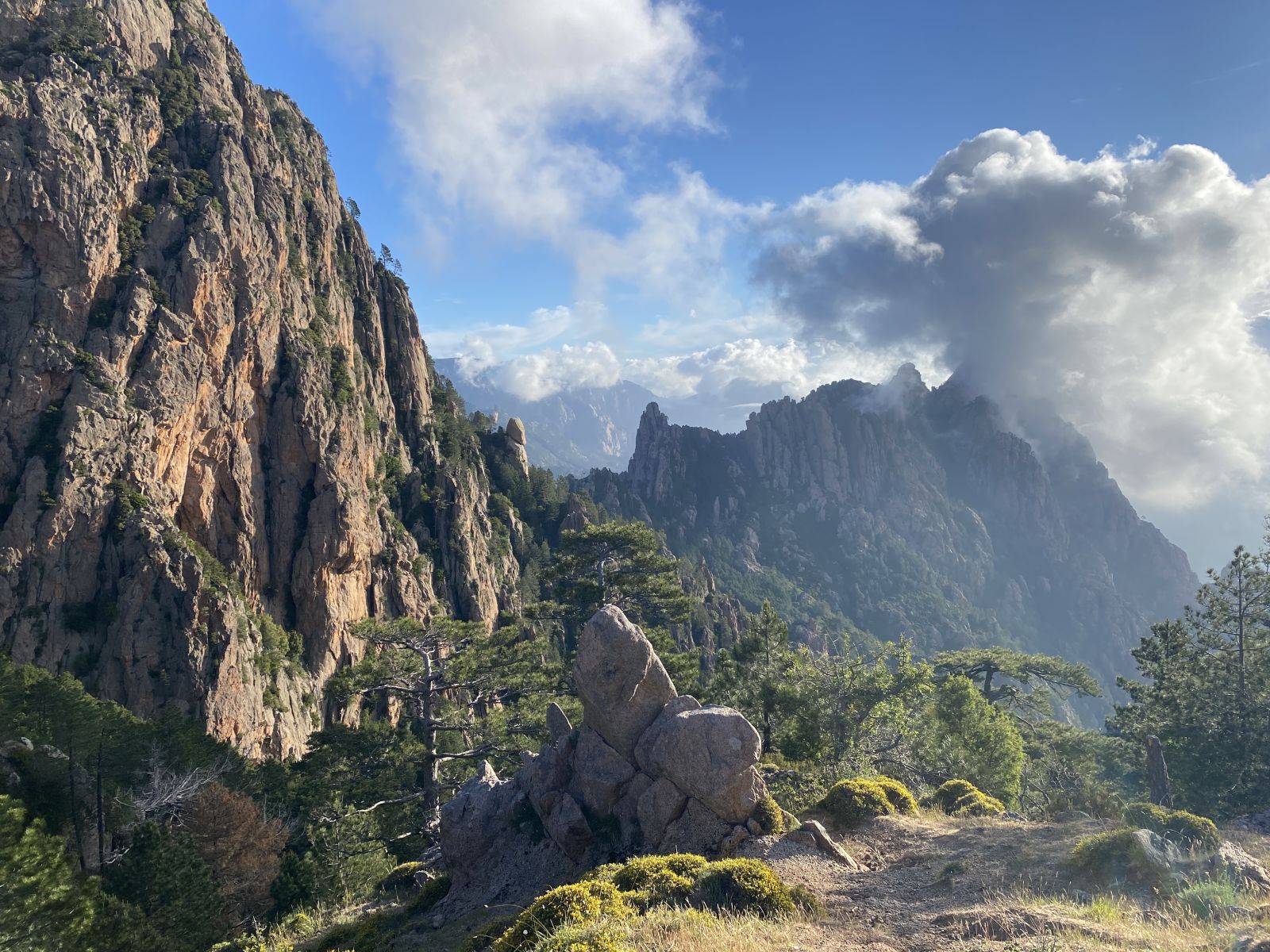
More rugged mountain landscapes along the GR20 hiking trail
The vertical gain on the GR20 is no joke. Set realistic goals with the vertical mileage in mind. It takes a lot longer to navigate steep, unforgiving climbs and descents with a heavy pack. It’s easy to underestimate the trail… it’s not named the Hardest Hike in Europe for nothing…
H2 Useful GR20 Planning Resources
Before hiking, check the official GR20 refuge booking rules and book GR20 refuges and bivouacs through the Parc Naturel Régional de Corse. I’d also check the Corsica mountain weather forecast on Météo-France before each stage, then compare your kit against a trusted GR20 equipment checklist and download the GR20 route stages for offline navigation (you can use apps like MapOut).
.JPG)
As hard as the GR20 can be, it’s also one of the most rewarding hikes I’ve ever done.
Don’t forget to take time to swim in the beautiful streams and waterholes along the way, bask in sunny alpine meadows and stargaze from a faraway summit. Chat to other hikers and join in the camaraderie. The hike attracts people from all over the world with interesting stories.
Do you need to book campsites on the GR20?
If you’re camping near refuges on the GR20, check the current booking rules before you go. Some hikers report needing reservations even with their own tent, so don’t assume you can just turn up in peak season.
Can you rely on refuges for food on the GR20?
Not completely. Refuges may sell meals, snacks and basic groceries, but availability varies by season, location and stock levels. I’d carry enough food to cover delays or closed refuges.
How much water should you carry on the GR20?
Many hikers carry around 2 litres at a time and refill along the route, but hot exposed sections can increase your needs. Carry purification tablets, a filter or UV purifier so you can treat water when needed.
Are trail runners okay for the GR20?
Yes, trail runners can work well if they have strong grip, good stability and enough comfort for steep rocky terrain. I used Altra Lone Peaks and was glad to have quick-drying shoes instead of heavy boots.
Do you need microspikes on the GR20?
In summer, microspikes are not always necessary, but they can be useful in early season, after snow, or on icy steep sections. Check conditions close to your start date before deciding.
How cold does the GR20 get in summer?
Even in summer, GR20 conditions can swing from hot valleys to cold, windy, wet alpine sections. Hikers mention big temperature ranges, so waterproof layers and warm camp clothes are worth carrying.
How heavy should your pack be for the GR20?
As light as safely possible. The GR20 has relentless climbing and descending, so every extra kilo matters, but don’t cut essential weather, food, water or safety gear.
Is the GR20 harder than other European hikes?
Most hikers describe the GR20 as more technical, rocky and physically demanding than many popular European long-distance routes. The challenge is not just distance, it’s the steep terrain, exposure, weather and pack weight.
This is the trip report, the hard-earned lessons, and the full packing guide of what worked, what didn’t, and what I’d change next time walking the CDT southbound from Canada to Mexico in 113 days.
If you’ve ever searched ‘what is a PLB?’ and ended up more confused than when you started, this guide explains the difference, compares the best models in Australia for 2026, and shows how to register and carry them properly.
Before Sea to Summit was a gear brand, it was a human-powered Everest expedition. Here’s what Tim Macartney-Snape’s story teaches us about better gear.
Washing down gear can feel risky, but it doesn’t have to be. Here’s how to clean down jackets, sleeping bags and quilts without wrecking them.












Using Afterpay you can pay for your order over 8 weeks. There's no interest or added fees* and nothing to pay today. Payment will be automatically taken from your debit or credit card in four equal payments each fortnight over 8 weeks, and you will receive your order immediately.
You simply need:
To use this service simply:
Approved AfterPay buyers will require the funds for the first payment to be available on their card at time of checkout, however the first payment won't be deducted for 14 days. First time AfterPay buyers will need to make the first instalment payment at the time of their purchase.
If you wish to return your goods you can choose to receive an exchange, or the Afterpay payment plan can be cancelled before the first payment at no charge. *If you fail to have sufficient funds available for AfterPay to automatically deduct payment on due instalment dates you will be charged a late fee of $10, and if the instalment payment remains overdue, an additional $7 will be charged one week later.
With AfterPay, there's no waiting and we'll ship out your order immediately as normal.

When you want to go now, sometimes it's handy to pay later. That's why, we offer interest free payment plans from two of Australia's favourite Buy now, Pay later services.