Total Items: 0
Sub Total: $0.00


Wild Earth ambassador Steph Devery reviews the Big Agnes Copper Spur HV UL2 after 10+ years and 400+ nights. See how this ultralight 2-person tent handles storms, snow, heat, bikepacking and hiking, plus its comfort, durability, setup and drawbacks.
If you’re trying to decide whether the Big Agnes Copper Spur HV UL2 is worth the money, Steph Devery, Wild Earth ambassador and an Australian Geographic Adventurer of the Year has put this ultralight two-person tent through more punishment than most reviewers ever will.
She’s used the Big Agnes Copper Spur for more than 10 years and over 400 nights, taking it hiking, bikepacking and camping across the world and her verdict is pretty straightforward:
"It’s the best. It’s the tent that I would 100% choose over and over. I don’t even look, I don’t compare. This is my choice."
Steph has camped with it through serious storms and blizzards, sandstorms in Saudi Arabia, extreme heat in Namibia, freezing conditions in the Alps and nights below zero in Yellowstone National Park and after all that use, she still calls the Copper Spur her 'absolute tent of choice again and again in all my adventures.'
Note: This article was written off the back of Steph's Wild Earth YouTube review. Watch the full thing below or you can watch Wild Earth Ambassador Simon Ennals share his review of the 3-Person Big Agnes Copper Spur Mountain Glo.
I absolutely love this tent because it is super small, compact and lightweight, but inside it’s really roomy. It’s light enough for hiking and bikepacking, yet roomy enough to sit up, change clothes, store gear and wait out bad weather.
It’s also freestanding, quick to pitch, fast-drying and surprisingly durable considering how lightweight it is.
The main complaint after more than a decade of use? Maybe my only two gripes at all are that sometimes the zippers get caught in the fabric and that the fly fabric can get saggy when wet. This is pretty typical of double-layered tents, you just need to cinch down the corners of the fly once the fabric is wet and be careful when you open the doors so it doesn't drip inside. And that’s quite an endorsement for a tent that has seen over 400 nights outdoors!
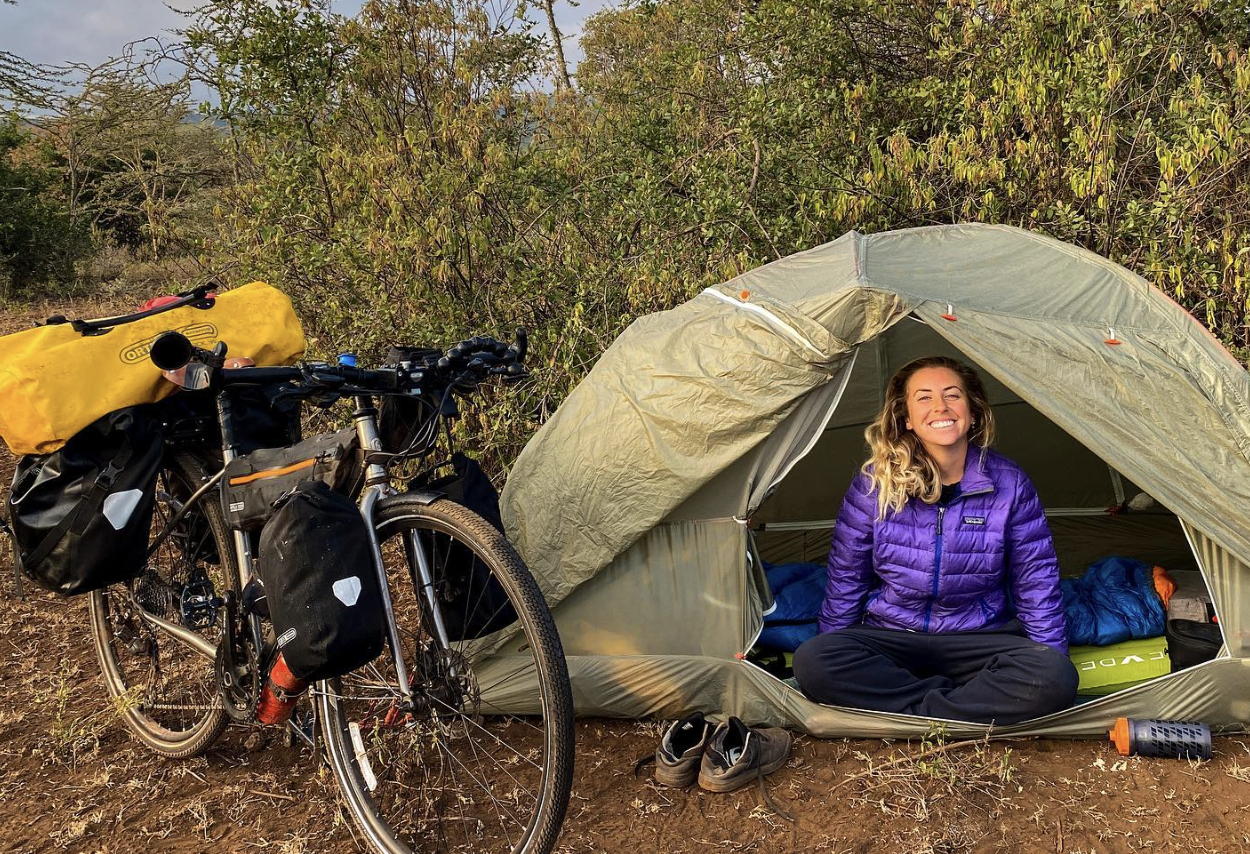
Sleeping with Lions in Tanzania
Ultralight tents can sometimes save weight by sacrificing living space but that isn’t my experience with the Copper Spur. It’s super small, compact and lightweight, but inside it’s roomy enough for two people. I’m only 5'3, so my height doesn’t make me the toughest test of headroom, but I can absolutely still appreciate how much usable space there is.
It fits all my gear and in bad weather you can enjoy spending time in there. I’ve have lots and lots of room above me and that extra space becomes much more important when you’re not simply crawling into your tent to sleep. It’s really nice to be able to sit up, get changed, hang out if you get caught in a storm and for long-distance trips like mine, that distinction really matters. A tent that looks spacious enough on a shop room floor can feel very different after several hours trapped inside by bad weather.
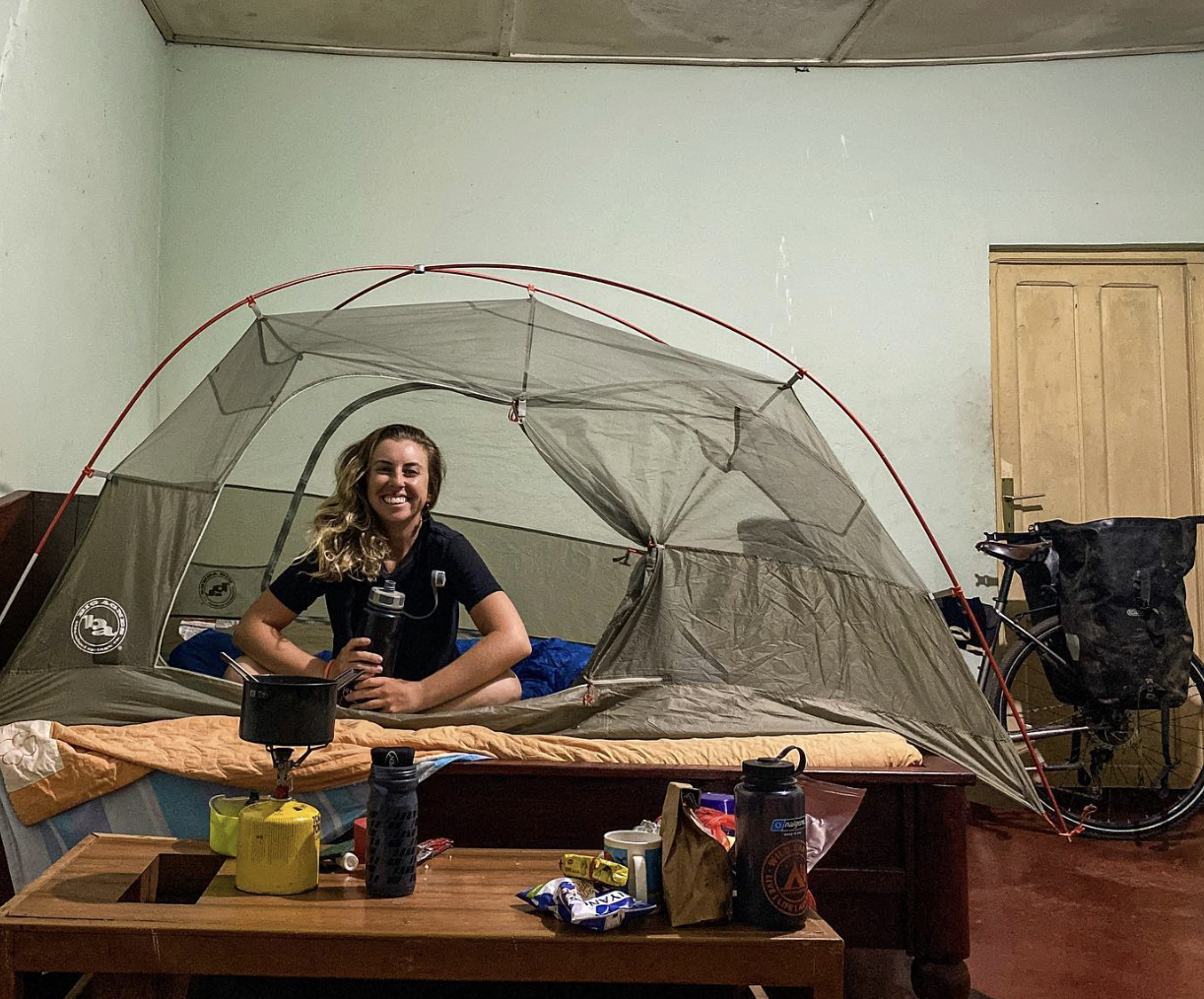
Kayanza, Burundi. Sometimes, when the mozzies are biting or the guest house sheets are too grim, it’s better to byo bed.
For regular camping/bikepacking/hiking trips, absolutely, the two-person model has large exits on both sides, which means you don’t have to crawl over your camping partner whenever you need to get out. For multi-year/multi-country adventures, I would always opt to upgrade to a UL3 model. The extra few grams are worth it when that space becomes your long term home.
It’s got big wonderful exits on either side and two thresholds, so if you are sharing with someone this is the two-person tent you can both put your gear on either side with room to spare. The separate entrances and vestibule areas are particularly useful when both campers have backpacks, shoes and wet equipment to store. So, rather than piling everything around one door, each person gets their own side.
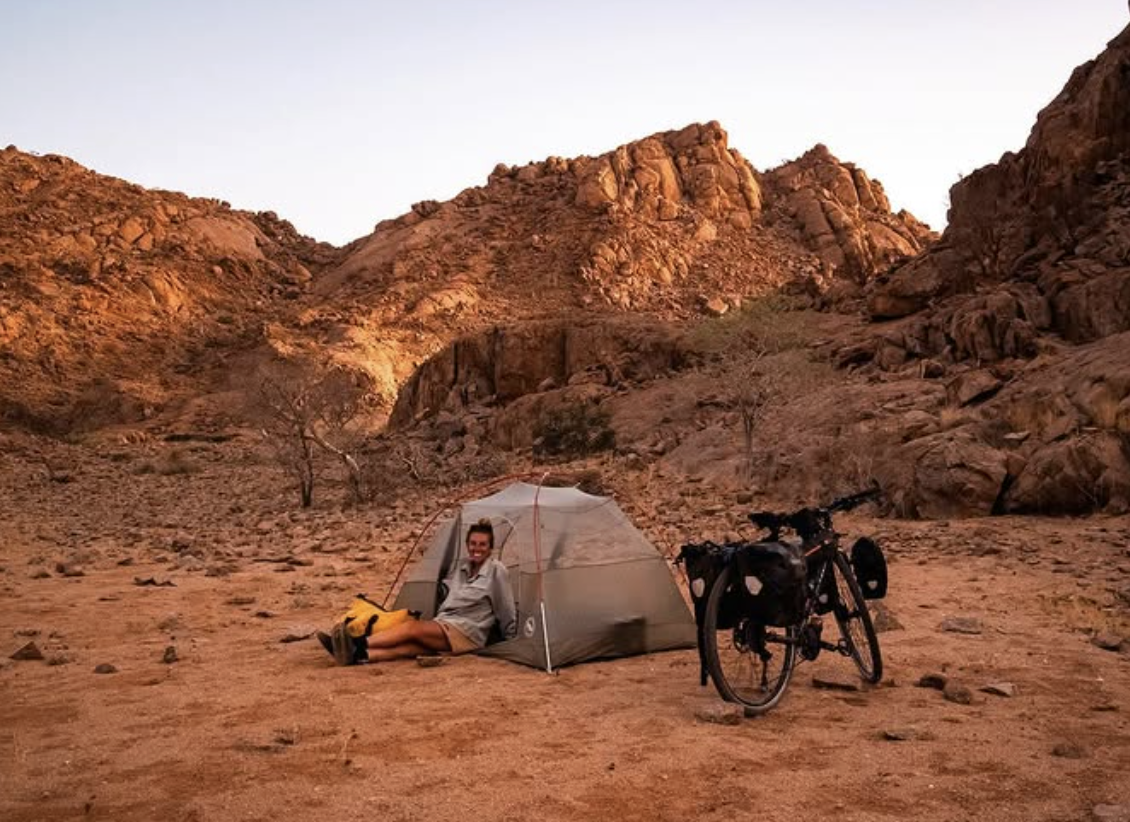
Namib Desert, Namibia My home in the desert
One of my favourite features is the amount of mesh inner there is. It’s also really nice to have lots of mesh on the windows and it’s all mesh at the top, which I find a lot of tents don’t have. In good weather, I often leave the fly off completely and you can just stargaze all night! This also means you can enjoy an open-air feeling without becoming dinner for every mosquito in the area. Especially if you’re somewhere with lots of mozzies or midgies, that’s an awesome feature! For warm-weather camping, that combination of airflow, bug protection and visibility is one of the Copper Spur’s strongest features.
The interior storage is also really well thought out and useful. Big Agnes designed beautiful big pockets rather than simply having a couple of tiny pockets for keys and a headlamp. There’s enough storage to organise equipment around the tent too and I even use some of that as sort of a drying rack, and then you’ve got your pockets on either side.
This overhead pocket above is nice to put a speaker there and then it’s super central so I have really nice surround sound!… it’s not necessarily an essential backpacking specification, but definitely nice.
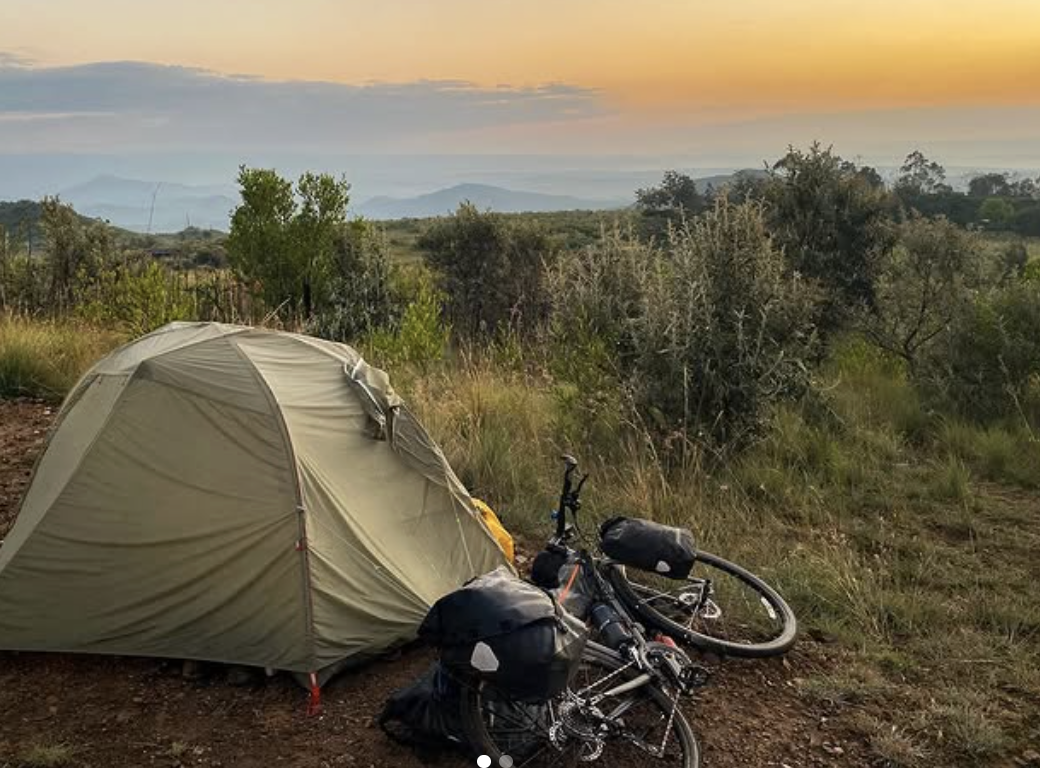
Earth Camp, Kenya
Yes! Another advantage of the lightweight material is that it’s super quick to dry, which is really nice. Anyone who regularly camps knows the morning routine: wake up, discover condensation on the tent, then decide whether to wait around or stuff a damp shelter into your pack.
I often pack up early in the morning and there’s some condensation or it’s a bit wet, and just pull it out for five minutes while I’m having breakfast later in the day or lunch and it dries super quick.
That matters much more on multi-day hikes and bikepacking trips than it does on an occasional overnight camp because a tent that dries rapidly means less time carrying wet fabric and less hassle when you arrive at your next campsite.
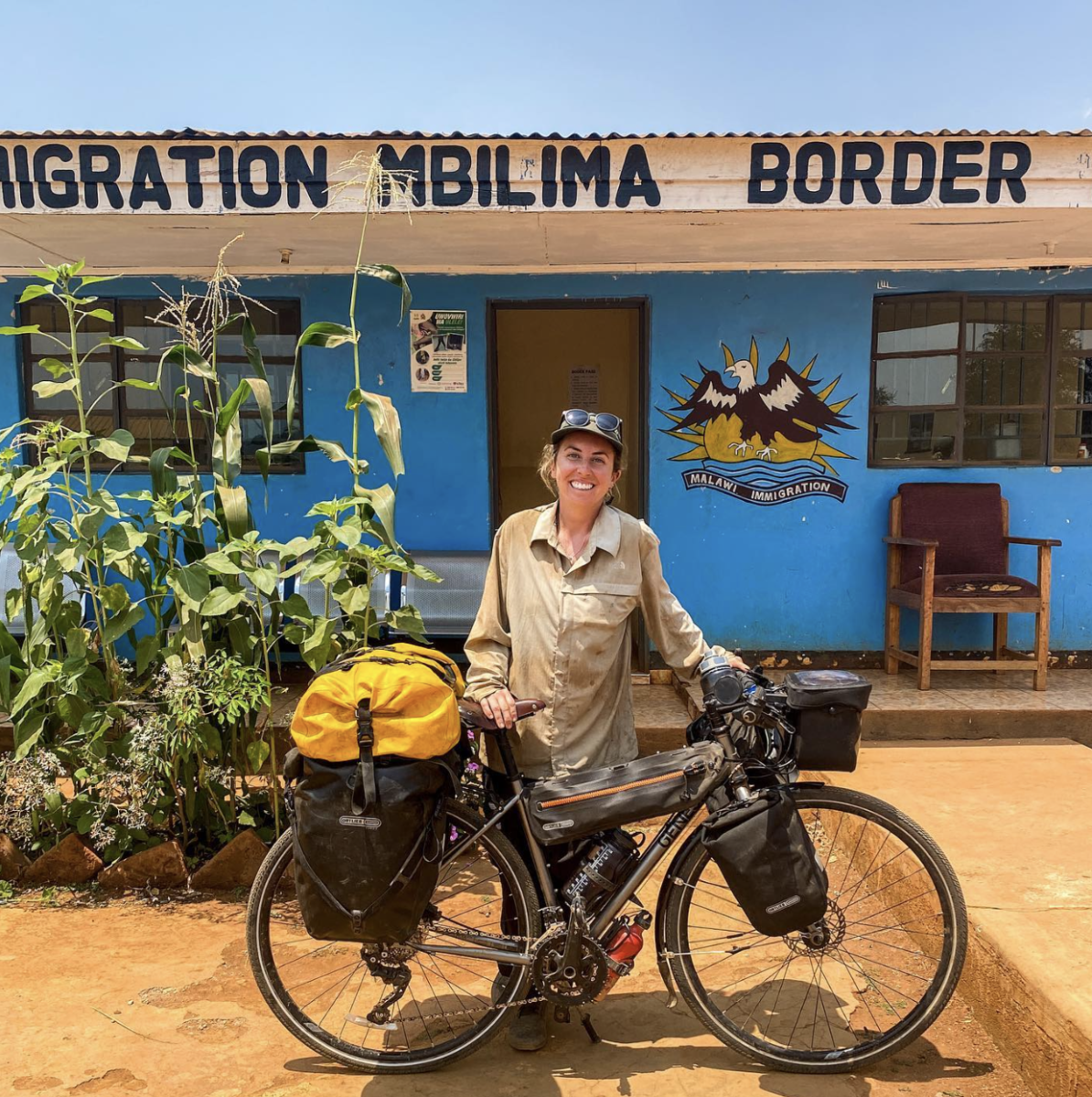
Malawi, Africa
It’s really durable, it’s really, really lightweight, and when I first got it I was a bit worried it wasn't hardy enough but that concern hasn’t played out. With the footprint I’ve camped on really rocky terrain and never had any issues.
That doesn’t mean the material is indestructible though, sometimes you get a little nick and you can just get a tent repair kit and fix it up and it’s totally fine. But after hundreds of nights of use, that's more like normal wear on an ultralight shelter than a durability problem and I haven't exactly treated this tent gently!
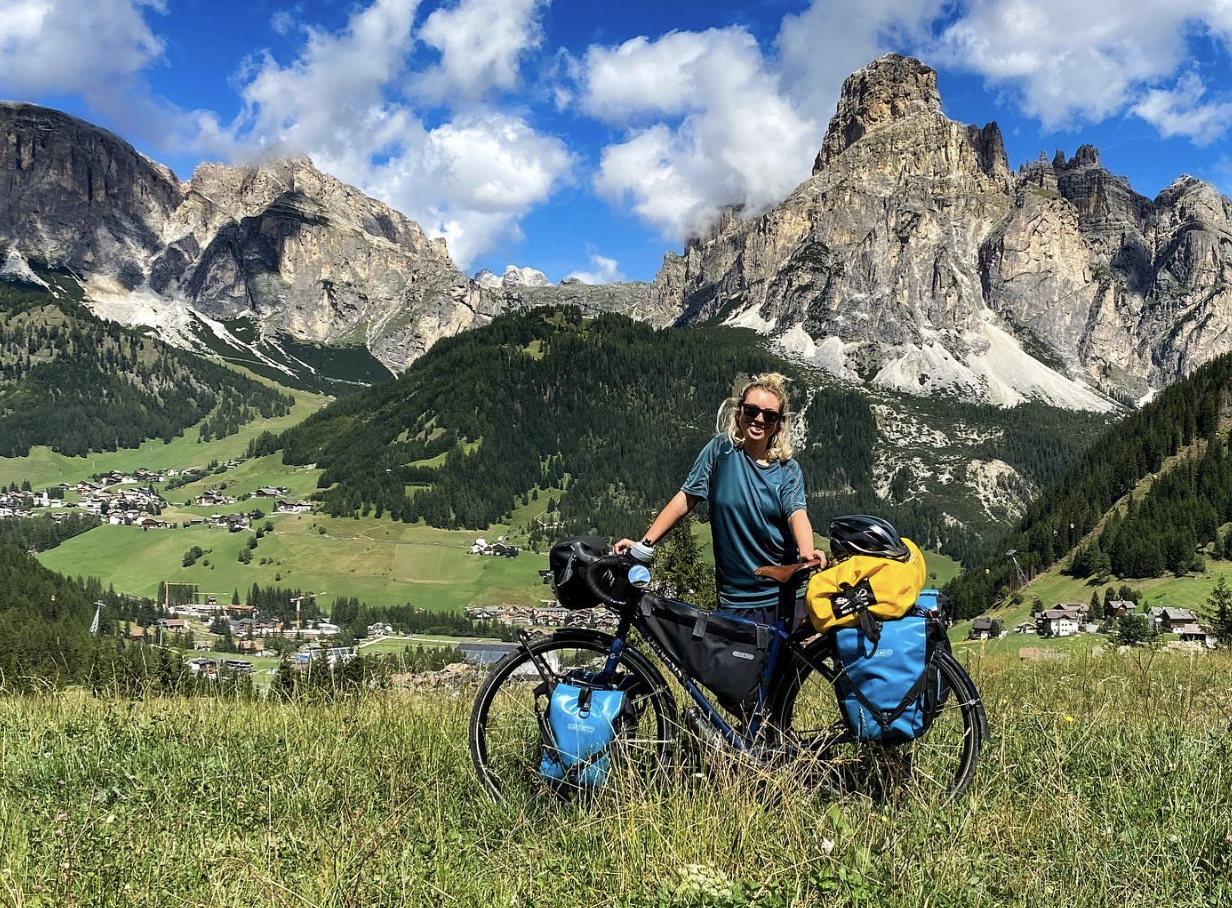
The Dolomites, Italy
I’ve been in very serious storms, blizzards, sandstorms in Saudi Arabia, extreme heat in Namibia and freezing cold in the Alps in the snow, and it’s really held up.
During the video review above, I was camping in Yellowstone National Park, where overnight temperatures had fallen below freezing. It dropped to minus two, I think. It’s a very fall-esque sort of vibe there, but it’s warm inside the tent because it’s got the double layer and it’s the double layer that does help keep you insulated.
That said, the Copper Spur is not a four-season tent, and I want to be clear about that. I’ve also camped in the snow quite a bit as well, so it’s not a four-season tent, but it definitely, definitely can do it, which is really nice. So, my experience proves the Copper Spur can handle surprisingly difficult conditions in capable hands. But it doesn’t turn a three-season ultralight tent into a purpose-built mountaineering shelter. For that you should check out Wild Earth’s 4 Season tent range.
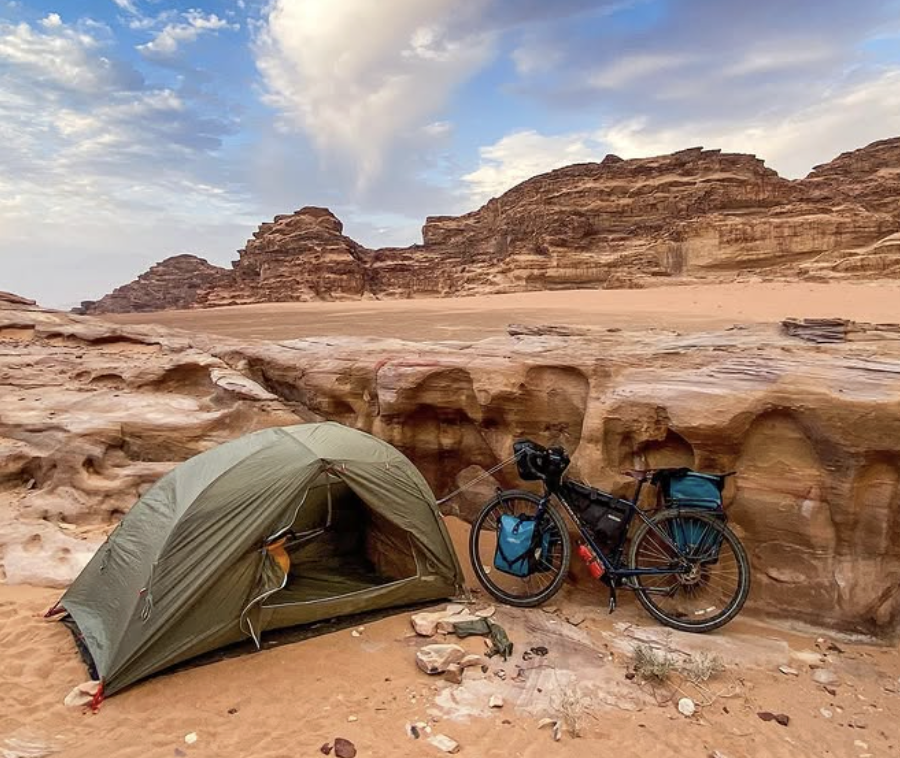
Desert Camp, Jordan
Yes, After more than 400 nights, I have had the tent poles break once and that was in a massive storm on an alpine ridge and I think the winds were above 150 km an hour, gusts of 200, and by morning, everyone’s tent had broken!
Usually, this is a toss-up between the MSR Hubba Hubba and the Big Agnes Copper Spur, and the Hubba Hubba also broke. It was just a savage storm, so I wouldn’t hold it against it…Other than that, I’ve been in some really heavy winds and big storms and it bends and flexes and holds up.
It has extra velcro attachments on the fly which you can wrap around the poles in big winds, so it both flaps around less and diffuses wind forces across the fabric and poles to reduce breakages.
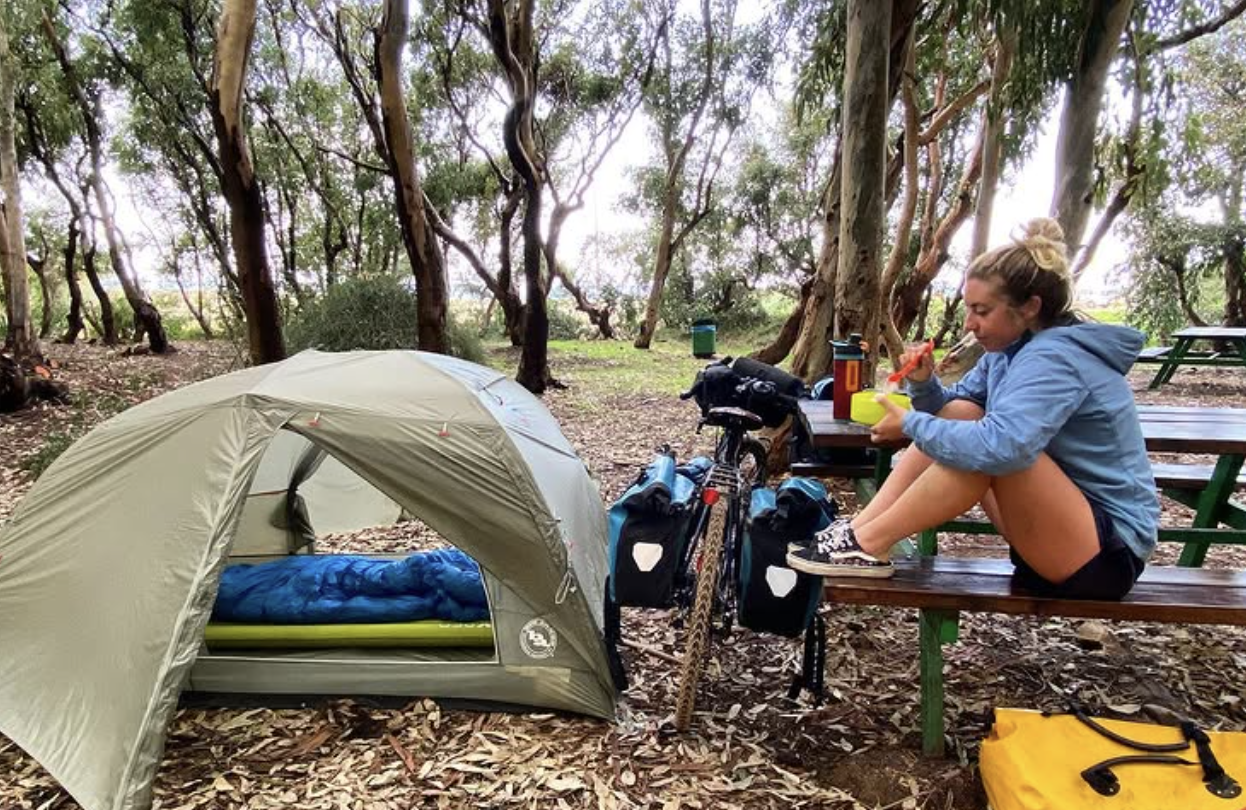
Israel National Trail
The set up of the Big Agnes Copper Spur is super easy. It’s freestanding, which is great because it means you can pitch it on any surface… sand, rocks, alpine, you name it. You don’t need anything extra and I often don’t even peg it if it’s not windy.
It’s super quick.
I can put it up within five minutes in the dark and for a tent that’s built for hiking and bikepacking, that’s exactly what you want after arriving at camp tired, cold or after sunset.
I started off just using a $10 tarp from Kmart and just cut it, which was fine. But the Big Agnes footprint adds another useful feature, especially if you’re going through really hot countries, because you can attach the fly and take this whole area out so you just have a big shade cover.
I found that really useful for going through deserted areas and areas where you couldn’t find any shade. Instead of putting up the entire tent, you just pop it up, direct it out of the sun, and yeah, you’ve got a nice little breezy shaded area.
For adventurers planning to use the Copper Spur across different climates, that gives the footprint a purpose beyond simply protecting the tent floor.
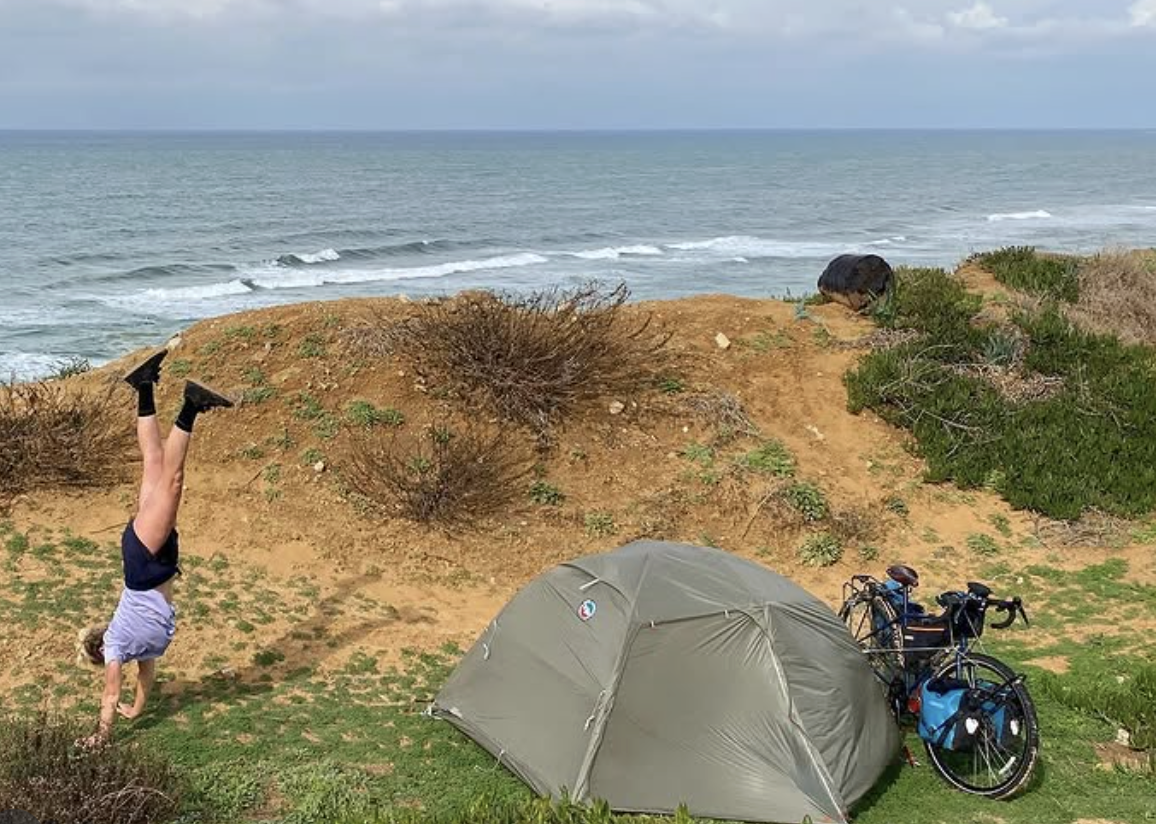
This review is more than your typical first-impressions wrap up. I’m not a weekend warrior, I think I’ve used the Big Agnes Copper Spur for more than 10 years and I’ve spent more than 400 nights in it and those nights haven’t all been easy campground trips either. I’ve taken this thing hiking and bikepacking all around the world, through different countries and climates.
And after all that use, I still feel like it’s the best! It’s the tent that I would 100% choose over and over. I don’t even look, I don’t compare. This is my choice!
After a decade of ownership, I have very few complaints. Maybe my only gripes at all are that sometimes the zippers get caught in the fabric and that the fly fabric can get saggy when wet. This is pretty typical of double layered tents, you just need to cinch down the corners of the fly once the fabric is wet and be careful when you open the doors so it doesn't drip inside.
And that’s essentially it.
More Articles Like This:
Based on Steph’s experience, the Copper Spur makes the most sense for someone who wants an ultralight tent that can handle a wide range of adventures like hiking and bike packing to name a few. Couples and hiking buddies will appreciate having doors and storage on both sides and warm-weather campers get extensive mesh for airflow, bug protection and stargazing
Travellers moving through different climates can make use of the full tent in cold or wet weather and the footprint-and-fly setup as a shade shelter in extreme heat. And anyone spending extended periods living from a tent should appreciate having enough interior space to sit up, play cards, change clothes and wait out a storm.
The Copper Spur isn’t designed as a genuine four-season expedition tent, and despite the fact that I’ve taken mine into snow, freezing temperatures and severe storms, it’s not a four-season tent. If your main goal is winter mountaineering or regularly camping in extreme alpine weather, a purpose-built four-season shelter makes more sense.
And if you’re only car camping and don’t care about weight or packed size, you can get considerably larger tents for less money.
The Copper Spur earns its price by combining low weight, small packed size and genuine livability.
For me, it’s a resounding yes. If you’re trying to decide on a tent, it’s a lot of money to drop and you’re not quite sure… after ten years of testing this out, I can absolutely vouch for this Big Agnes ultralight Copper Spur 2. Plenty of outdoor gear looks impressive when it’s new. The real test is whether someone still trusts it and loves using it after hundreds of nights out in the wild.
If you need any help, chat with our friendly team of Outdoor Gear Specialists in-store or online today and don’t forget to share your adventures with us on Instagram by tagging @wildearthaustralia and #mywildearth in your next post.
Planning the Camino de Santiago? I walked 900km on the Camino Francés to Santiago, then on to Finisterre. Here’s what I’d do again (and what I’d change) from training, my packing list, shoes, blisters, accommodation, safety, and gear.
If you’ve ever searched ‘what is a PLB?’ and ended up more confused than when you started, this guide explains the difference, compares the best models in Australia for 2026, and shows how to register and carry them properly.
Planning the GR20 in Corsica? Wild Earth Ambassador Steph Devery shares her complete GR20 packing list, including gear, clothing, camping equipment, trail runners and tips from hiking one of Europe's toughest trails.
Compare the best carry-on luggage for Australian travellers, including backpacks, wheeled bags and duffels. Learn airline size limits, weight rules, key features and which carry-on bag suits your travel style.












Using Afterpay you can pay for your order over 8 weeks. There's no interest or added fees* and nothing to pay today. Payment will be automatically taken from your debit or credit card in four equal payments each fortnight over 8 weeks, and you will receive your order immediately.
You simply need:
To use this service simply:
Approved AfterPay buyers will require the funds for the first payment to be available on their card at time of checkout, however the first payment won't be deducted for 14 days. First time AfterPay buyers will need to make the first instalment payment at the time of their purchase.
If you wish to return your goods you can choose to receive an exchange, or the Afterpay payment plan can be cancelled before the first payment at no charge. *If you fail to have sufficient funds available for AfterPay to automatically deduct payment on due instalment dates you will be charged a late fee of $10, and if the instalment payment remains overdue, an additional $7 will be charged one week later.
With AfterPay, there's no waiting and we'll ship out your order immediately as normal.

When you want to go now, sometimes it's handy to pay later. That's why, we offer interest free payment plans from two of Australia's favourite Buy now, Pay later services.