Total Items: 0
Sub Total: $0.00
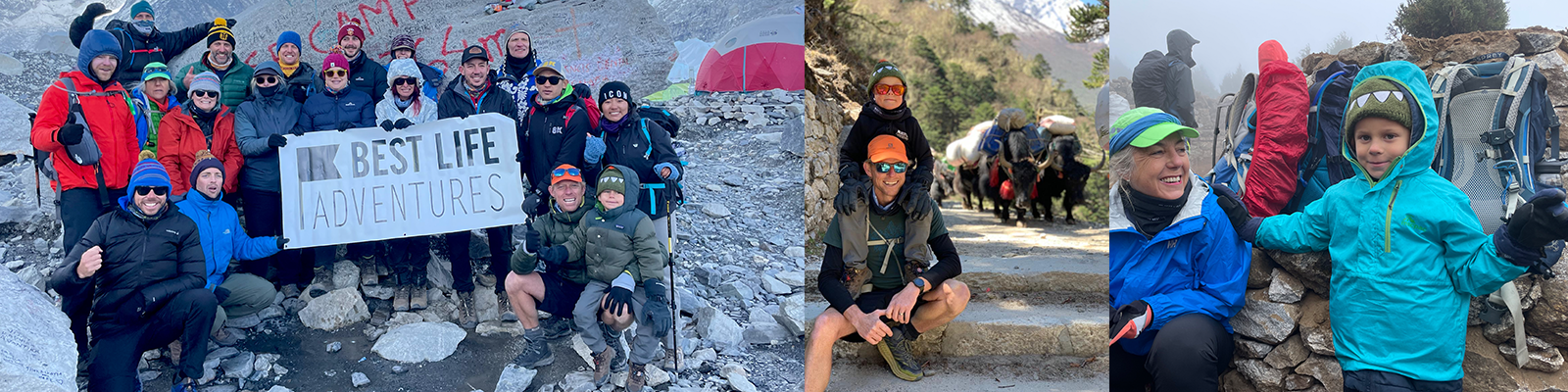
What happens when you take a five-year-old to Everest Base Camp? Ben Southall shares the preparation, gear, risks and unexpected lessons about parenting that came from trekking into the Himalayas with his son Atlas.
2026 Update.
Four years after hiking to Everest Base Camp with my five-year old son Atlas, I’m often asked: ‘Would I do it again?’ The answer is...We did, returning in 2024, and we’re heading back for his third high-altitude adventure in April 2027.
.jpeg)
When you dig deeper though, the answer is a little more complicated than a simple yes or no. The trek taught me more about fatherhood than preparation, risk and resilience.
It reminded me that being a dad is not about pushing a child towards your version of success. It’s about knowing them well enough to recognise when they need encouragement, when they need help and when it is time to turn around, and by witnessing incredible parts of the world through their eyes.
His feet were so cold, his smile had turned to an unhappy frown “How far to go, Dada? My feet are like blocks of ice...”
“We’re almost there big man, you’ve nearly made it,” I replied.
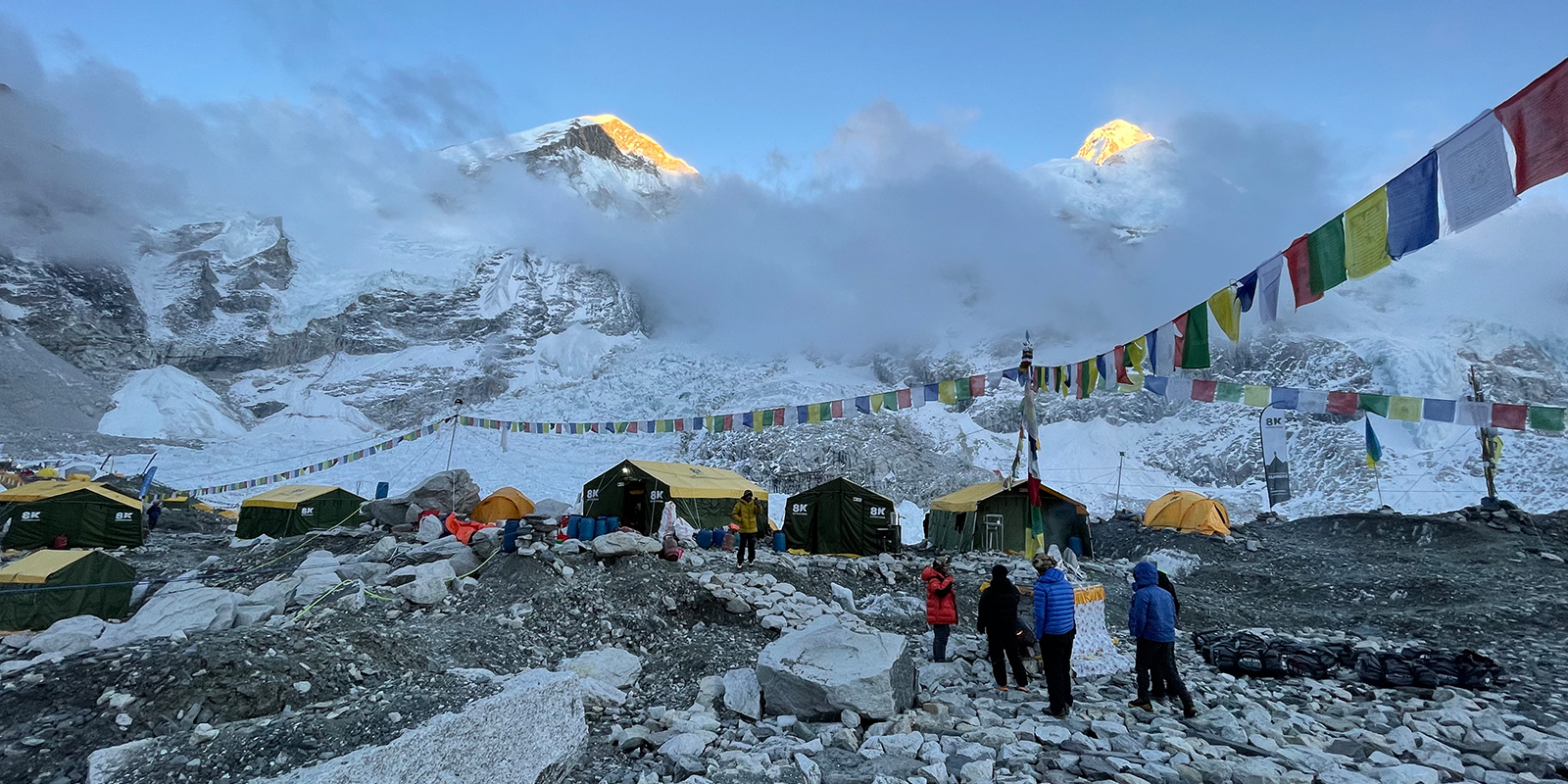
After seven days of bouncing along, walking, and being ‘portered’ up the steepest parts of the trek, my little five-year-old had finally made it to Everest Base Camp, 53km, and 2500m of elevation later. I looked around at the familiar surroundings, nestled in the deep Khumbu Valley, at the foot of the infamous Khumbu Icefall and thanked something, someone, anything that we’d safely made the ascent to 5363m with minimal problems for Atlas, myself or any of the 16 charity trekkers we’d accompanied for the trek.
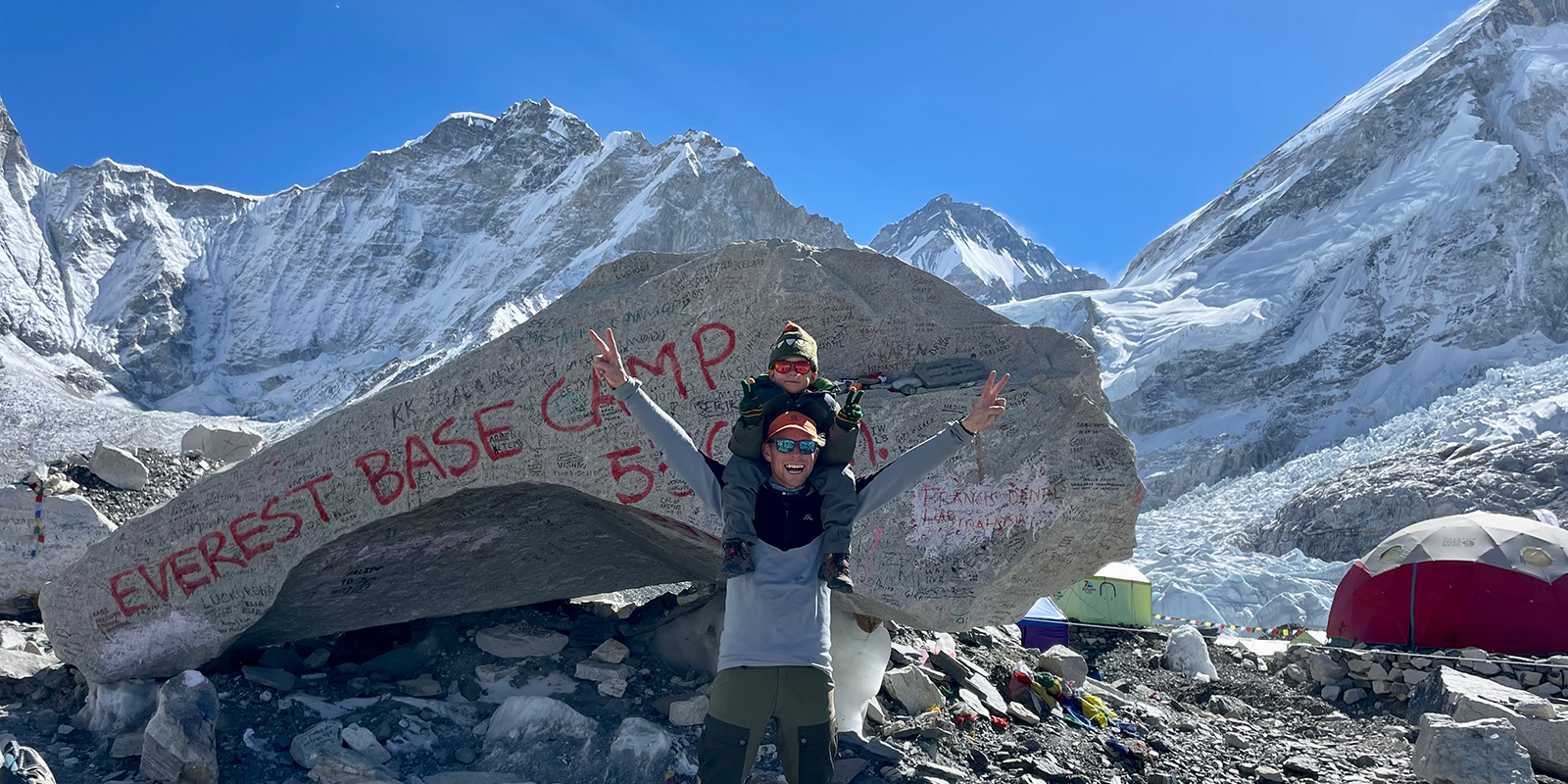
It was my tenth successful EBC trek. I’d lived at base camp for four months in 2016 to film a TV series for the Travel Channel, but this one arrival felt like the biggest mental victory of all. I’m Ben Southall, founder of Best Life Adventures. In some eyes a pushy parent, in others, someone who inspires and challenges the norm. I prefer to go with the latter... let me explain.
I wouldn't normally consider taking a trekker as young as five to the ‘Bottom of the Top of the World’, but this was different for a number of reasons. With my wife working overseas with the Australian military, my elderly parents living in the UK, and my mother-in-law having passed away a year before (my usual childcare when I’m away), I was left with a huge problem, what to do with Atlas while I head to Nepal for two weeks.
There are numerous stories of both support and outrage about taking children to high altitude, so I wanted to write this post to give my honest opinion on the benefits and potential pitfalls of having actually done it and how if you’ve done the hard work preparing your kid mentally, and physically, kitting them out with the right gear to make their experience a safe a comfortable one, should really be the icing on the cake.
Having run many treks there, I know the place intimately. Where to rest and recover, how to stay healthy, and where helicopters can land if anything goes wrong and I need to evacuate a client, or heaven forbid, Atlas. I also had a plan for the weeks leading up to our trek to best protect our digestive system - the single most important thing to keep healthy during any overseas adventure to a developing world country.
Having successfully led over 150 people to EBC, I’ve found it’s almost always gut health issues that make the experience so much harder than it needs to be. Dodgy food in Kathmandu in the lead up to, or during the trek, questionable water quality or cross-contamination, hand washing and personal hygiene are all things that can be avoided if you really look after yourself. I know how easy it is to be slack, and one simple mistake can mean nausea, vomiting, or a serious case of shitting rusty water that’ll drain your body of any energy reserves in a matter of hours - something you just can't afford to do when you’re battling thin air at altitude.
We turned the usual toilet procedures into more of a game during the trek. Every time we left a bathroom and before we’d finished washing and sanitising our hands, we had to come up with how we’d rate it out of 10, and two words to describe it such as “stinky and dark”. Atlas still does this sometimes with public toilets here in Aus!
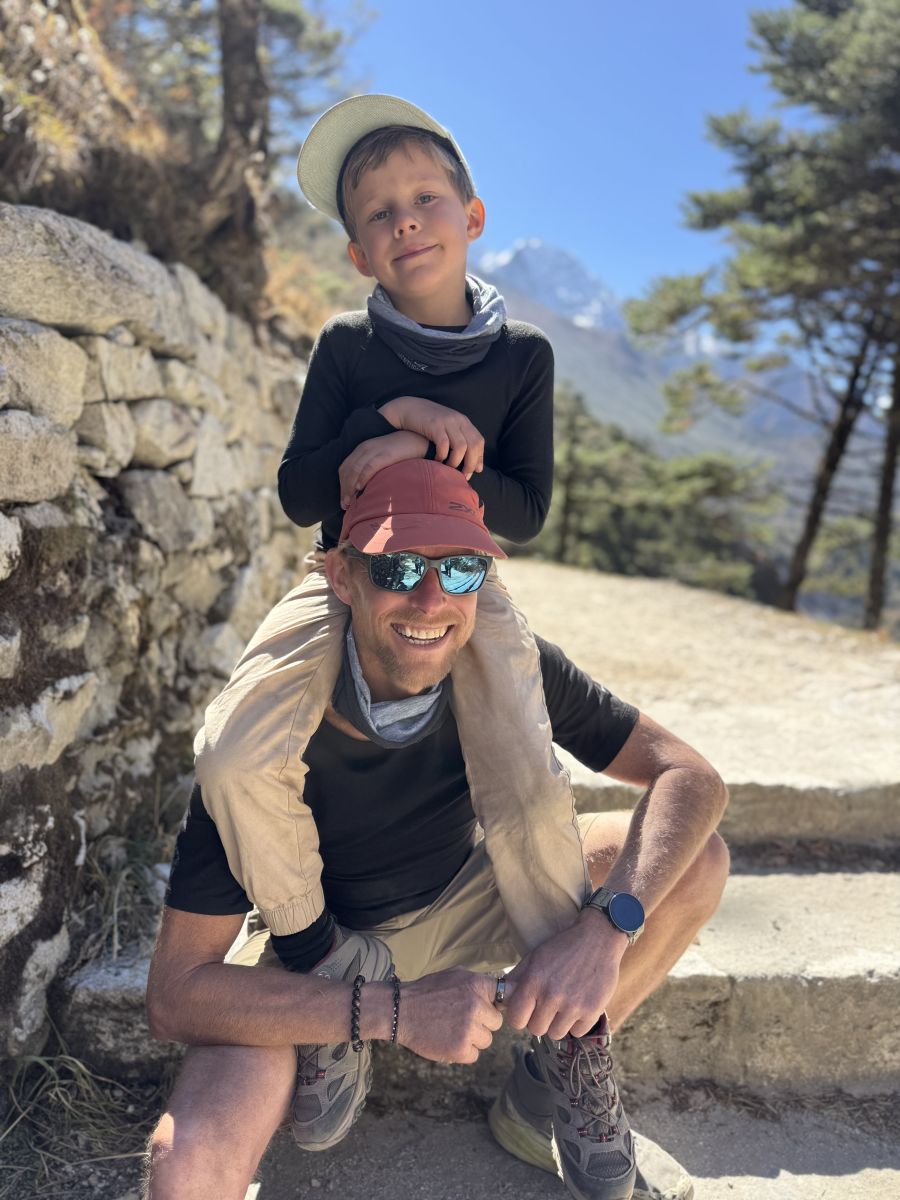
If Atlas had come down with anything on the ascent to EBC, it would have meant evacuating him from the Himalayas and leaving the group I was supposed to be leading. Something I simply couldn't afford to do. Here’s how I did it:
Pre-Trip: I worked with Kirsty from Kultured Wellness to build a plan for the two weeks pre-trip to strengthen his gut health with probiotics and supplements that we took throughout the trek to ensure he was in the best possible condition to fight any potential infections. It worked like a dream. With the exception of one ‘flying fast poo’ on arrival in Kathmandu, he was comfortable and regular throughout the entire adventure.
During Trip: Water, water and more water. It’s one of the greatest keys to success on the EBC to hydrate well and help deal with the elevation. But ensuring you have the cleanest and purest you can get your hands on, is uber-important so most companies opt to buy bottled water.
If you do the maths, it’s hugely detrimental to the villages and Khumbu environment - 10 days > 3 litre bottles a day = 30 bottles per person that go into landfill or get burnt.
Staying sustainable is crucial to the way we run our business, so we’ve opted to filter and purify all water for our clients using two methods to supply their needs every morning, lunch and evening.
LifeStraw Peak Series Large Capacity Gravity Water Filter System - 8L - we set this up three times a day using boiled mountain water
Purinize Water Purifier Drops - each client gets a bottle that lasts the entire trek
Food choices were another big one. When you start the trek, there's a plethora of choices on the menu, from grilled chicken to yak steaks and even tuna pizzas. Keeping the same Western mentality of 'anything goes' can be a downfall, so sticking to a non-meat diet is the go, even though it's tempting to go for the tastier option sometimes.
My basic rule of thumb is: if you can't see it out of the window, then don't go for it.
Eggs are good because there are chickens around most of the time, and fresh vegetables can be seen growing in the fields and are always a great way of keeping your gut healthy. You can always celebrate with a ridiculously Western meal once you're back in Kathmandu at the end of the adventure.
Unless you’re an uber athlete, no one just rocks up to Nepal and successfully completes the trek to EBC. It takes training and preparation for everyone, five-year-olds included.
In the lead-up to our trek:
I took Atlas on some weekend fitness hikes disguised as micro-adventures so he didn't feel the pressure of expectation with me harassing him about ‘being fit enough to finish the trek’, it was the best way to build his inner strength and belief in himself about climbing hills and not giving up.
I knew Atlas was never going to be able to walk the entire way himself and prepared for those moments of “Can I have a carry?” by employing two extra locals to help out where and when needed.
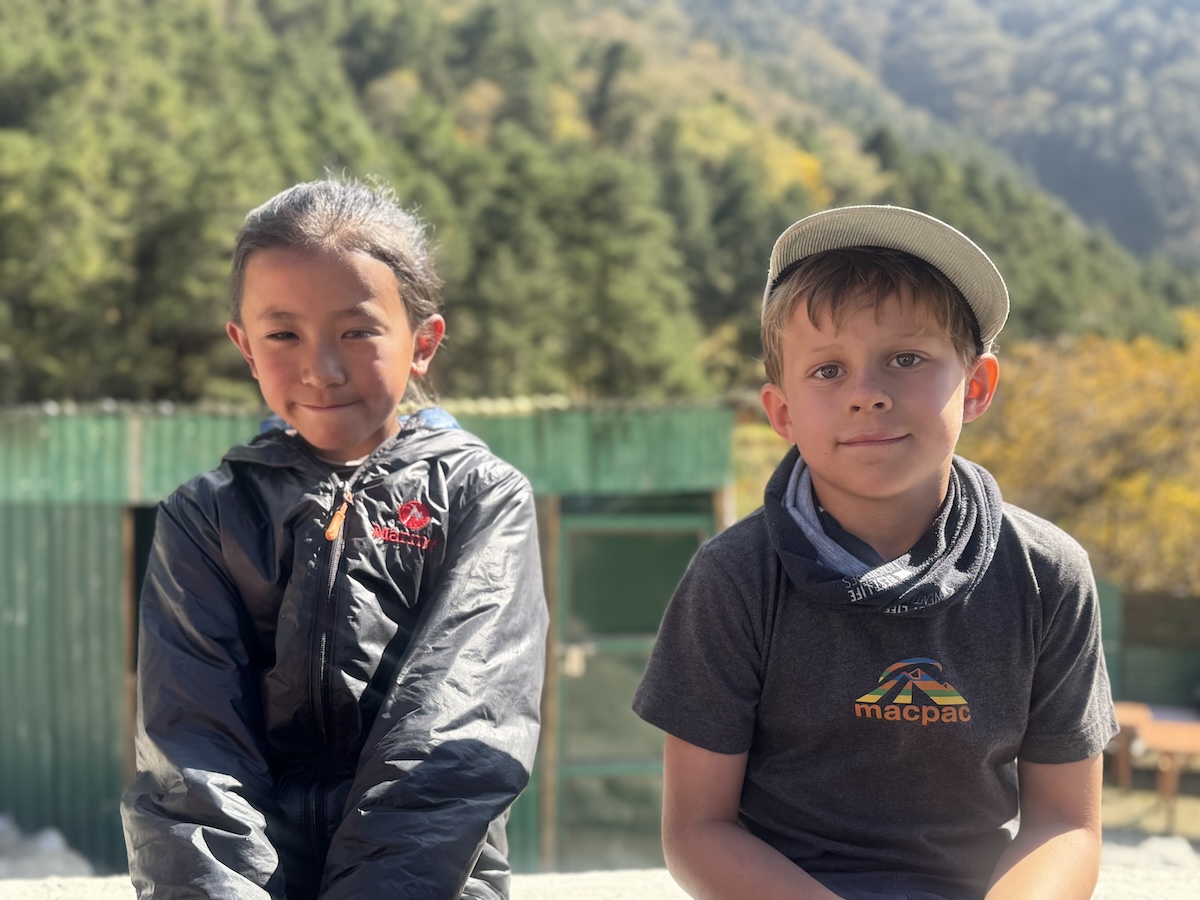
A friend and previous Everest summiter, Nima, came along as a porter to help carry Atlas up the toughest climbs, when I was too buggered to carry him, and I also brought along a Sherpini (female Sherpa) to be his nanny at the teahouses when I needed to spend time with my clients, and to give him a different insight into what Nepali life in the mountains is like. It’s also good to give employment back to a region that relies on tourism so heavily.
I've made a firm rule that if a child is old enough to honestly report on how they're feeling, not just 'okay' or 'a little bit sick', but the what’s going on inside their head and stomach, then they're old enough to head into the mountains on a trek like this.
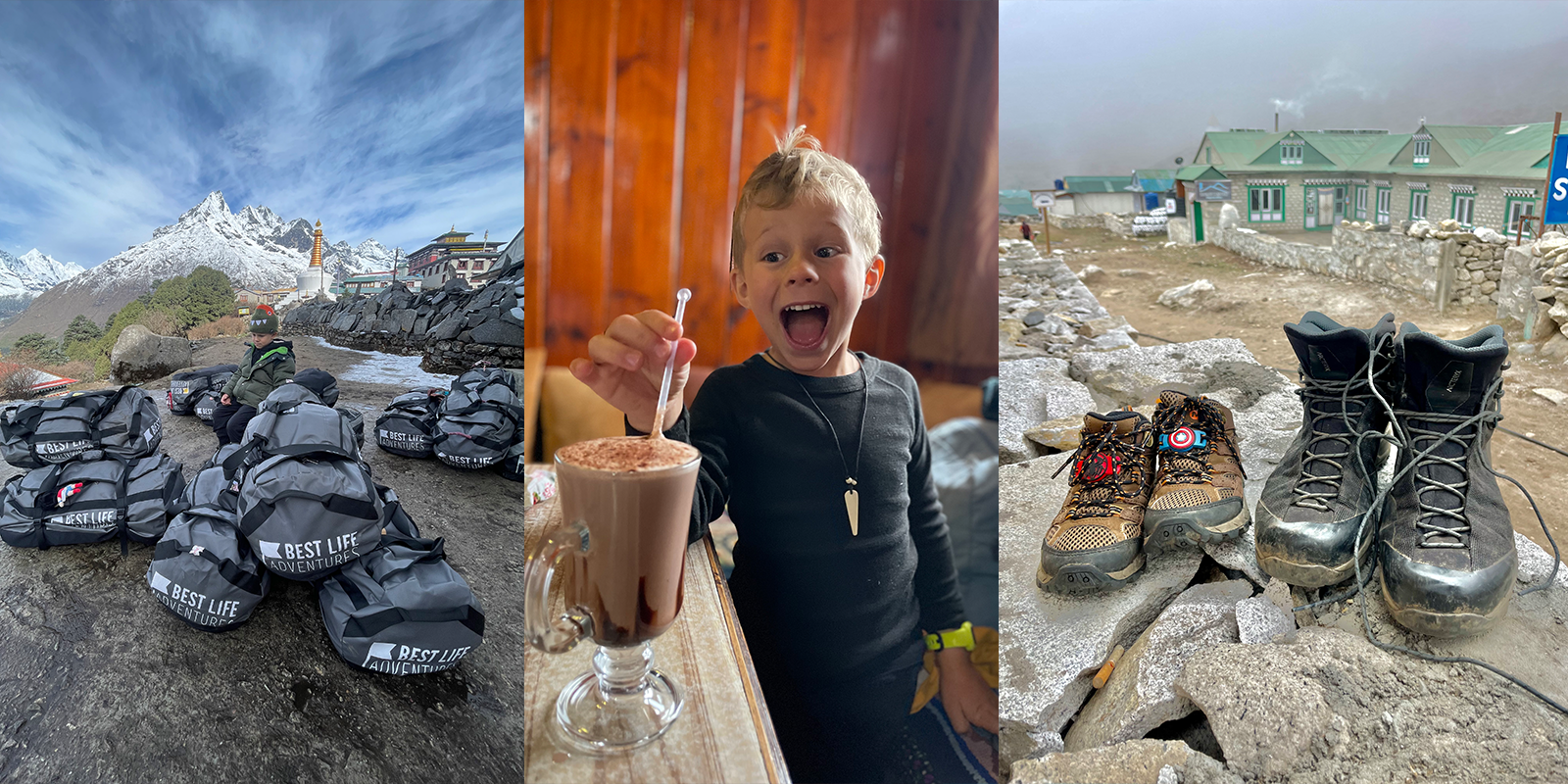
Checking in at breakfast, lunch, dinner, and in the comfort of the teahouse bedroom just before they sleep, are important times of the day to gauge how conversational and healthy the young person with you actually is. Any sign of loss of appetite (especially when offered a chocolate milkshake) is a key indicator something's wrong.
If a kid has solid poos, it's a good indicator everything inside is working as it should do.
But the moment there's a loss of colour in their face, or vomiting or diarrhoea are experienced, there's a maximum of 24 hours before I decide if we're staying on the trek or flying down to lower altitudes and real medical help.
A cold or wet kid is a grumpy kid, that I learnt a long time ago, so having everything I needed to keep my little nugget warm and dry was essential. It’s tough to get good gear for kids but a few of the major outdoor brands like Patagonia, Merrell and XTM build clothing that’s as good as the adult versions.
I'm stuck between two choices when it comes to picking the best boots for an Everest Base Camp trek. One half of me enjoys using trail shoes like Hoka, and the other, more traditional trekking boots with higher ankles for more support.
The issue with lighter trail shoes is if the weather is wet over the first few days, your feet can get cold and struggle to heat up during the course of the day. The flip side of that is if you take heavy hiking boots and have warm conditions, you often feel over-geared. So what do I do?
Take trail shoes to travel in, walk around Kathmandu and for the early days of the trek, and have my larger trekking boots available in my bag when the conditions at higher altitudes demand more warmth and ankle stability.
I'm a massive fan of Injinji hiking and running socks that separate the toes like gloves. However, at higher elevations and in cold temperatures, these leave your toes isolated from each other and they get colder a lot quicker. It's definitely better to go for thicker, traditional socks when you get to higher altitudes and lower temperatures.
The phrase I deliver time and time again is 'be bold, start cold', as it is really easy to overgear first thing in the morning, only to find you are shedding clothes 10 minutes later on the first hill.
The key to avoiding this is layering. I always walk with a merino t-shirt base layer, start with a lightweight mid-layer, and if the wind is up or conditions are cold, use a shell jacket rather than a down jacket. The insulating down jacket only comes out when we stop in a cold location or at the end of the day, sitting around the fire or stargazing at night.
I've always suffered from cold fingers, so gloves are an essential item. Everybody should have a set of merino base layer gloves to protect them from the elements at the cold start of the day.
Once you get up higher and the temperatures are really cold, especially for the summit of Kala Pattar on the Everest Base Camp day, you need a thicker set of either gloves or mittens.
My preference are mittens, as it allows your fingers to stay together and warm each other up, along with an obligatory charcoal heat pack in my palm to really keep the digits warm.
We issue a lightweight cotton buff to every one of our trekkers, as they are the single best item of clothing you need for a trek like this.
Being able to pull it up over your face and cover your ears and nose at high altitude reduces the effects of wind exposure and sunburn on the sensitive parts of your face. It also stops the dust and very cold morning air getting into your lungs, reducing the risk of a chest infection, which can prematurely end your trek.
Almost every tea house on the trek comes with a comfy (sometimes semi-comfy) bed with a mattress, duvet and blankets. Only on the last couple of days at high altitude will you really need to have an additional sleeping bag for warmth at night.
There's nothing better than a little taste of something familiar when you're down on energy and feeling tired. My personal favourites are biltong, as it's high in protein, contains a good amount of salt, and lasts much longer than beef jerky.
I'm also a sucker for trail mix with preserved fruit for additional sweetness.
If you're trekking with a responsible company, their guide will carry all standard and emergency first aid gear.
If you have any personal medication required, ensure you have an ample supply for the duration of your trek, plus a few days extra in case you end up being delayed by the weather or, heaven forbid, in hospital suffering the effects of altitude sickness.
Namche Bazaar has a number of pharmacies where you can pick up the majority of basics required for hiking, as well as low-cost antibiotics, throat lozenges, and any other drugs you might require for chest infections or an impending cold.
There is Wi-Fi throughout the entire trek, which means communication with the outside world is easy enough. Cellular networks run out after day two, so don’t rely on that as a mechanism for contacting family or your travel insurance should you require it.
As a guide, I always carry my Garmin inReach in case of absolute emergencies, but so far I've never needed to use it. In a worst-case scenario, if an avalanche or earthquake takes out standard communication networks, I have something left to rely on.
We spent a few days in Kathmandu before the trek so Attie could get used to the country, the hustle and bustle of Nepali life, and feel the vibe of the Himalayan country and it was really good to get him climbing with some of the local kids too.
He’s always loved flying in small planes so the excitement of the flight into Lukla (supposedly the world’s most dangerous airport) was good to see on his face, especially when we’d touched down safely.
Seeing things differently through a kid’s eyes was good for me; his fascination with donkey and yak poo, the dogs around the hotel in Lukla and playing with the school kids as we finally departed are things that’ll stay with me forever.
Over the first few days of the trek everything was pretty easy for both of us. He walked a lot, seemingly taking on the vast number of steps each day as a personal challenge egged on by the constant vocal support from other trekkers coming back down the mountain. “If he can do it, we can do it,” became the normal chant.
Once we hit the thinner air above Namche Bazaar (3500m) acclimatisation becomes a constant game for every trekker.
Taking your kids on a challenge like this was supremely rewarding and there are moments I look back on today with immense pride. When we visited the school in Kumjung and Atlas spoke to the class about life in Australia, and then danced in the snow for the first time outside the classroom door.
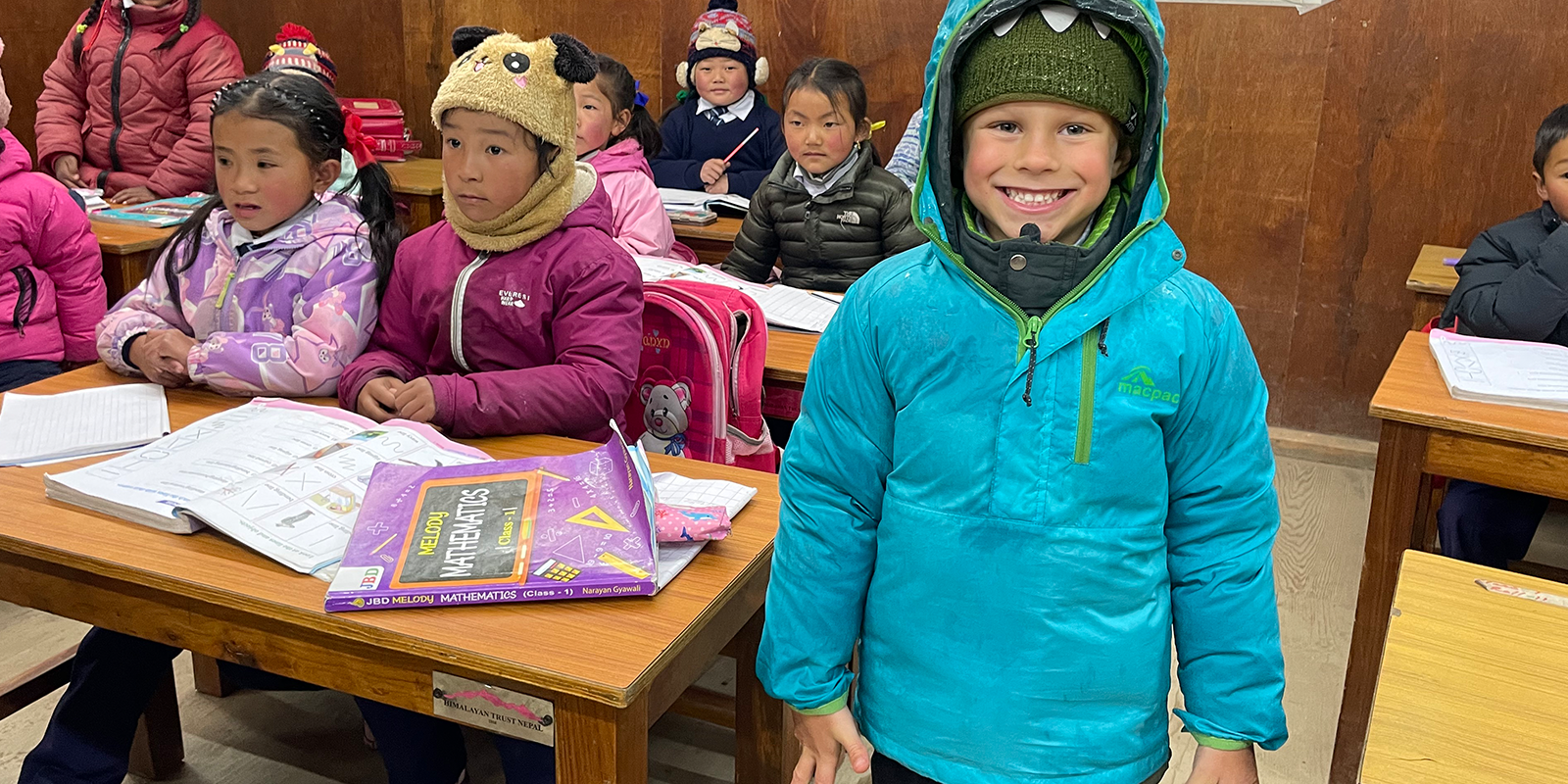
I also learnt not to push him beyond his limits and know how to identify that. This trek was never about ‘being the youngest kid to make it to EBC’, so allowing him to be carried whenever he needed it was vital. No one wants a grumpy, miserable kid on the trail next to them. Rewarding him with some good home food was another temptation when the times got tough, and one of his favourites was the simple Clif Bar, especially the White Chocolate and Macadamia one!
That final day into base camp was an interesting one. We had two members of the trek who weren’t feeling healthy and up to the challenge but decided to push on. One was a 12-year-old boy who Atlas idolised to some degree, so to see him weak and slow-moving, placed a little doubt in his mind, especially when he needed to be helicoptered out with AMS (Acute Mountain Sickness) only an hour from EBC.
As we arrived at the rock (known as Trekker’s Point) that marks the end of the EBC trek at 5365m above sea level, it was the place where the wheels started to fall off for a few people. Best Life Adventures are one of the few trekking companies that stays overnight with the summit teams (although things will change in 2025), who make their camps around 1.5km further up the Khumbu glacier. This can take another 1-2 hours to complete and with temperatures dropping to around -20c that night, and with Atlas on Nima’s back for the entire distance, he got cold pretty quickly.
Do you remember that feeling when as a kid you felt that much cold in your feet and hands, it was almost scary? That’s the headspace Attie was experiencing and he didn't like it one bit. It was probably the first time summit teams had heard a five year old crying at base camp, but within ten minutes of checking into our dining tent, we were thawing out with a celebration cake and hot chocolate - the best way to take a five-year-olds mind off the pain!
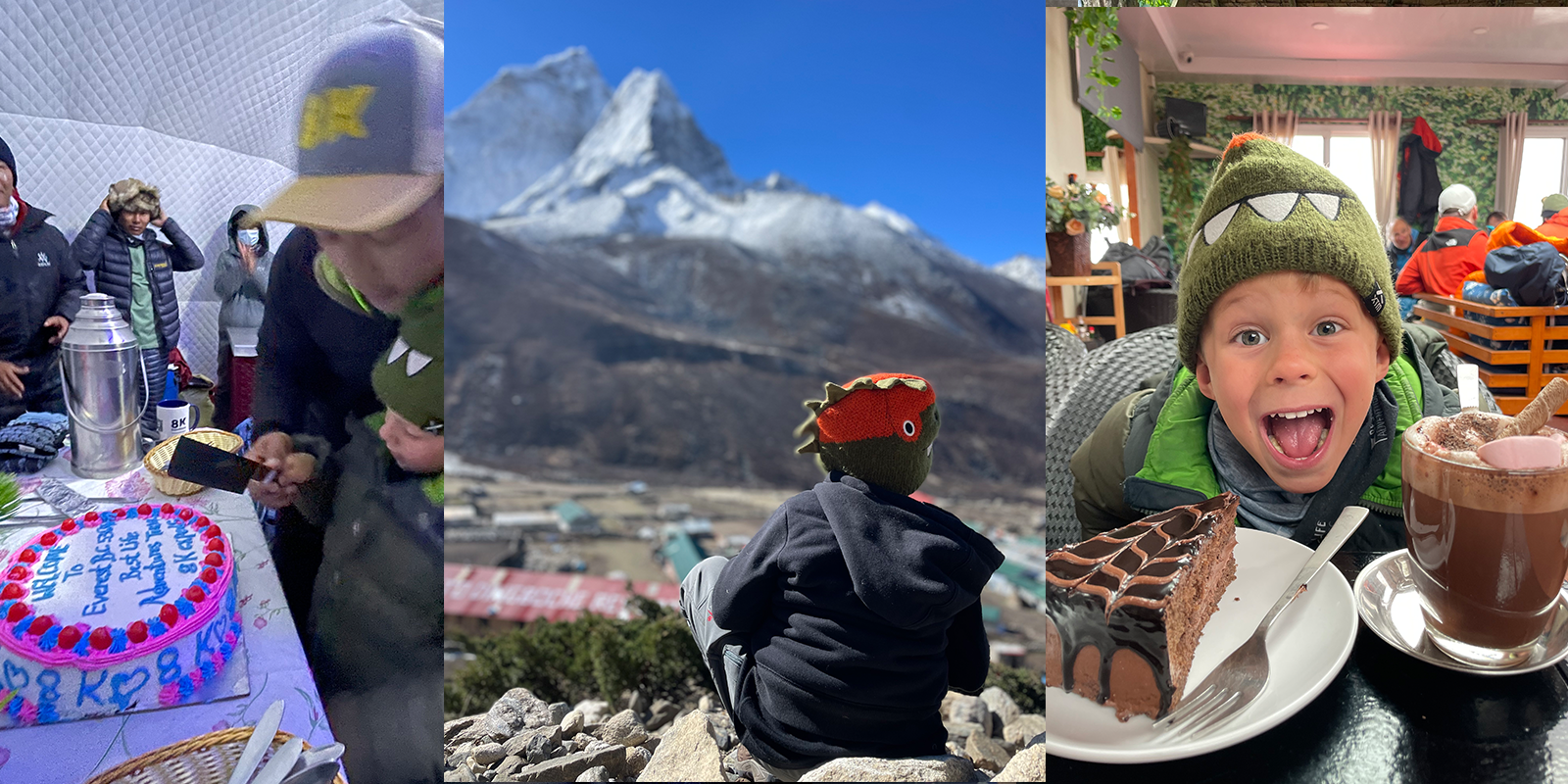
Looking back, I can remember the planning, the risks and every decision that weighed on me as his dad. But Atlas experienced the trek very differently. Two years later, I wanted to know which parts had stayed with him most.
TWO YEARS LATER, WHAT DOES ATLAS REMEMBER?
When I asked Atlas what he remembered most about trekking to Everest Base Camp, his answer wasn’t what I thought it was going to be….
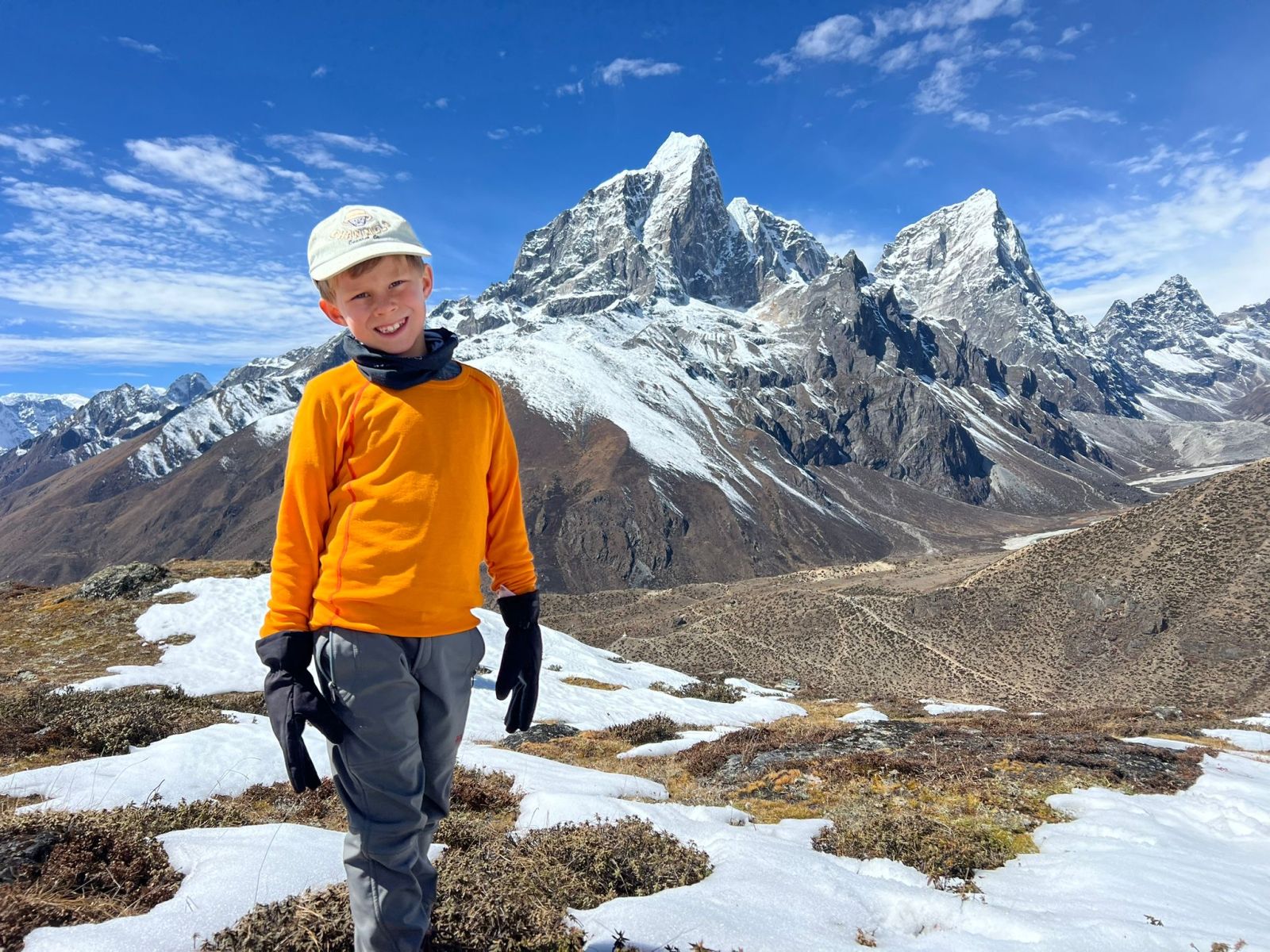
What he remembered most clearly was the high cable bridges over the valleys, and playing with the kids along the trail even though they didn't have the same language to share.
The hardest part, he told me was trying to keep his feet warm in his sleeping bag when we overnighted at base camp itself, while his favourite moment was throwing snowballs at me for the first time...
.JPG)
Since taking Atlas there at five years old, he has now been back and repeated the trek at eight, and we will be going back again in April 2027 with another group at nine years old. He really loves the experience and now walks the entire trail up, although I do give in and carry him on the steepest sections!
His answers reminded me that children don’t always measure an adventure by its final destination. The moments that stay with them may be the jokes, the animals, the food, the people who helped them or the time spent beside a parent.
For me, that has changed how I look back on the experience. At the time, much of my attention was focused on reaching Base Camp safely. Now, I see that the greater achievement was learning when to encourage him, when to listen and when to put his needs ahead of the objective.
I look back at the adventure with a sense of wonder at what kids can achieve. We pigeon-hole and protect them so much they don’t get the chance to spread their wings and truly fly in circumstances we might find uncomfortable ourselves.
Yes, there was a certain element of risk, but as I do week in, week out with our Best Life Adventures clients, we push people to the edge of their comfort zone and slightly beyond, safe in the knowledge we’ve done our due diligence to give them a safety net if they need it, which nine times out of ten they don’t. It’s in this space, adults and kids alike, grow as humans and develop their own belief that anything’s possible. It’s the way I’d love Atlas to approach any challenges he encounters in the world.
Going against the age old adage that Atlas the Greek God inherited the weight of the world on his shoulders, I’d love to rethink it as supporting the Planet to be, do and achieve more. With the right preparation, gear and people around you, even the most ridiculous adventure becomes possible.
If you’re up for the adventure yourself, with friends, family or a five-year-old, we run two treks each year. The next is October 2027, you can learn more here.
Still, have questions? Come in-store to chat with our experts or shoot us a message online and we’d love to help! Don’t forget to share your adventures with us on Instagram at @wildearthaustralia and use the hashtag #MyWildEarth to be featured.
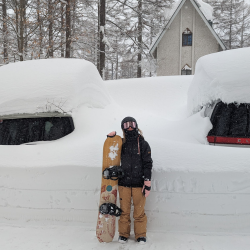
Learn how to layer for winter with a base layer, fleece or mid-layer, insulated jacket and waterproof shell. Based on multiple winter seasons in Nagano, Japan, this guide explains how to stay warm, dry and comfortable without overheating in cold weather.
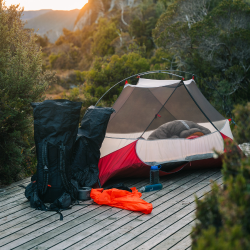
Ultralight backpacking is basically the art of minimalism on the trails. It's about bringing less so you can hike without feeling like your pack is weighing you down. For some people, this feels more like freedom. For others… the trade-offs just aren’t wo
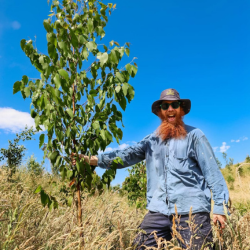
You don’t need a passport (or a perfectly dialled kit) to find real adventure. Beau Miles’ best stories come from ordinary places, simple tools, and the courage to do the ‘weird thing you keep thinking about.’
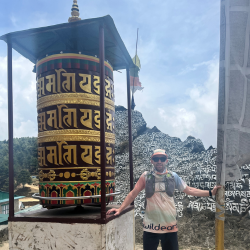
After waiting 11 years to attempt the Mount Everest Marathon, altitude sickness ended Adam’s race before the start line. This is his story of turning back, recovering and accepting what the mountains decided.












Using Afterpay you can pay for your order over 8 weeks. There's no interest or added fees* and nothing to pay today. Payment will be automatically taken from your debit or credit card in four equal payments each fortnight over 8 weeks, and you will receive your order immediately.
You simply need:
To use this service simply:
Approved AfterPay buyers will require the funds for the first payment to be available on their card at time of checkout, however the first payment won't be deducted for 14 days. First time AfterPay buyers will need to make the first instalment payment at the time of their purchase.
If you wish to return your goods you can choose to receive an exchange, or the Afterpay payment plan can be cancelled before the first payment at no charge. *If you fail to have sufficient funds available for AfterPay to automatically deduct payment on due instalment dates you will be charged a late fee of $10, and if the instalment payment remains overdue, an additional $7 will be charged one week later.
With AfterPay, there's no waiting and we'll ship out your order immediately as normal.

When you want to go now, sometimes it's handy to pay later. That's why, we offer interest free payment plans from two of Australia's favourite Buy now, Pay later services.